
A municipal wastewater safety class is about to start. Crews look tense and unnamed. How should the instructor open so the session is positive and learner-centered?
Select an answer to reveal the explanation.
Short Explanation
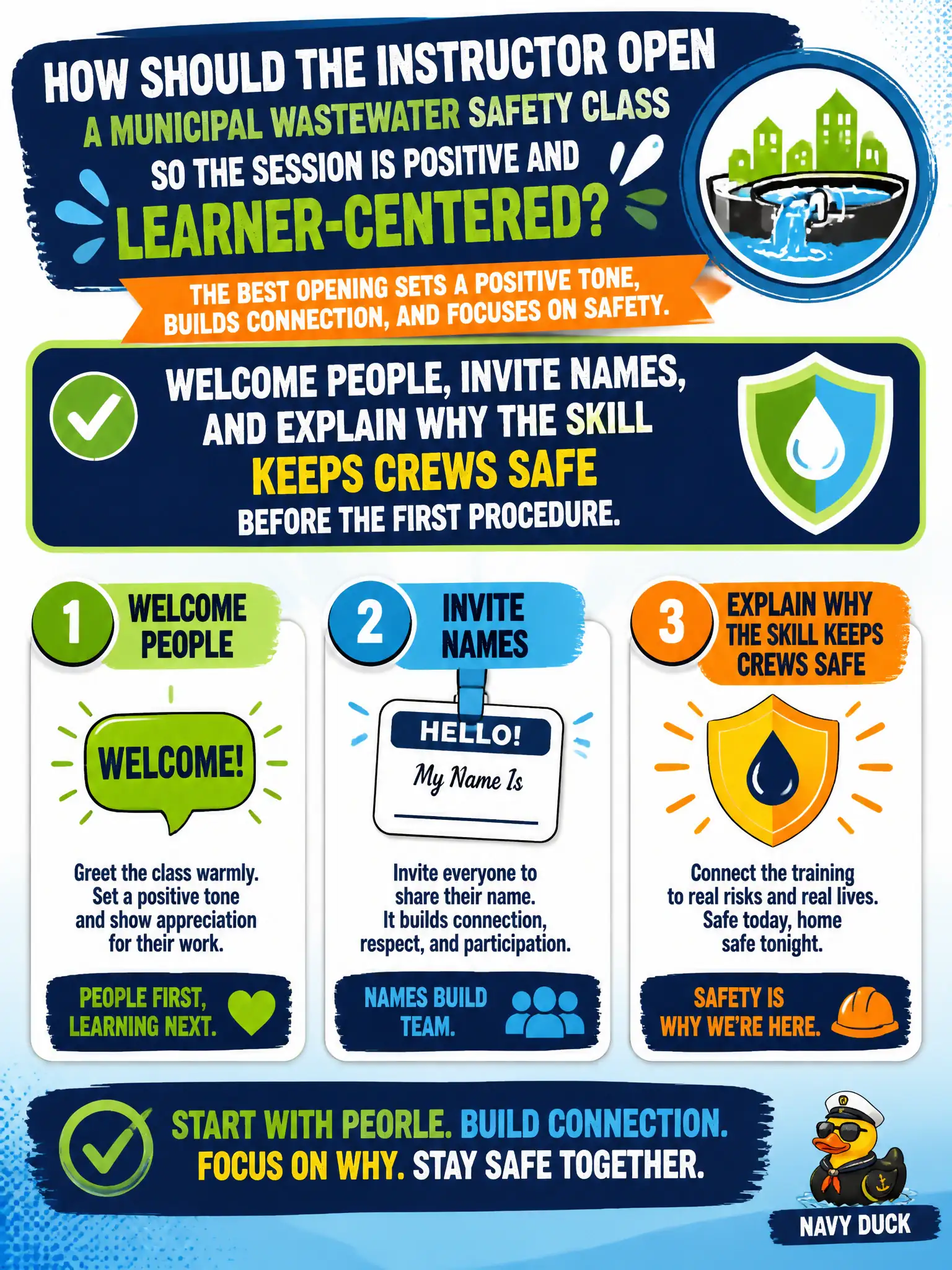
Nobody learns lockout steps from a cold jump-scare. Say hello, get names in the room, and tie the skill to going home safe. That opening is a handshake, not a lecture about how last year’s injuries were their fault.
Full Explanation
Positive, learner-centered openings welcome people, invite names, and explain why the skill matters before procedures begin. For a municipal wastewater safety class with tense, unnamed crews, that welcome-and-purpose start reduces threat and orients adults to confined-space safety as job protection—not as a scolding. Climate and purpose first make the later procedure video land.
Starting the confined-space video immediately so no time is spent on names or purpose fails by concept: skipping welcome and why undercuts engagement and psychological readiness for safety content. Reading injury statistics in a scolding tone without a welcome fails by using fear alone and skipping learner-centered opening. Skipping introductions because crews “already know each other” fails when the instructional event still needs a shared start and purpose frame.
Exam caveat: CTT+ opening items reward positive welcome plus purpose—not fear-first or content-only starts.
Operational check: greet, invite names or quick round, state why the skill keeps crews safe on city sites, then begin the first procedure with that purpose still audible. In civic public-training settings, that judgment protects both learner dignity and the municipality’s duty to leave staff actually able to perform the job after class—not merely to finish slides or keep a schedule looking tidy.