
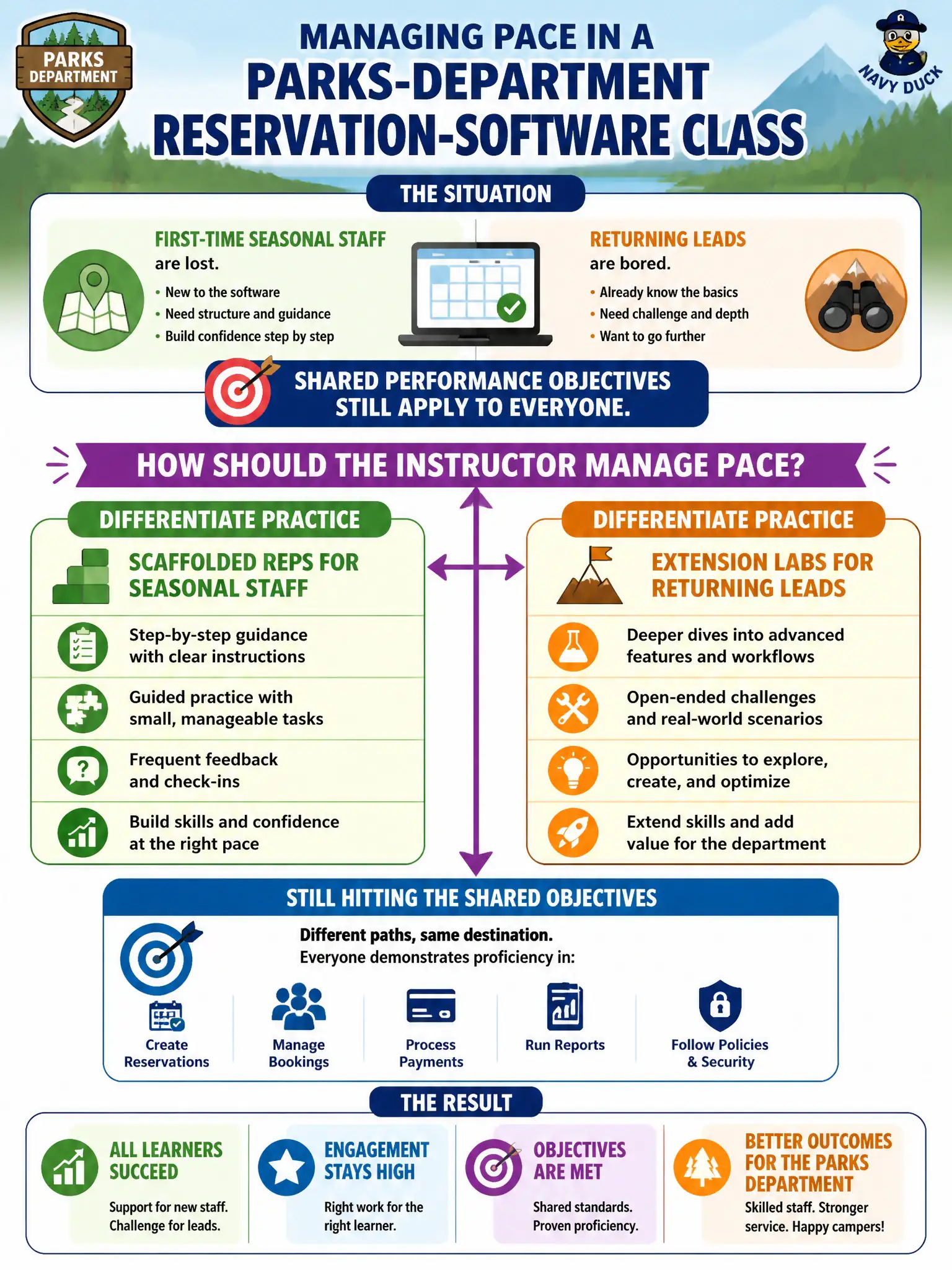
A parks-department reservation-software class mixes first-time seasonal staff who are lost and returning leads who are bored. Shared performance objectives still apply to everyone. How should the instructor manage pace?
Select an answer to reveal the explanation.
Short Explanation
One trail, two hiking speeds. New seasonal staff need switchbacks; returning leads need a steeper spur—not a different mountain. Keep the shared booking objective, just change the practice load so nobody is abandoned or bored stiff.
Full Explanation
Mixed-readiness municipal classes still share performance objectives; instructors differentiate practice—scaffolds for novices and extensions for advanced learners—while hitting those shared outcomes. In parks reservation-software training with lost seasonal staff and bored returning leads, differentiated reps keep everyone working the booking objectives without abandoning either group. Differentiation is pace and support design, not separate unrelated courses.
Teaching only at the leads’ speed and telling seasonal staff to catch up from the manual after class fails by concept: it withholds guided practice from those who need it most during the funded session. Dropping shared booking objectives to run two unrelated mini-courses fails by abandoning the common curriculum. Holding the whole group on slide one until every seasonal hire is comfortable fails by starving leads of practice and stalling shared progress indefinitely.
Exam caveat: CTT+ pacing/differentiation items reward scaffold-plus-extension under shared objectives—not ability tracking that abandons the design.
Operational check: give seasonal staff guided booking reps with checklists while leads run extension scenarios on edge cases; reconvene on the same mastery check for the shared reservation objective.