
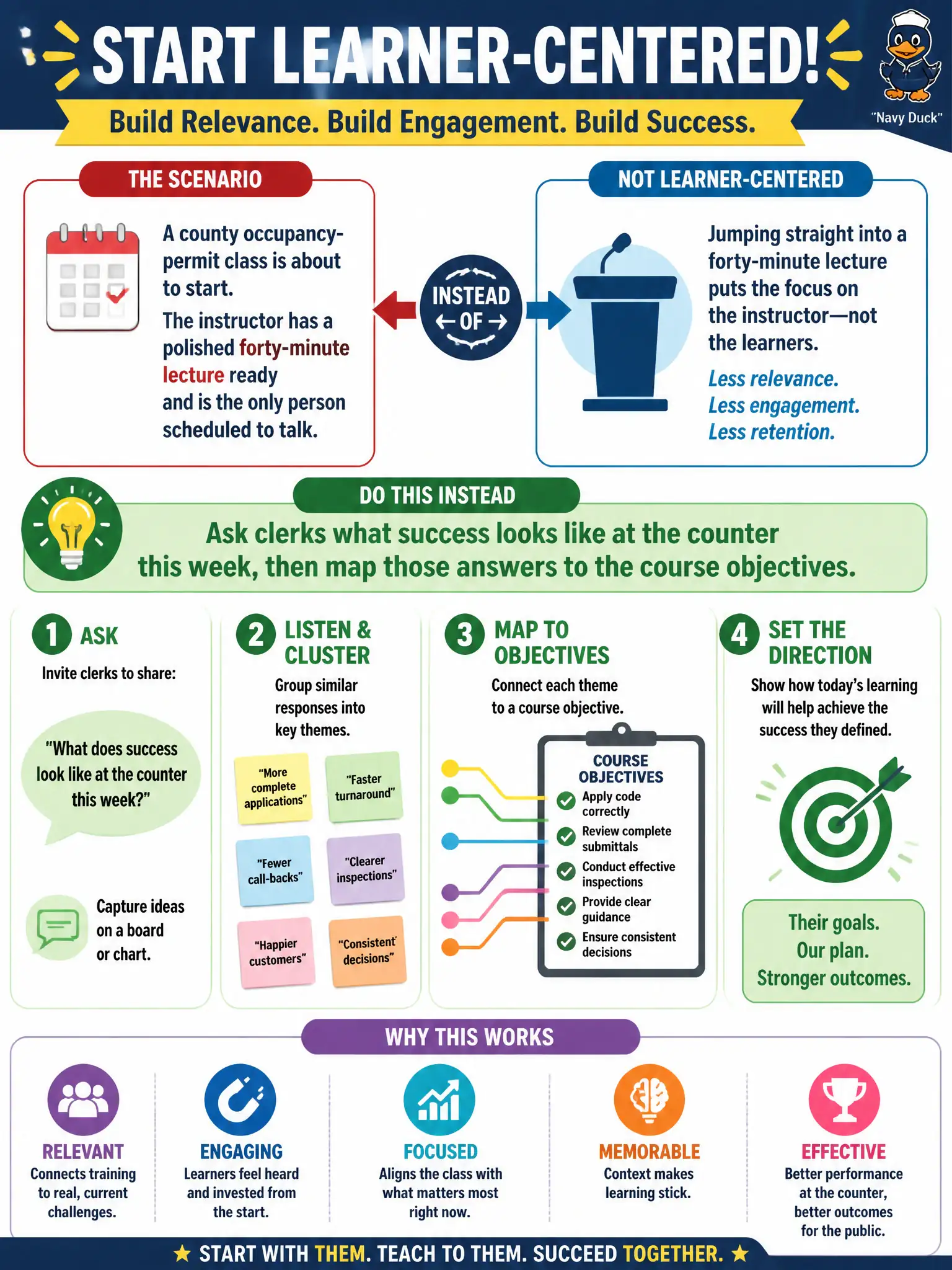
A county occupancy-permit class is about to start. The instructor has a polished forty-minute lecture ready and is the only person scheduled to talk. What learner-centered opening should the instructor use instead?
Select an answer to reveal the explanation.
Short Explanation
A class that starts as a one-person concert is already off the rails. Ask what “a good week at the occupancy counter” looks like, then hang those answers on the objectives. Now the clerks own the map instead of watching a tour guide talk.
Full Explanation
Learner-centered openings elicit what success looks like for participants and then map those answers to course objectives. For a county occupancy-permit class, asking clerks what success looks like at the counter this week before diving into a polished lecture makes their municipal work the starting point. The instructor still teaches the designed content, but engagement begins from learner reality rather than from a monologue.
Delivering the full lecture first so clerks hear every vendor screen before anyone speaks fails by concept as instructor-centered sequencing that delays learner voice. Asking clerks to remain silent until the final quiz fails by suppressing contribution that could guide emphasis. Starting with the instructor’s career story before any occupancy content fails when it centers the instructor’s biography instead of learner job success and objectives.
Exam caveat: CTT+ learner-centered openings favor eliciting learner success criteria and linking them to design—not long instructor monologues first.
Operational check: collect two or three counter-success statements; explicitly map each to a published objective; then begin the first occupancy activity with that map visible to the room.