
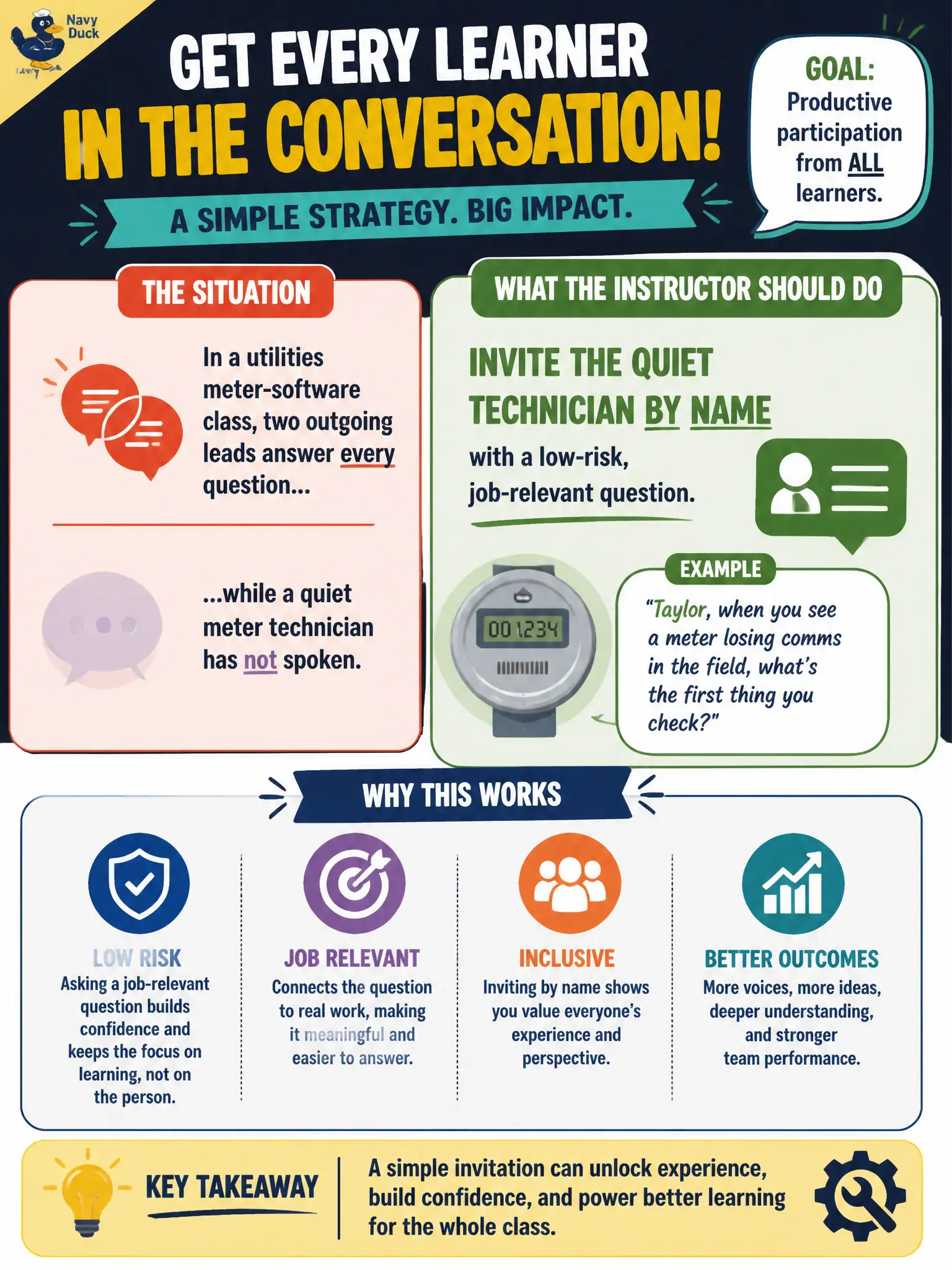
In a utilities meter-software class, two outgoing leads answer every question while a quiet meter technician has not spoken. The instructor wants productive participation from all learners. What should the instructor do?
Select an answer to reveal the explanation.
Short Explanation
If only the two people with the loudest horns get the mic, the rest of the yard never learns to talk. A quiet meter tech needs a named, easy on-ramp—not a pop quiz under stadium lights. Invite, don’t ambush, and don’t pretend silence is participation.
Full Explanation
Productive participation from all learners means inviting quiet contributors with low-risk, job-relevant prompts—not only rewarding the loudest voices. In a utilities meter-software class, when two outgoing leads answer everything, the instructor should invite the quiet meter technician by name with a manageable, work-related question. That draws the technician in without turning participation into a high-stakes interrogation.
Keeping rewards only for loud leads so the technician “learns by listening” fails by concept: listening-only status permanently excludes practice and diagnostic evidence. Cold-calling with a high-stakes certification item in front of the crew fails by raising threat and may shut the technician down further. Removing the technician from the roster for not volunteering early fails as punitive exclusion rather than facilitation.
Exam caveat: CTT+ participation items reward inclusive, low-risk invitations—not dominance by extroverts or punitive removal.
Operational check: prepare one easy, job-real question for the quiet technician; invite by name; affirm the contribution; then rotate so leads do not reclaim every subsequent answer. In civic public-training settings, that judgment protects both learner dignity and the municipality’s duty to leave staff actually able to perform the job after class—not merely to finish slides or keep a schedule looking tidy.