
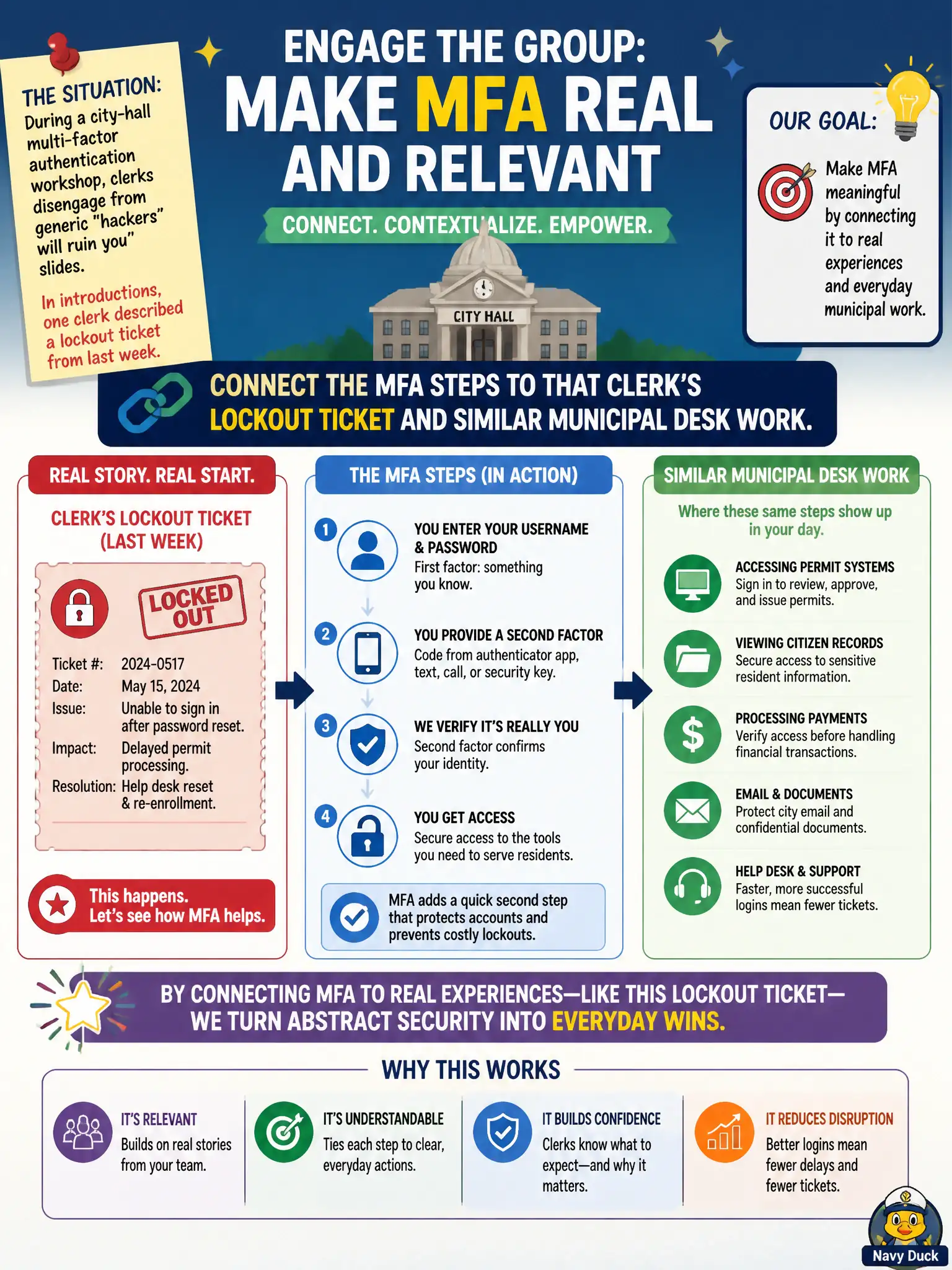
During a city-hall multi-factor authentication workshop, clerks disengage from generic “hackers will ruin you” slides. In introductions, one clerk described a lockout ticket from last week. How should the instructor engage the group?
Select an answer to reveal the explanation.
Short Explanation
Generic scare posters bounce off like a “wet floor” sign in a hallway everyone already walks. Hook the MFA clicks to last week’s lockout ticket and the room leans in. Personal beats theatrical every time.
Full Explanation
Engagement rises when instructors personalize content to learners’ job reality. In a city-hall MFA workshop, connecting MFA steps to a clerk’s recent lockout ticket and similar municipal desk work beats generic “hackers will ruin you” slides that cause disengagement. Personalization uses information already offered in introductions to make security skills concrete for counter staff.
Repeating vendor threat slides louder so generic risk creates engagement fails by concept: volume does not fix relevance. Skipping MFA practice to debate dropping passwords entirely fails by abandoning the skill objective for speculative policy talk. Calling only on IT staff so business clerks are not asked to relate steps to their counters fails as favoritism and leaves the primary audience disengaged.
Exam caveat: CTT+ motivation/engagement items favor linking content to learners’ actual municipal work examples.
Operational check: reuse the lockout-ticket example while demonstrating MFA unlock steps; ask two non-IT clerks how the same failure appears at their desks; then run practice on the city’s portal flow. In civic public-training settings, that judgment protects both learner dignity and the municipality’s duty to leave staff actually able to perform the job after class—not merely to finish slides or keep a schedule looking tidy.