
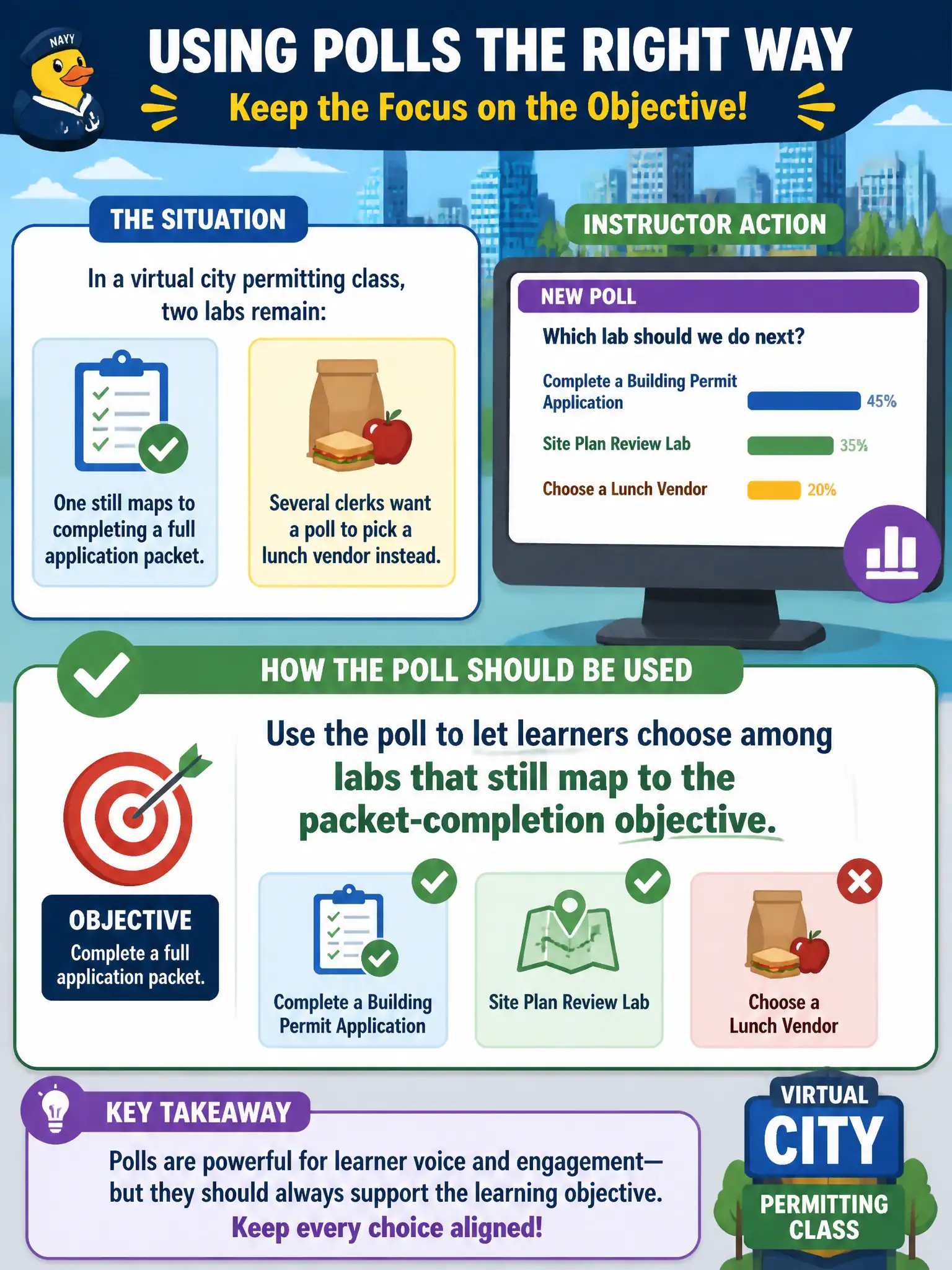
In a virtual city permitting class, two labs remain: one still maps to completing a full application packet, and several clerks want a poll to pick a lunch vendor instead. The instructor is about to launch a poll. How should that virtual tool be used?
Select an answer to reveal the explanation.
Short Explanation
A poll is a steering wheel, not a party game. If the destination is a complete permit packet, the vote has to be among routes that still get there. Picking lunch with the same button is just a snack break wearing a learning-tool costume.
Full Explanation
Virtual tools such as polls should help learners choose among activities that still map to the learning objective. In a city permitting class with labs remaining, using a poll so clerks choose among labs that still support completing a full application packet keeps autonomy inside instructional boundaries. The tool serves objective-aligned choice, not entertainment or lunch logistics.
Running a lunch-vendor poll first because any poll raises energy fails by concept when the poll ignores the packet objective and burns instructional time. Skipping polling and lecturing both labs so the tool never influences practice fails by discarding a useful engagement method that could still serve the objective. Letting the loudest clerk pick any remaining demo, including off-objective content, fails by substituting dominance for designed outcomes.
Exam caveat: CTT+ tool-use items often contrast objective-aligned choice with novelty polls or laissez-faire selection.
Operational check: build poll options that are all packet-completion labs; exclude lunch or off-topic choices; launch the poll; run the winning lab and confirm the packet objective is still the success measure. In civic public-training settings, that judgment protects both learner dignity and the municipality’s duty to leave staff actually able to perform the job after class—not merely to finish slides or keep a schedule looking tidy.