
Quiet virtual grant analysts rarely speak but type useful notes in chat. How should the instructor optimize contribution?
Select an answer to reveal the explanation.
Short Explanation
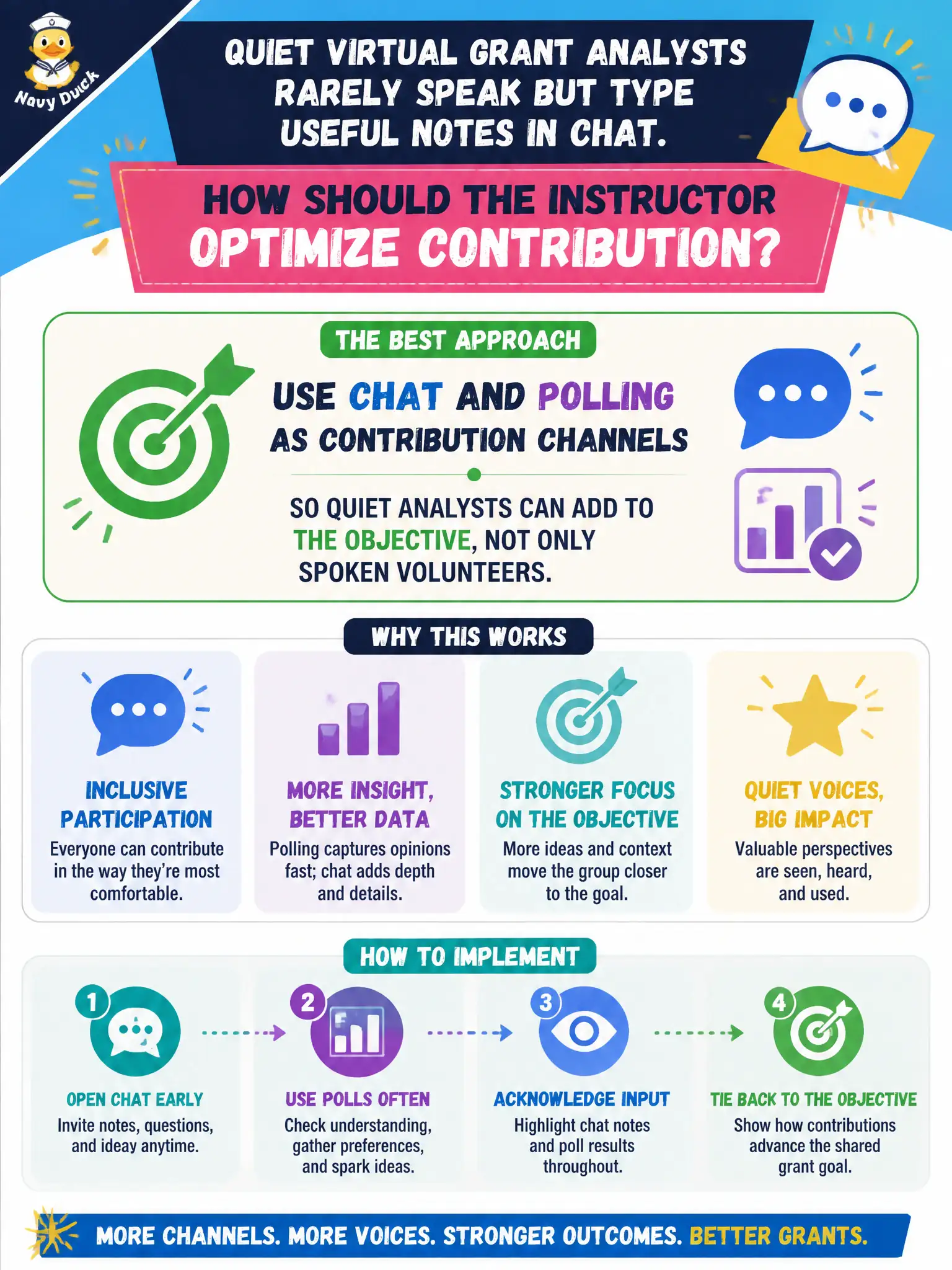
Chat is a second microphone for people who hate the red unmute button. Pull those notes and poll the group so the quiet analysts still count. Killing chat just rewards the loudest tiles.
Full Explanation
Instructors optimize contribution by opening channels that fit learner preferences while still serving objectives. Quiet virtual grant analysts who type useful notes in chat should be able to contribute through chat and polling, not only through spoken volunteers. Multiple contribution channels increase evidence of understanding and keep municipal virtual sessions inclusive of different communication styles.
Requiring every comment to be spoken and treating chat as off-channel noise fails by concept: it silences analysts who already contribute productively in writing. Disabling chat so the session stays “lecture-clean” fails by removing a valid participation path. Running polls only as toys between modules fails when polls could gather answers that advance the grant objective.
Exam caveat: CTT+ virtual engagement items reward using chat/polls as real contribution channels tied to objectives.
Operational check: pose an objective-linked prompt in chat, read selected responses aloud, run a poll on the same point, and credit typed contributions equally with spoken ones when advancing. In civic public-training settings, that judgment protects both learner dignity and the municipality’s duty to leave staff actually able to perform the job after class—not merely to finish slides or keep a schedule looking tidy.