
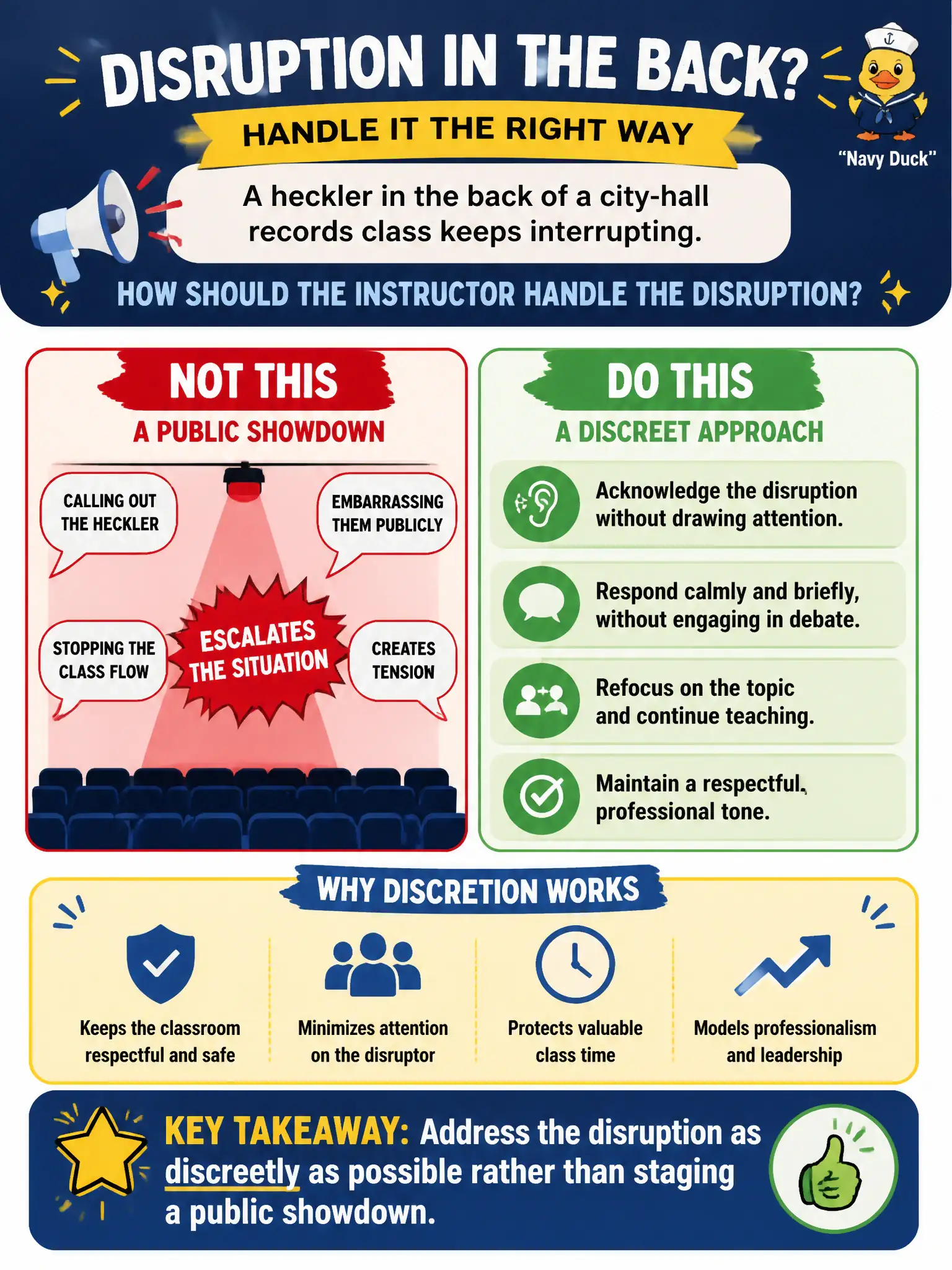
A heckler in the back of a city-hall records class keeps interrupting. How should the instructor handle the disruption?
Select an answer to reveal the explanation.
Short Explanation
A heckler wants a spotlight. Give a quiet redirect, not a duel. Lectern debates and shame slides hand over the stage; ignoring it lets the interruptions run the class.
Full Explanation
Disruptions should be handled as discreetly as possible so the learning climate stays intact and the heckler is not rewarded with a public stage. In a city-hall records class, addressing a heckler quietly—proximity, private words, brief redirect—beats a lectern showdown. Discretion protects the majority’s focus on municipal records skills and avoids turning the room into an audience for conflict.
Debating the heckler from the lectern until the room chooses a side fails by concept: it amplifies the disruption and polarizes learners. Ignoring every interruption so the heckler “gets bored” fails when continued interruption keeps blocking instruction. Naming and shaming the heckler on a slide for the recording fails as public humiliation that damages climate and may escalate behavior.
Exam caveat: CTT+ disruption items emphasize discreet handling first. Public showdowns are classic wrong answers.
Operational check: move near the heckler, use a quiet private redirect tied to the records task, resume teaching; if behavior continues, escalate per city training policy privately—still without a podium debate. In civic public-training settings, that judgment protects both learner dignity and the municipality’s duty to leave staff actually able to perform the job after class—not merely to finish slides or keep a schedule looking tidy.