
A novice permit clerk is paired with a senior mapper on a GIS query. How should the instructor structure that peer work?
Select an answer to reveal the explanation.
Short Explanation
Pair work is a tandem bike, not a trailer. The novice has to pedal some of the GIS query. Silent watching teaches the senior’s speed, not the clerk’s skill.
Full Explanation
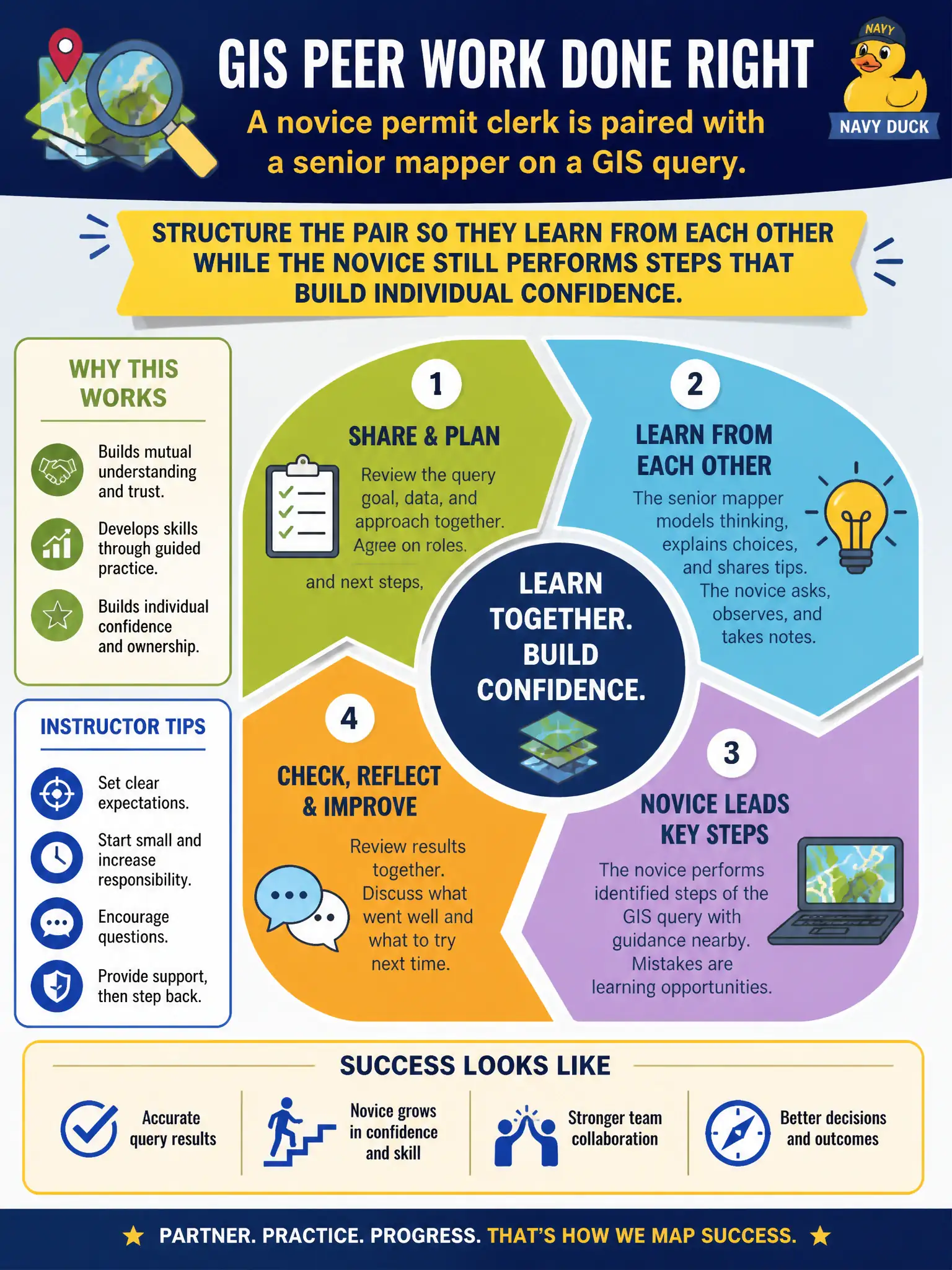
Peer learning should be structured so partners learn from each other while each learner still performs steps that build individual confidence. Pairing a novice permit clerk with a senior mapper on a GIS query works when the novice executes meaningful steps—not when the senior silently completes the work. Structure protects both collaboration and individual competence for municipal permitting work.
Letting the senior mapper complete the query while the novice watches silently fails by concept: observation alone does not build the novice’s performance confidence. Grading only the senior so the novice feels no pressure fails by removing accountability and practice from the learner who needs skill growth. Separating them if the novice asks any questions fails by punishing help-seeking and ending productive peer learning.
Exam caveat: CTT+ peer-learning items reward structured mutual learning with individual practice—not expert demonstration while novices spectate.
Operational check: assign roles so the novice drives the mouse for defined steps while the senior coaches with questions; require the novice to complete a final query independently before leaving the pair activity; credit both for collaborative process and individual performance.