
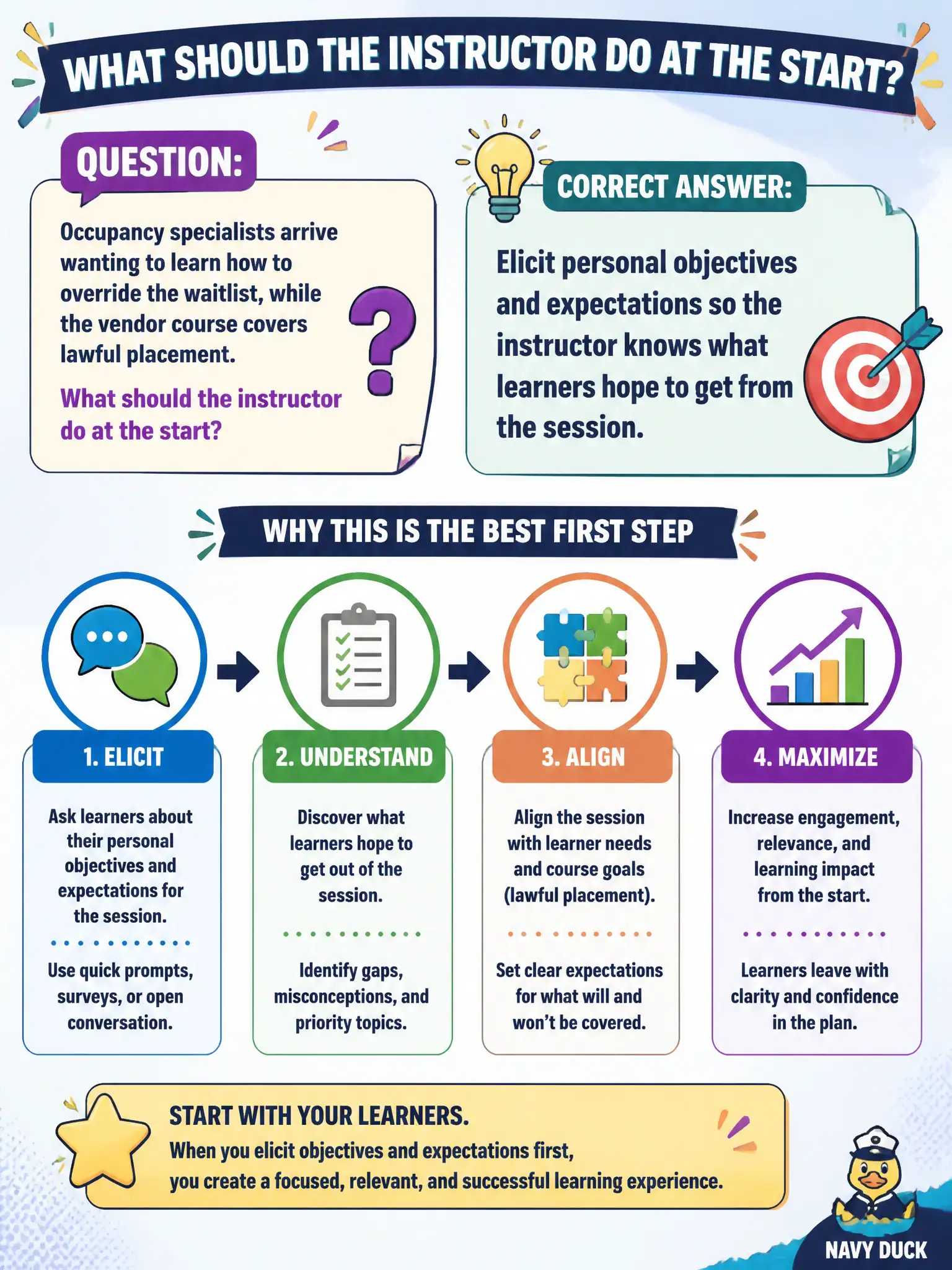
Occupancy specialists arrive wanting to learn how to override the waitlist, while the vendor course covers lawful placement. What should the instructor do at the start?
Select an answer to reveal the explanation.
Short Explanation
People walk in with their own shopping list. Ask for it. You cannot reconcile a waitlist-override wish you never heard, and promising an illegal shortcut is not intake.
Full Explanation
At the start of a session, instructors elicit personal objectives and expectations so they understand what learners hope to gain from the offering. Occupancy specialists arriving wanting override skills while the vendor course covers lawful placement still need that elicitation. Hearing expectations early lets the instructor plan reconciliation with design and prevents silent mismatch between hope and the published municipal curriculum.
Assuming the vendor outline is everyone’s goal and skipping intake fails by concept: unspoken personal objectives still shape engagement, questions, and mid-day frustration. Promising to teach the override even if outside course design fails by committing to content the class may not authorize or that conflicts with lawful placement rules. Telling specialists that personal goals are irrelevant in public housing work fails as dismissive and not learner-centered facilitation.
Exam caveat: eliciting expectations is distinct from automatically teaching whatever was requested. First hear; then reconcile with course design.
Operational check: ask specialists what they came to learn; park override requests visibly; confirm the published lawful-placement objectives; proceed to reconciliation rather than silent assumption.