
Occupancy specialists expect to be taught how to deny appeals, but the published objective is lawful process. What should the instructor do?
Select an answer to reveal the explanation.
Short Explanation
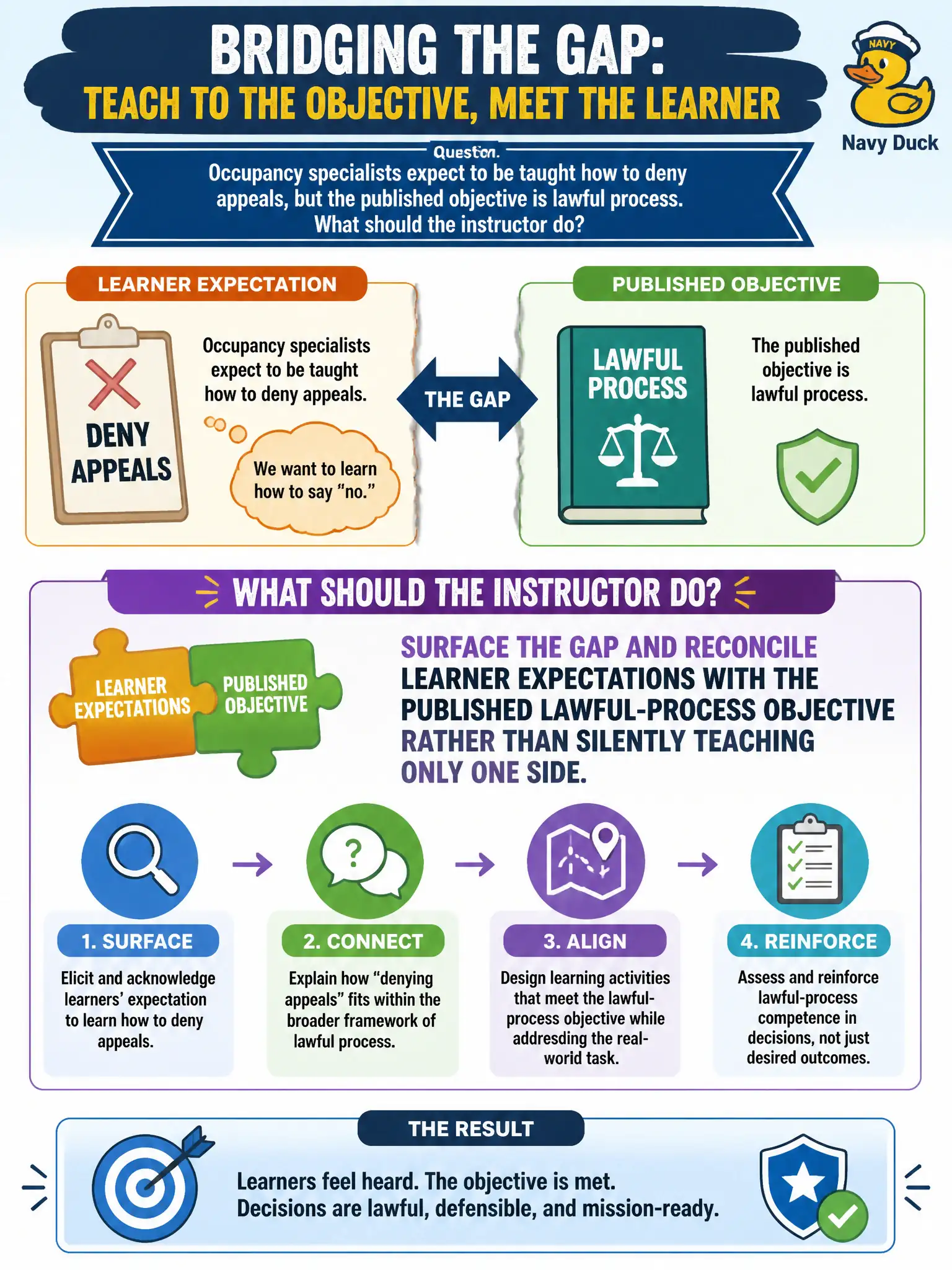
Two maps, one trip. Hang both on the wall—the “deny appeals” wish and the lawful-process objective—and show how the designed path still serves the job. Quietly teaching only one side leaves a fight in the parking lot.
Full Explanation
When learner expectations conflict with published objectives, the instructor surfaces the gap and reconciles expectations with the course design rather than silently teaching only one side. Occupancy specialists who expect denial shortcuts while the objective is lawful process need that reconciliation so municipal training stays aligned, transparent, and defensible. Acknowledgment plus redirection protects both engagement and integrity of the designed outcomes.
Silently teaching only the denial shortcuts requested fails by concept: it abandons published lawful-process objectives and can expose the city to improper practice. Canceling the class until legal rewrites objectives fails as an overreaction that abandons instruction instead of facilitating alignment in the room. Ignoring the request and never mentioning appeals fails by leaving the expectation gap unaddressed so frustration returns mid-session and trust drops.
Exam caveat: CTT+ distinguishes eliciting expectations from rewriting design on the fly. Reconcile openly; do not secretly substitute unauthorized content.
Operational check: name both the specialists’ denial interest and the lawful-process objective; explain what will and will not be covered; if appeals touch the objective, cover lawful process—not unauthorized shortcuts—and park extras for the policy owner.