
After a public-works work-order class, how can the instructor evaluate whether the completeness objective transferred to the job?
Select an answer to reveal the explanation.
Short Explanation
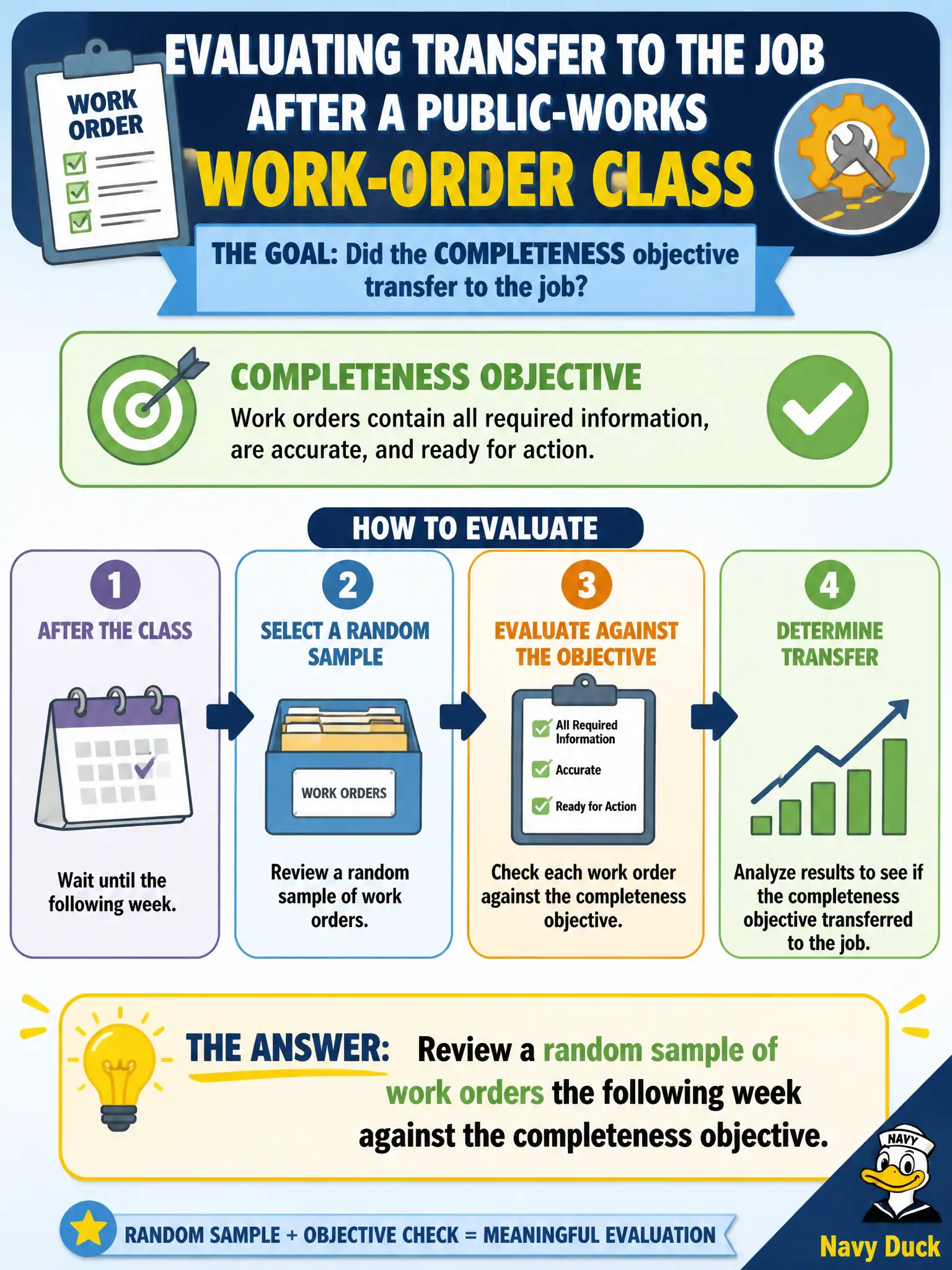
Did the tickets get more complete next week? Pull a sample and check against the objective. 'Pretty good' and 'favorite tech' are not transfer evidence.
Full Explanation
After a public-works work-order class, evaluating whether the completeness objective transferred to the job means reviewing a random sample of work orders the following week against the completeness objective. Transfer evaluation looks at workplace artifacts, not classroom applause. Counting how many learners said the class was pretty good measures reaction only. Comparing completeness only to the instructor’s favorite technician introduces bias and a moving target. Waiting a year and surveying whether anyone remembers the room fails timely transfer measurement. Exam caveat: sample real work products soon after training against the same objective. Operational check: pull a random sample of post-class work orders, score them with the completeness checklist, report transfer rates to public-works leadership, coach units with recurring gaps, and archive the sample results with the course evaluation. Keep the published objective visible on every rubric and report so raters do not drift into convenience metrics. Confirm with a second reviewer when stakes are high that the evidence matches the objective rather than a proxy such as speed, smiles, or familiarity. Retain scored artifacts with the course file per city retention rules and brief only stakeholders with a need to know.