
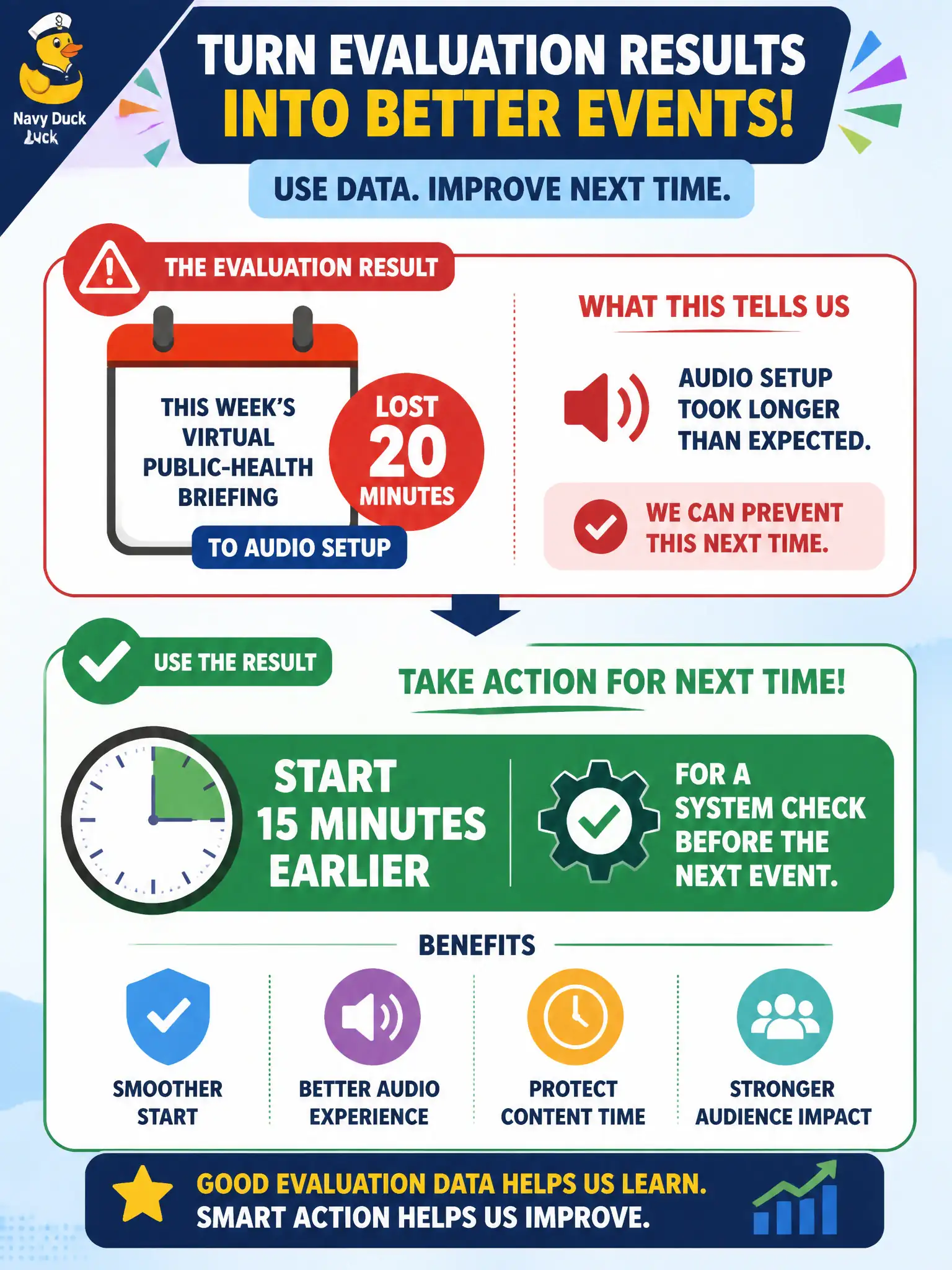
This week's virtual public-health briefing lost 20 minutes to audio setup. How should the instructor use that evaluation result?
Select an answer to reveal the explanation.
Short Explanation
Twenty minutes of dead air is a setup problem, not a mystery. Next class, show up early and check the audio before learners join. Hope is not a process change.
Full Explanation
When this week’s virtual public-health briefing lost 20 minutes to audio setup, the instructor should use that evaluation result by starting 15 minutes earlier for a system check before the next event. Environment and setup findings should change pre-class procedures. Keeping the same start time and hoping audio works fails to act on the evaluation. Skipping system checks because they steal instructional time ignores that failed audio steals more time. Switching to an unannounced in-person class with no notice to learners is an unjustified modality leap that creates new access problems. Exam caveat: convert setup failures into earlier tech checks. Operational check: calendar a T-minus-15 audio/video check, verify mic, speakers, and screen share with a co-host, confirm public-health presenters can be heard, and note in the next after-action whether the lost-time problem was eliminated. Keep the published objective visible on every rubric and report so raters do not drift into convenience metrics. Confirm with a second reviewer when stakes are high that the evidence matches the objective rather than a proxy such as speed, smiles, or familiarity. Store artifacts under the city’s retention schedule and brief only those with a need to know.