
A peer will observe a city open-meetings class. What should the delivery-evaluation form focus on?
Select an answer to reveal the explanation.
Short Explanation
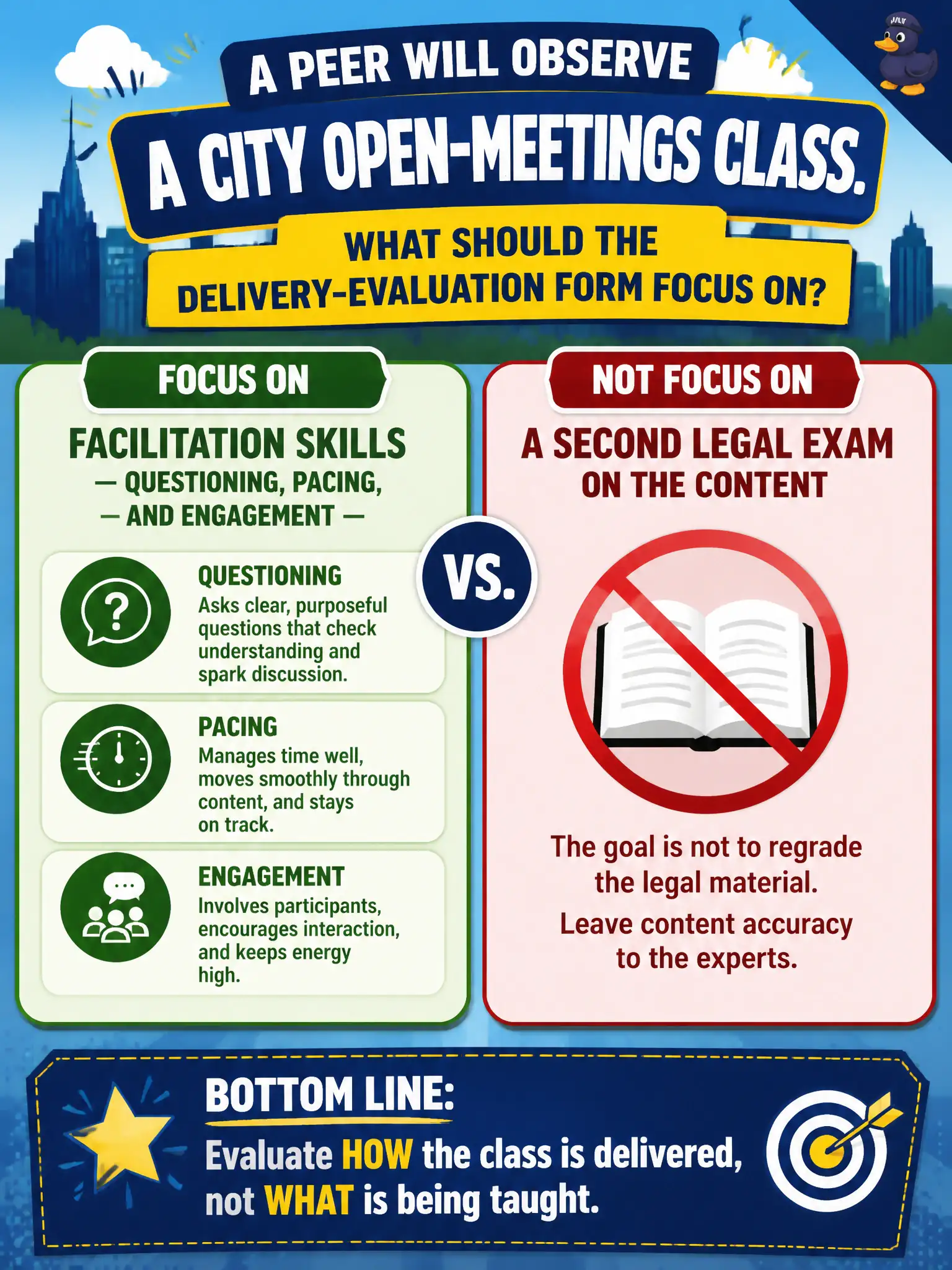
The peer is watching how the class is run, not grading the statute. Questioning, pacing, and whether people stayed in the work are delivery. Rewriting the law or checking party cards is the wrong form.
Full Explanation
When a peer will observe a city open-meetings class, the delivery-evaluation form should focus on facilitation skill—questioning, pacing, and engagement—not a second legal exam on the content. Peer observation of delivery assesses how the instructor teaches, not whether the observer would rewrite statutes. Scoring whether the observer would rewrite the state’s open-meetings statute misses delivery evaluation. Counting how many statutes the instructor recited from memory without a slide measures recall theater, not facilitation quality. Checking whether the instructor’s political party matches the city council’s is irrelevant and improper. Exam caveat: delivery forms target facilitation behaviors. Operational check: use a rubric with questioning, pacing, engagement, and clarity items; have the peer score those during the class; debrief with specific facilitation examples; and leave legal-content accuracy review to a separate subject-matter process if needed. Keep the published objective visible on every rubric and report so raters do not drift into convenience metrics. Confirm with a second reviewer when stakes are high that the evidence matches the objective rather than a proxy such as speed, smiles, or familiarity.