
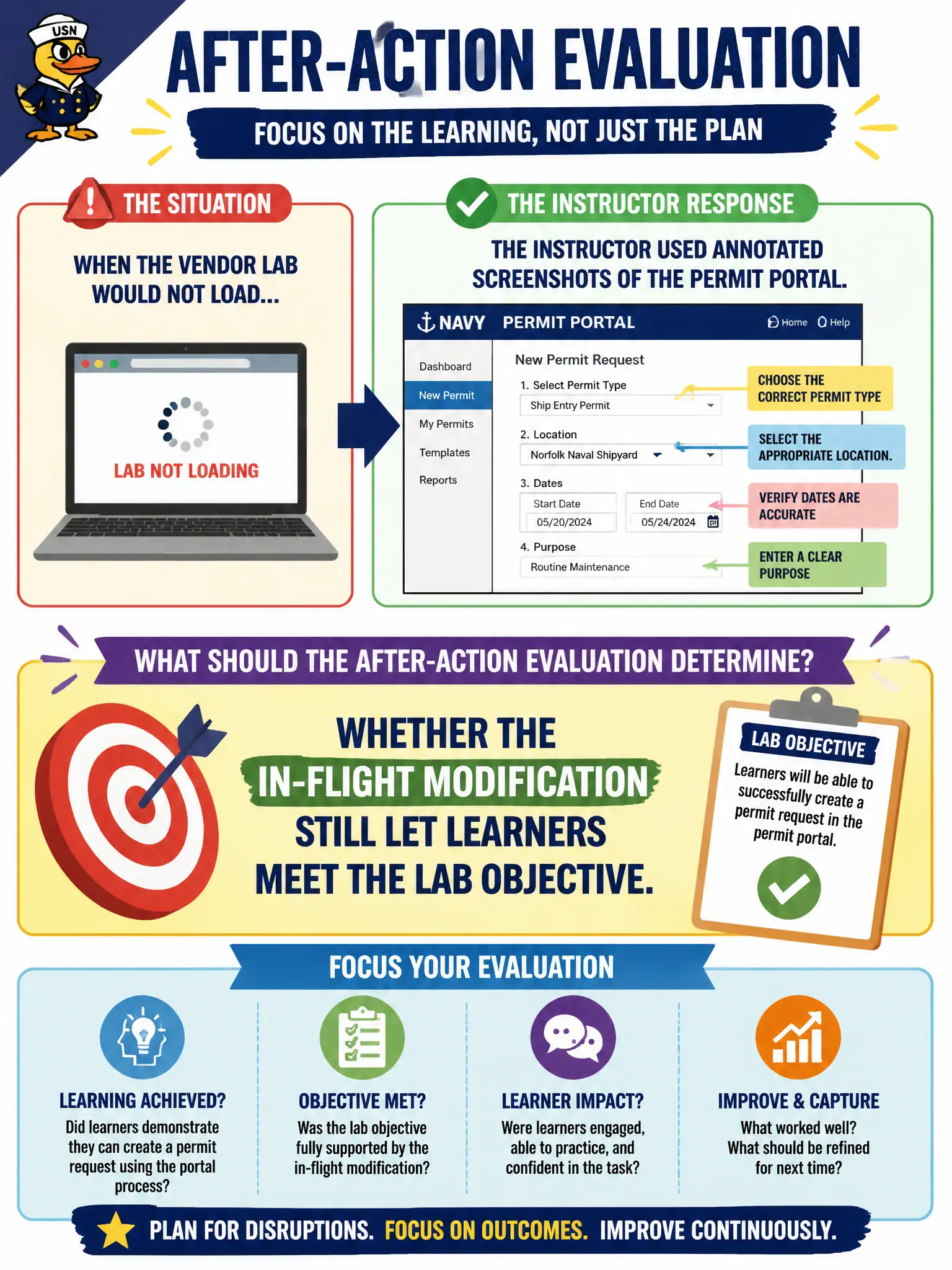
When the vendor lab would not load, the instructor used annotated screenshots of the permit portal. What should the after-action evaluation determine?
Select an answer to reveal the explanation.
Short Explanation
Skipping a dead lab for screenshots is a live save — now check whether clerks still hit the lab objective. Logo placement and automatic failure grades miss that question. Judge the workaround by the outcome.
Full Explanation
When the vendor lab would not load and the instructor used annotated screenshots of the permit portal, after-action evaluation should determine whether the in-flight modification still let learners meet the lab objective. Contingency materials are judged by learning outcomes, not by whether the original lab ran. Asking whether screenshots are always better than labs, regardless of objective, overgeneralizes from one incident. Checking whether the vendor’s logo still appeared in the footer is irrelevant to mastery. Scoring the class as an automatic failure because the lab was skipped ignores whether the workaround produced objective-aligned performance. Exam caveat: evaluate workarounds by objective attainment. Operational check: compare screenshot-lab performance to the portal checklist, note which steps could and could not be practiced, recommend vendor stability fixes, and decide whether screenshots remain an approved backup for future permitting classes. Keep the published objective visible on every rubric and report so raters do not drift into convenience metrics. Confirm with a second reviewer when stakes are high that the evidence matches the objective rather than a proxy such as speed, smiles, or familiarity.