
Waitlist-error training for library circulation staff produced cheerful reaction cards. What additional evaluation is appropriate when the city needs transfer evidence?
Select an answer to reveal the explanation.
Short Explanation
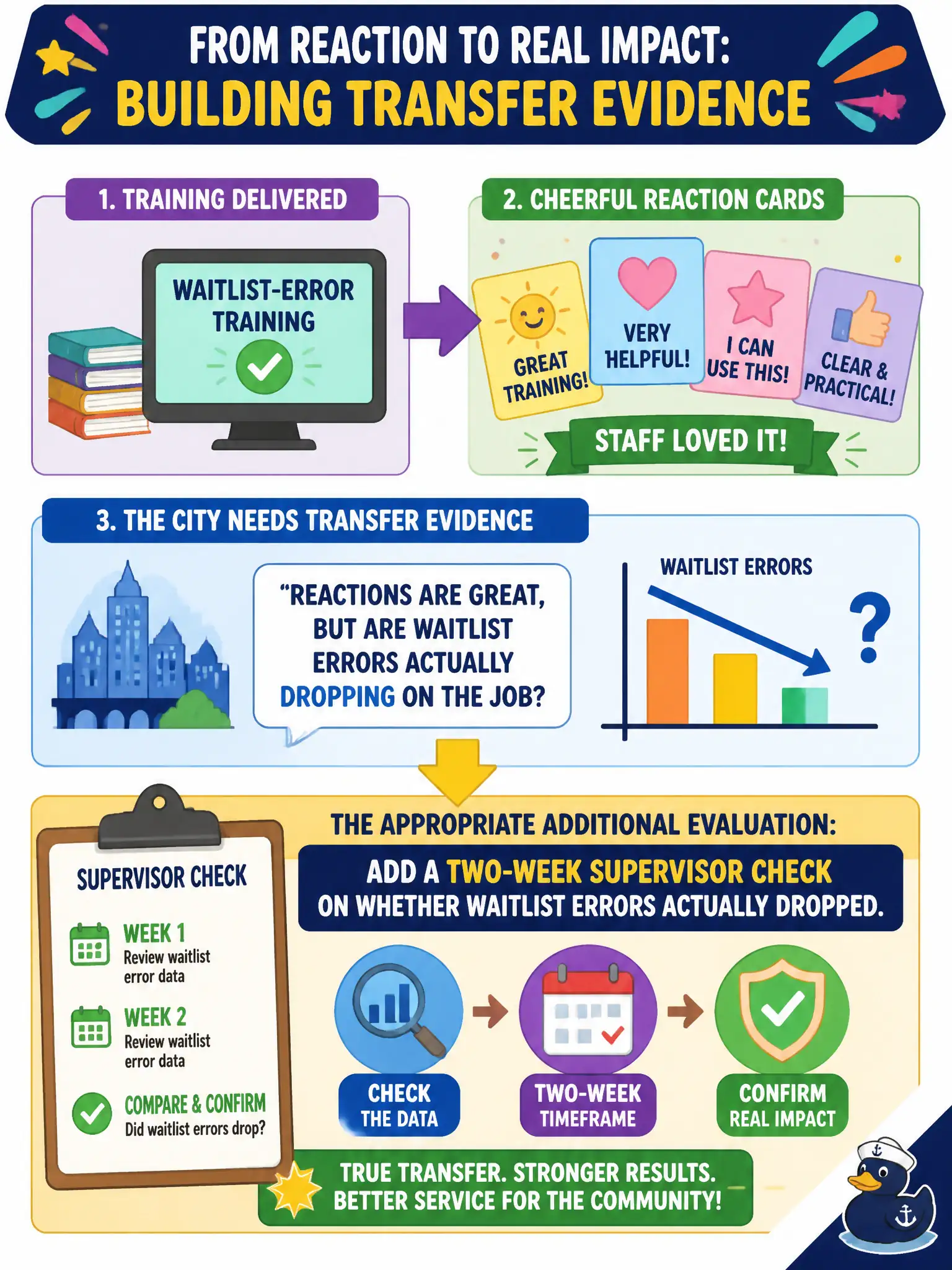
Happy cards say they liked the hour — not that waitlist errors dropped. Ask supervisors two weeks later whether the desk actually got cleaner. That is still trainer evaluation, not a university study.
Full Explanation
Waitlist-error training for library circulation staff that produced cheerful reaction cards still needs additional evaluation when the city requires transfer evidence—such as a two-week supervisor check on whether waitlist errors actually dropped. Reaction is only one level; behavior on the job answers the civic transfer question. Stopping at reaction cards because smile sheets are the "only legitimate level" misunderstands evaluation depth. Commissioning a multi-year academic study before reporting anything is disproportionate for an operational transfer check. Replacing evaluation with a pizza party if cards were positive abandons measurement entirely. Exam caveat: add a feasible transfer check when the city needs on-the-job evidence. Operational check: define the waitlist-error metric with circulation supervisors, sample records two weeks post-class, compare to baseline, report transfer results alongside reaction data, and target coaching where errors persist. Keep the published objective visible on every rubric and report so raters do not drift into convenience metrics. Confirm with a second reviewer when stakes are high that the evidence matches the objective rather than a proxy such as speed, smiles, or familiarity.