
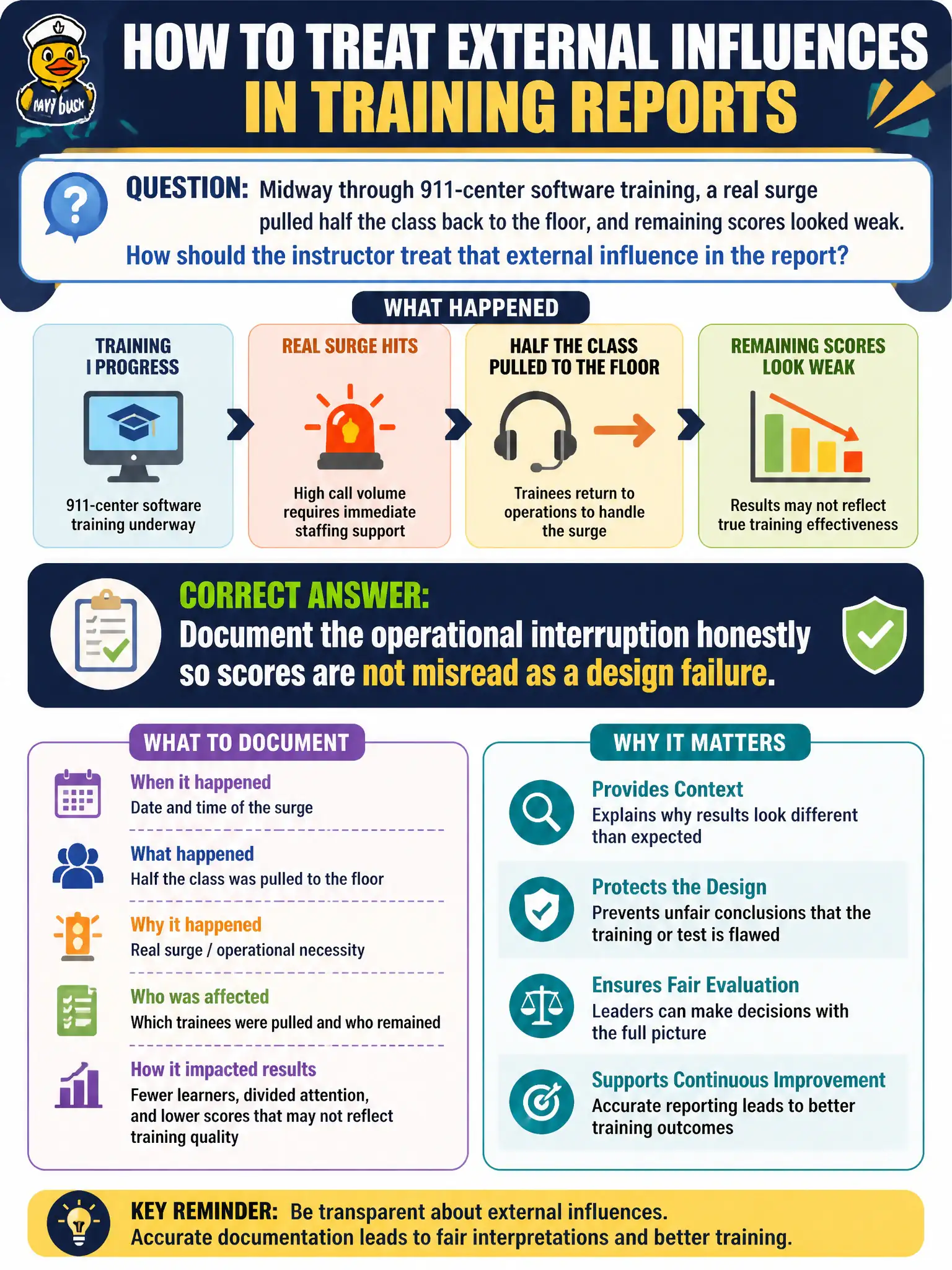
Midway through 911-center software training, a real surge pulled half the class back to the floor, and remaining scores looked weak. How should the instructor treat that external influence in the report?
Select an answer to reveal the explanation.
Short Explanation
When half the 911 class runs to a real call, that is the story behind the scores. Write the surge down so nobody treats a thin roster like a bad course. Fake scores or a vanished class help no one.
Full Explanation
Midway through 911-center software training, when a real surge pulled half the class back to the floor and remaining scores looked weak, the instructor should document the operational interruption honestly so scores are not misread as a design failure. External operational influences must appear in evaluation reports for emergency-service settings. Reporting scores as design failure while omitting the surge misleads curriculum owners. Inventing makeup scores for dispatched learners falsifies the roster. Deleting the class from records because municipal work interrupted training erases a real event the city needs to understand. Exam caveat: tell the truth about interruptions when interpreting results. Operational check: record surge time, headcount pulled, and impact on practice; present scores with that context; schedule makeup for pulled telecommunicators; and avoid labeling the course a design failure solely on interrupted-day data. Keep the published objective visible on every rubric and report so raters do not drift into convenience metrics. Confirm with a second reviewer when stakes are high that the evidence matches the objective rather than a proxy such as speed, smiles, or familiarity.