
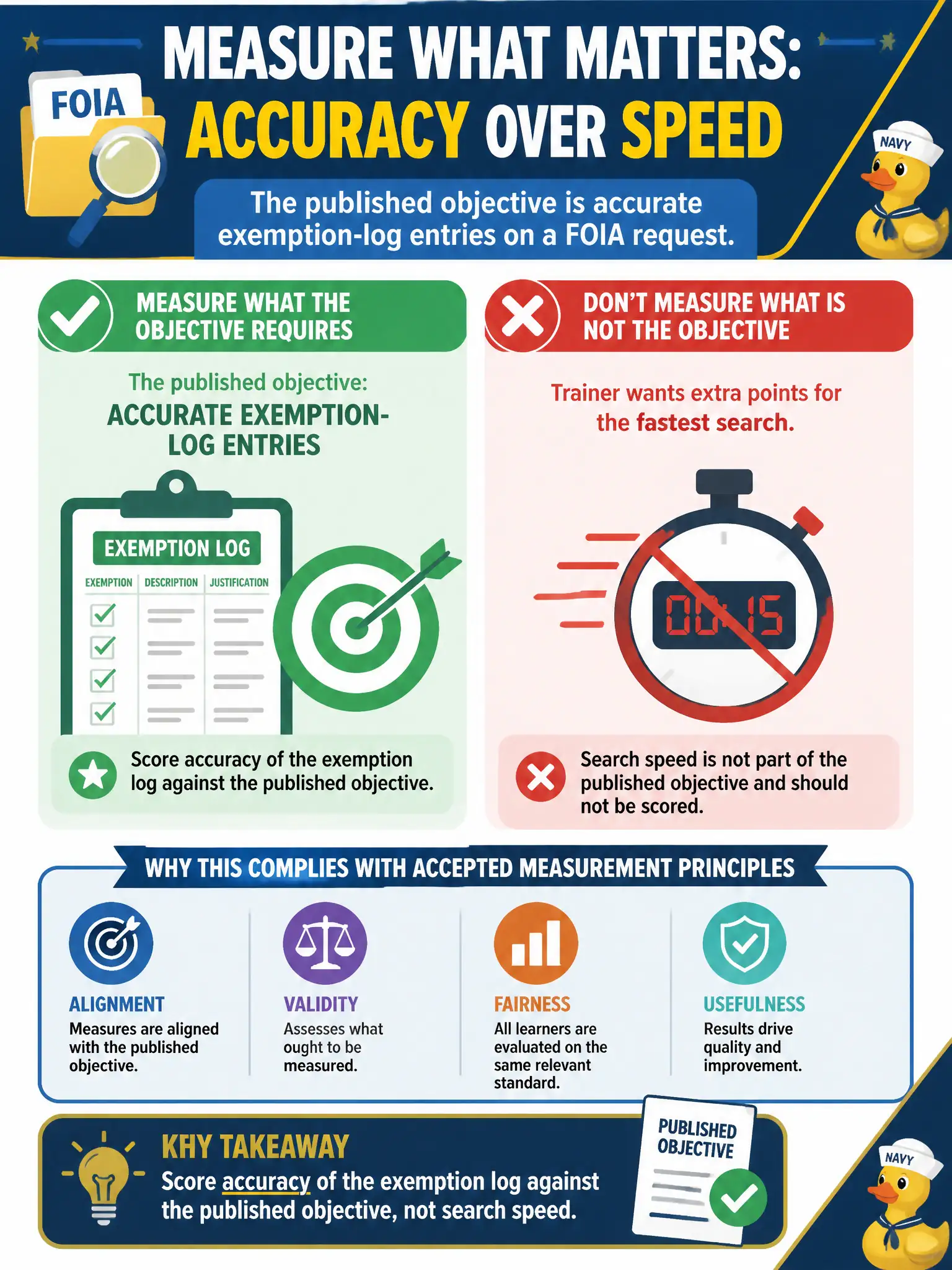
The published objective is accurate exemption-log entries on a FOIA request. A trainer wants extra points for the fastest search. What complies with accepted measurement principles?
Select an answer to reveal the explanation.
Short Explanation
The objective said accurate log, not drag-race. Score the log. A stopwatch is a convenience, not a measurement principle.
Full Explanation
When the published objective is accurate exemption-log entries on a FOIA request, scoring must judge accuracy of the exemption log against that objective—not search speed—even if a trainer wants extra points for the fastest search. Accepted measurement principles keep scoring criteria aligned to the stated outcome. Grading search speed because a stopwatch is easier fails validity for an accuracy objective. Failing anyone who took notes during the search invents an unauthorized penalty unrelated to log accuracy. Combining speed and handwriting neatness into one unexplained score fails transparency and objective match. Exam caveat: do not add rogue criteria that the published objective does not authorize. Operational check: score exemption-log fields with an answer key, exclude stopwatch bonuses from the mastery decision, show clerks which accuracy criteria were used, and file the key with the assessment record. FOIA exemption logs protect withholdings that must be legally accurate; stopwatch bonuses and neatness scores are measurement contaminants when the published objective is log accuracy, not search theatrics. Keep the civic standard visible on the rubric so every rater and learner sees what "met" means.