
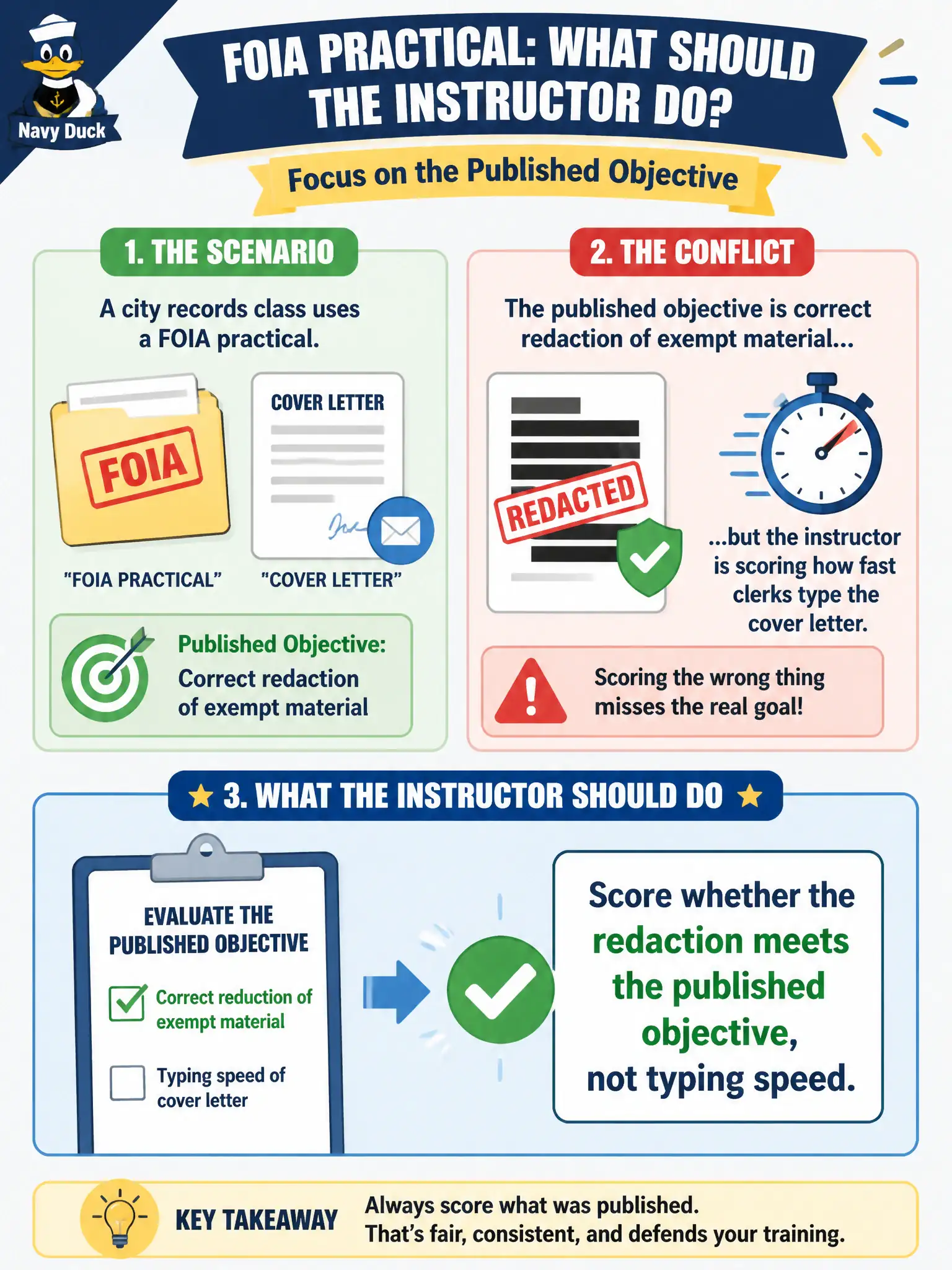
A city records class uses a FOIA practical. The published objective is correct redaction of exempt material, but the instructor is scoring how fast clerks type the cover letter. What should the instructor do?
Select an answer to reveal the explanation.
Short Explanation
If the target is a clean redaction, a stopwatch on the cover letter is the wrong ruler. Grade the skill the objective named. Speed is a different class.
Full Explanation
In a city records FOIA practical, the published objective is correct redaction of exempt material, so the instructor must score whether the redaction meets that objective—not how fast clerks type the cover letter. Measurement validity requires that scored criteria match the learning outcome the municipality published; speed on an adjacent clerical task is a different construct. Scoring typing speed because a faster clerk seems "more ready" fails the objective-alignment concept by substituting a convenient metric for the privacy-protecting skill the city funded. Dropping the practical for trivia on FOIA statute numbers fails performance measurement: recalling numbers is not demonstrating redaction. Grading only whether clerks finished before lunch fails both accuracy and objective match by turning a time race into a false competence signal. Exam caveat: when the stem gives a published objective, score that objective; do not invent a proxy like speed or packet finish time. Operational check: use a redaction rubric keyed to exempt-material handling, score each clerk’s practical against it, ignore cover-letter typing speed for the mastery decision, and retain the scored artifacts with the class file under city retention rules so records leadership can audit whether privacy skill—not typing pace—was certified.