
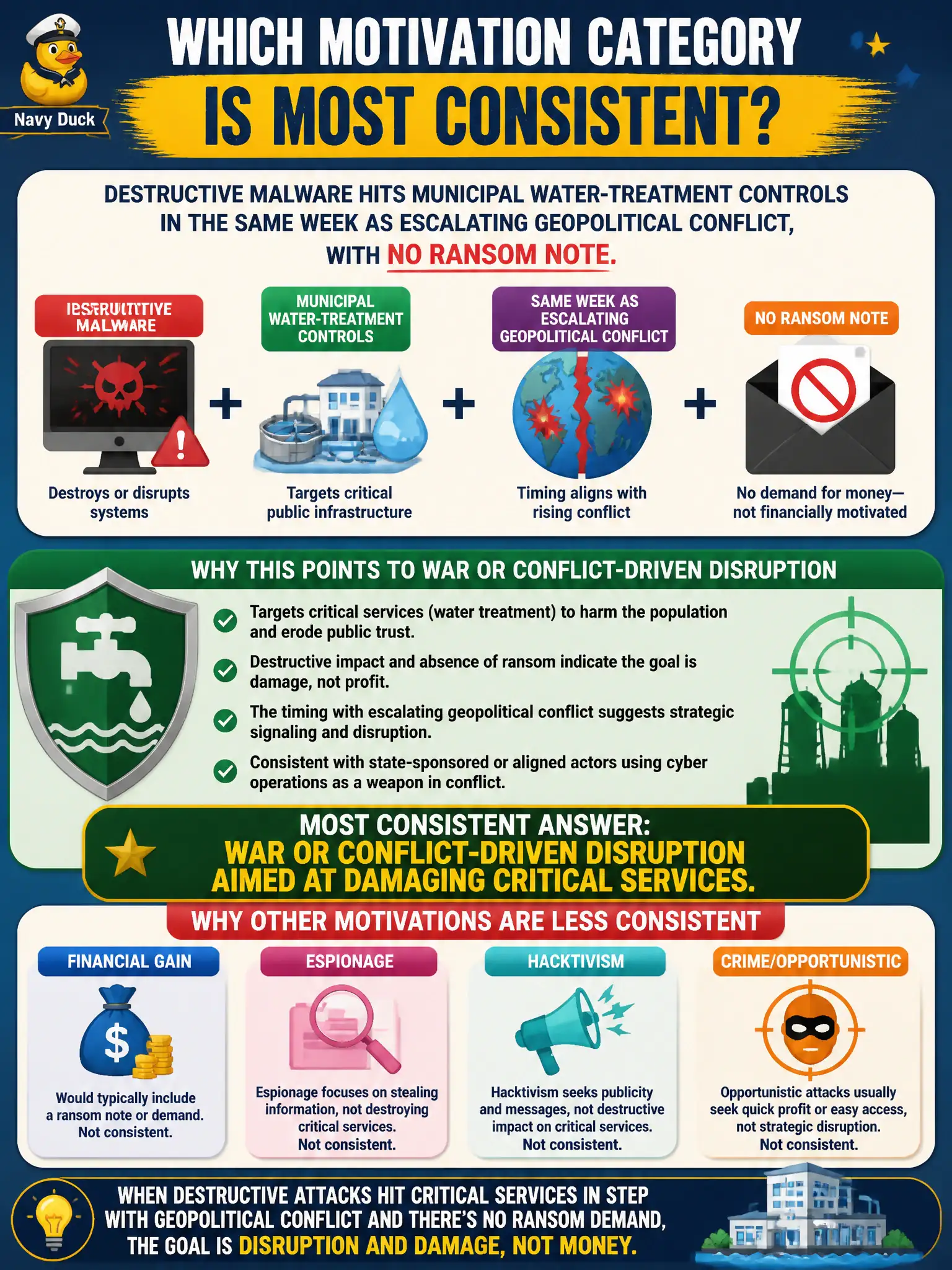
Destructive malware hits municipal water-treatment controls in the same week as escalating geopolitical conflict, with no ransom note. Which motivation category is most consistent?
Select an answer to reveal the explanation.
Short Explanation
No ransom, big impact on critical infrastructure, timed with geopolitical heat—that reads as conflict-driven disruption. A script kid tagging a homepage for laughs does not look like this. Treat the motive as wartime-style chaos against city services.
Full Explanation
Destructive malware against municipal water-treatment controls during escalating geopolitical conflict, with no ransom note, aligns with war or conflict-driven disruption. The objective is damaging critical services for strategic effect—denial, degradation, or coercion at a societal level—rather than collecting a cryptocurrency payment. Timing with geopolitical heat and focus on operational technology amplify that reading.
Casual vandalism by an unskilled attacker seeking website graffiti lacks destructive OT impact and strategic timing. Financial extortion identical to commodity ransomware affiliate playbooks would usually include ransom instructions and payment channels. Ethical disclosure intended to help the utility patch faster uses coordinated notification, not destructive malware in treatment controls.
Exam caveat: conflict/war motivations emphasize disruption or destruction of critical infrastructure without requiring a financial demand. Operational check: harden water-treatment OT with network segmentation, allowlists, immutable backups of control logic, out-of-band monitoring, and coordination with fusion centers when destructive activity coincides with geopolitical events; do not wait for a ransom note that may never arrive.