
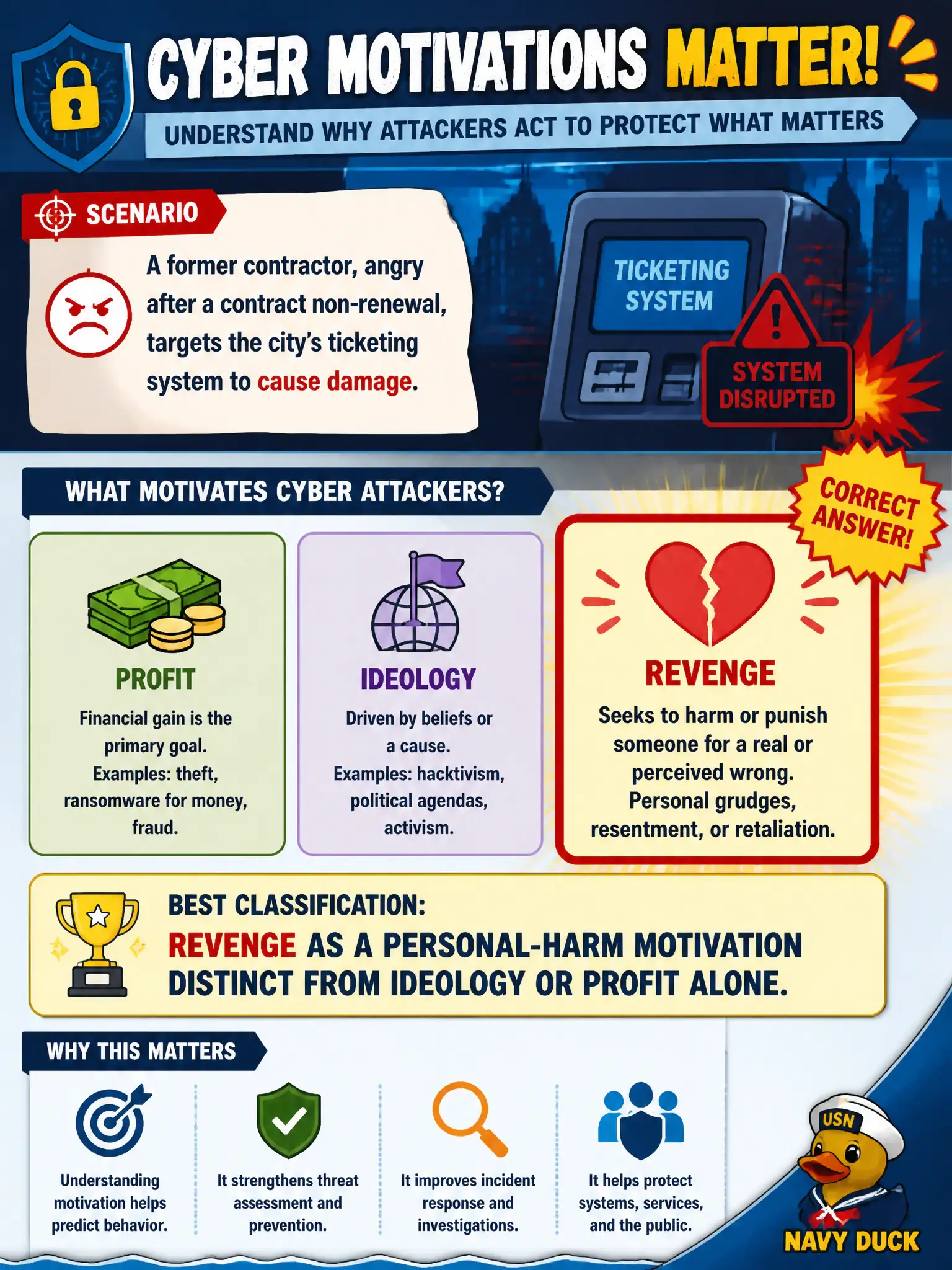
A former contractor, angry after a contract non-renewal, targets the city's ticketing system to cause damage. Which motivation best classifies this activity?
Select an answer to reveal the explanation.
Short Explanation
When the story starts with a cancelled contract and then a punch at the ticketing system, that is revenge territory. Personal payback is the driver—not a tidy bug-bounty write-up or a geopolitical war-room play. Motive labels matter when you decide monitoring and access-revocation priorities.
Full Explanation
A former contractor who attacks the city's ticketing system after a contract non-renewal illustrates revenge as a personal-harm motivation. The driver is grievance and intent to damage the organization or its operations, distinct from pure ideology, wartime strategy, or profit-seeking ransomware negotiation. Motive labeling matters because monitoring, access revocation, and legal response differ when the adversary is a known recent insider-adjacent party seeking payback.
Purely financial ransomware negotiation on behalf of a crime syndicate centers on payment, not personal contract anger as the primary story. Authorized ethical research through a bug-bounty portal follows disclosure rules and helps the city; it is not destructive payback. Nation-state wartime disruption timed solely to geopolitical conflict follows strategic conflict calendars rather than a cancelled municipal contract narrative.
Exam caveat: revenge is personal grievance-driven harm, separable from hacktivism, crime-for-profit, and conflict motives on SY0-701 taxonomies. Operational check: immediately revoke former contractor credentials and tokens at offboarding, review ticketing system access logs for their accounts, watch for retaliatory vandalism after contentious HR or procurement actions, and segment contractor access during engagements to limit blast radius if revenge occurs later.