
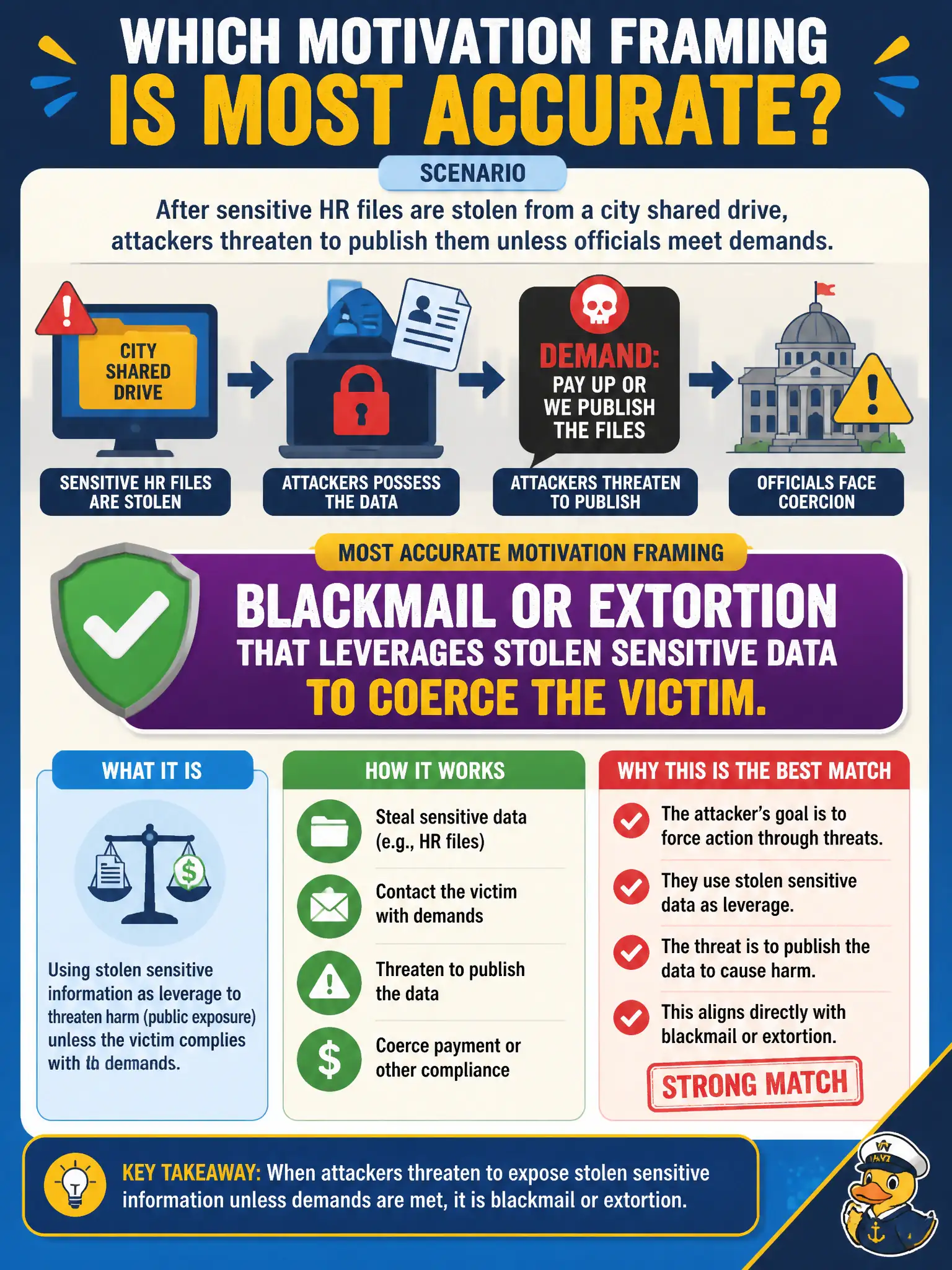
After sensitive HR files are stolen from a city shared drive, attackers threaten to publish them unless officials meet demands. Which motivation framing is most accurate?
Select an answer to reveal the explanation.
Short Explanation
Stealing the HR folder and then saying 'pay up or we post it' is blackmail with a USB stick. The theft sets the trap; the threat to expose people is the squeeze.
Full Explanation
After HR files are stolen from a city shared drive, threats to publish them unless officials comply constitute blackmail or extortion leveraging sensitive data. The coercive follow-through—pay or obey or personnel records go public—is the motivational core. Theft sets up leverage; the publication threat applies pressure against the municipality and affected employees.
Curiosity-driven scanning with no coercive follow-through stops at reconnaissance and lacks the extortion demand. Routine patch management communicating maintenance windows is normal operations, not criminal coercion. Hacktivist defacement that never touches confidential personnel records is a different motive and impact path focused on messaging rather than HR-data blackmail.
Exam caveat: blackmail/extortion is defined by coercive use of sensitive information (or other leverage), distinct from theft alone or simple vandalism. Operational check: lock down HR shares with least privilege and DLP, prepare legal and communications runbooks for doxing threats, preserve evidence, avoid negotiating outside policy, and support affected staff while rotating any credentials or personal data exposure pathways indicated in the stolen files.