
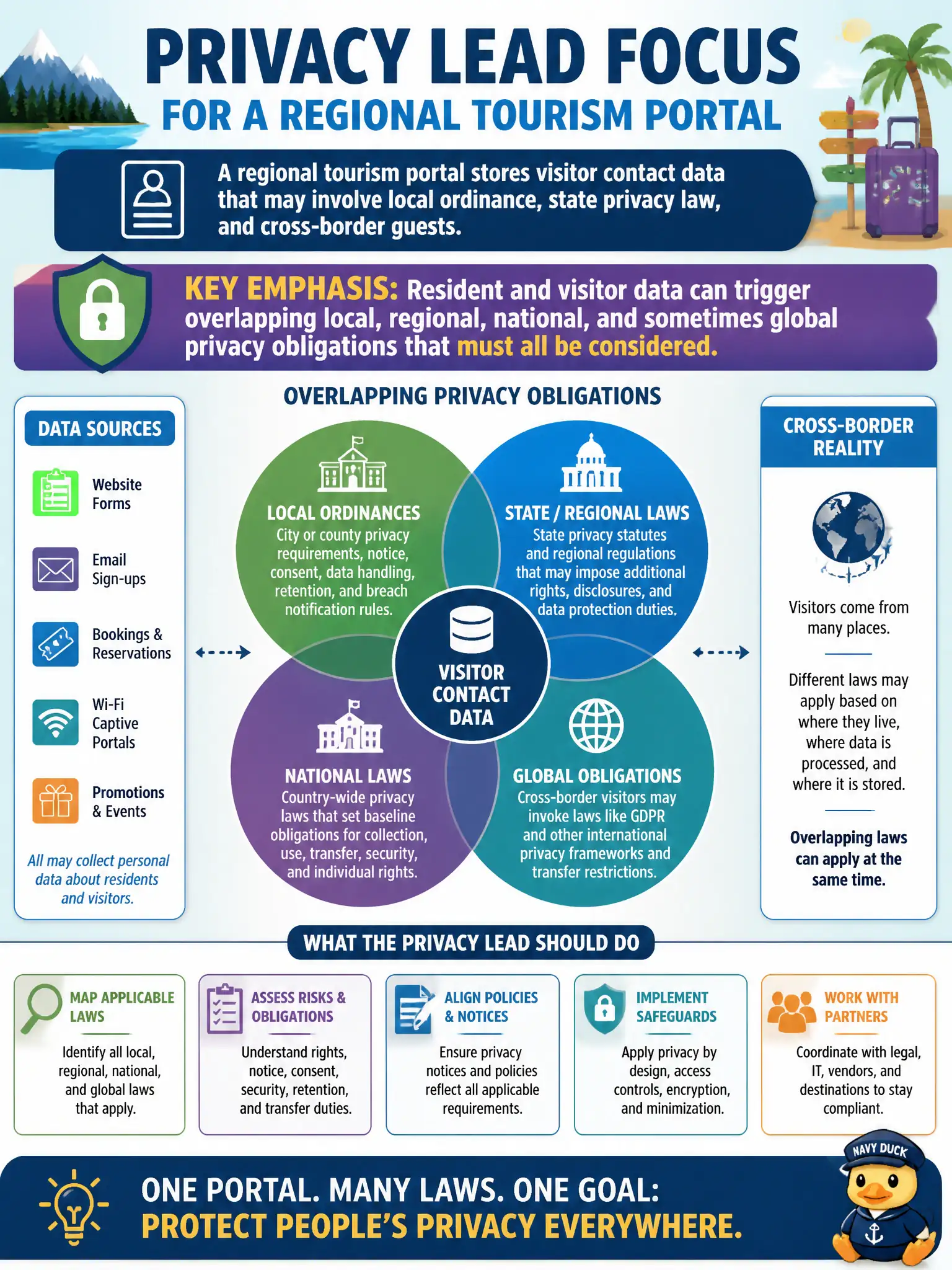
A regional tourism portal stores visitor contact data that may involve local ordinance, state privacy law, and cross-border guests. What should the privacy lead emphasize about legal implications?
Select an answer to reveal the explanation.
Short Explanation
Privacy law is a layered cake—city, state, national, and sometimes overseas rules can all sprinkle on the same visitor record. Don’t assume one FAQ covers the whole stack.
Full Explanation
Visitor and resident contact data on a regional tourism portal rarely sits under a single rulebook. Local ordinances, state privacy statutes, national frameworks, and—when guests or processing cross borders—global privacy principles or foreign-law expectations can overlap on the same record. The privacy lead should emphasize that layered obligations must all be considered when designing notices, retention, sharing, breach response, and vendor contracts for municipal portals that serve mixed audiences.
Asserting that only the city’s informal privacy FAQ applies once data is on a municipal server ignores higher-authority law and enforceable resident rights. Claiming global privacy rules never apply to municipal portals regardless of subject residency is overbroad; cross-border guests, cloud regions, or international marketing partners can introduce extraterritorial considerations that counsel must evaluate. Assuming state law always cancels local ordinances and international principles oversimplifies preemption and conflicts-of-law analysis; cities often must satisfy concurrent duties rather than pick a single winner.
Exam caveat: Security+ privacy items stress overlapping jurisdictions—local, regional, national, and sometimes global—not a single FAQ or automatic cancellation of other regimes.
Operational check: inventory data elements, subject types (resident vs. visitor), processing locations, and processors. Maintain a jurisdiction matrix with counsel sign-off covering notice language, lawful bases or municipal authorities, retention, transfer mechanisms, and response SLAs for rights requests. Revisit the matrix when the portal adds payment, personalization, or new hosting regions.