
A resident submits a right-to-be-forgotten request through the city’s online services portal. What should the privacy process emphasize first?
Select an answer to reveal the explanation.
Short Explanation
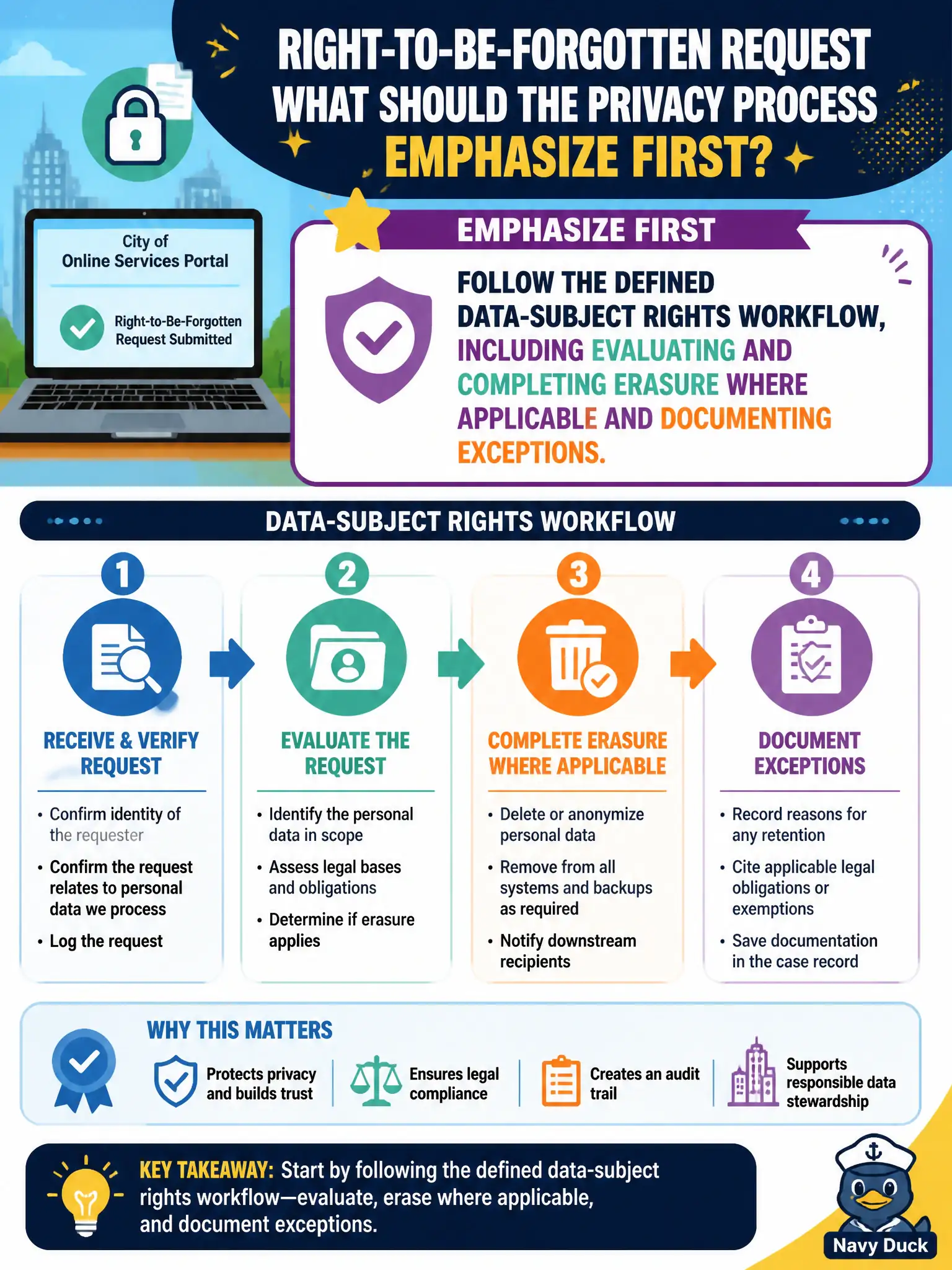
Right to be forgotten isn’t a junk-drawer delete-all button or a shrug. Run the official rights playbook—erase what you should, keep what the law still requires, and write down why.
Full Explanation
A right-to-be-forgotten (erasure) request through a municipal online services portal must enter a defined data-subject rights workflow. Staff should verify identity, locate personal data across systems and processors, evaluate whether erasure applies or whether statutory retention, legal holds, public-record duties, or other exceptions limit deletion, complete permitted erasure, notify processors as required, and document the decision path. That process protects both the resident’s rights and the city’s lawful recordkeeping duties.
Ignoring erasure requests for any account that ever paid a fee invents an unlawful carve-out and invites complaints or enforcement. Deleting every backup citywide immediately without reviewing legal holds or statutory retention creates operational and legal chaos, can destroy evidence required elsewhere, and is rarely what privacy frameworks require. Publishing the requester’s personal details internally for casual debate violates confidentiality and need-to-know principles around rights handling.
Exam caveat: SY0-701 privacy questions favor structured rights workflows with documented exceptions over blanket ignore, blanket wipe, or gossip. Erasure is conditional evaluation, not automatic citywide destruction.
Operational check: publish an intake channel, identity-proofing steps, system search checklist (apps, tickets, email archives, vendor SaaS), exception catalog (retention schedules, litigation holds, archival statutes), processor notification templates, and a case log with timestamps and approver. Train clerks that 'fee paid' is not a denial reason and that backup deletion follows policy after primary-store actions—not a panic wipe.