
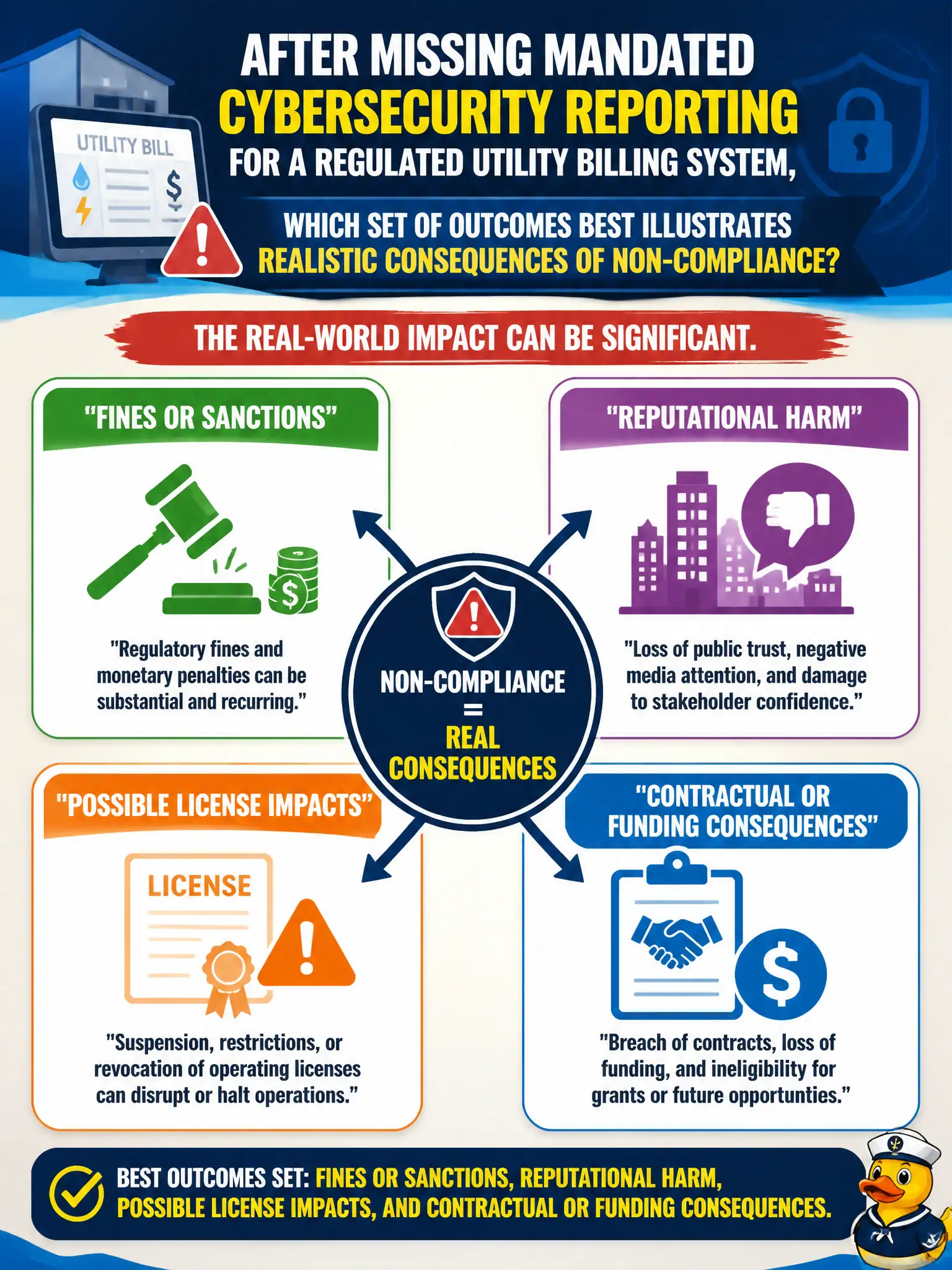
After missing mandated cybersecurity reporting for a regulated utility billing system, which set of outcomes best illustrates realistic consequences of non-compliance?
Select an answer to reveal the explanation.
Short Explanation
Skipping required security homework doesn’t just bruise feelings—it can hit wallets, licenses, contracts, and public trust. Non-compliance has real civic consequences, not just a stern email.
Full Explanation
Missing mandated cybersecurity reporting for a regulated utility billing system is not a soft HR issue. Realistic consequences of non-compliance include fines or sanctions, reputational harm with residents and partners, possible impacts to operating licenses or certifications, and contractual or funding consequences when grants, insurers, or regulators condition support on timely compliance. Municipal utilities sit at the intersection of public trust and regulated critical services, so reporting failures can cascade beyond an internal reprimand.
Claiming the only outcome is a temporary drop in employee satisfaction with no financial or legal exposure understates enforcement and liability realities. Automatic exemption from future audits because the city acknowledged the miss is backwards: acknowledgement often increases scrutiny, not immunity. Permanent immunity from civil claims after a website apology is fiction; public apologies do not erase statutory duties, contractual breaches, or private actions that may follow harm from unmanaged cyber risk.
Exam caveat: SY0-701 questions on compliance consequences look for concrete organizational impacts—money, licenses, contracts, reputation—not emotional or purely internal morale effects. Beware distractors that invent exemptions or legal immunity from symbolic gestures.
Operational check: map each mandated report to statute/regulation/contract clause, responsible official, calendar triggers, and escalation if a deadline is at risk. After any miss, document root cause, notify counsel and executive sponsors, engage the regulator or grantor per procedure, and implement compensating controls plus a catch-up filing plan rather than assuming the matter is closed by apology.