
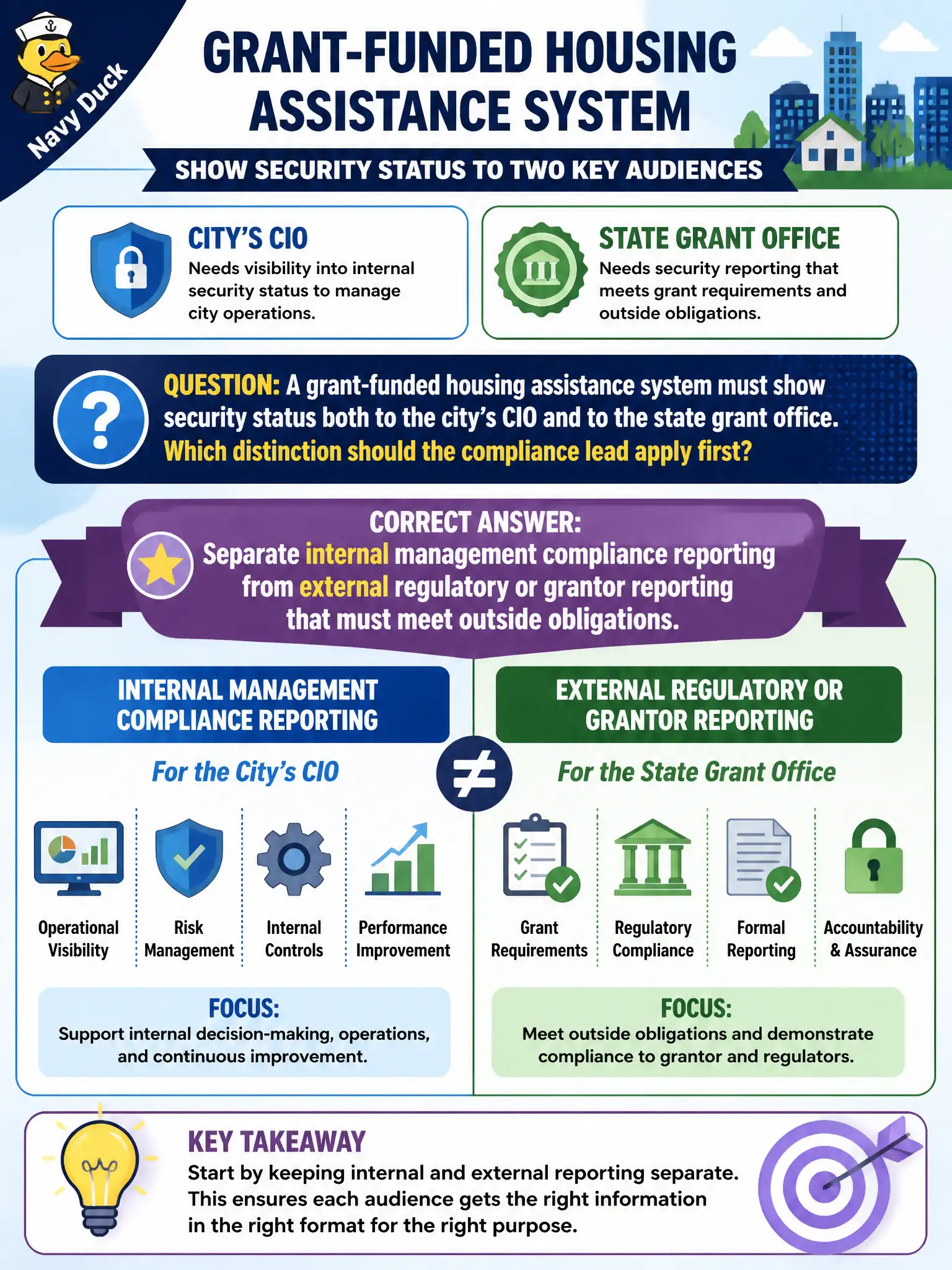
A grant-funded housing assistance system must show security status both to the city’s CIO and to the state grant office. Which distinction should the compliance lead apply first?
Select an answer to reveal the explanation.
Short Explanation
Think internal memo versus formal filing—same facts, different mailbox and rules. Keep city management updates separate from what the grantor or regulator must receive.
Full Explanation
Compliance reporting for a grant-funded housing system serves more than one audience, and those audiences are not interchangeable. Internal management reporting—CIO dashboards, heat maps, status briefings—helps city leadership steer risk and resources. External regulatory or grantor reporting must meet outside obligations, formats, attestations, and deadlines that carry contractual or statutory force. The compliance lead should separate those streams first so content, cadence, and approval paths match the receiving party.
Treating CIO dashboards and grant-office filings as identical artifacts ignores legal force and audience. What is adequate for an internal briefing may omit required controls narratives, certifications, or evidence packages the grantor demands. Sending only internal risk heat maps to the grant office because 'external reports are optional' misunderstands grant and regulatory reality: external obligations are often mandatory and independently enforceable. Postponing all reporting until the next external audit so internal and external needs never diverge creates dangerous blind spots; leadership still needs timely internal visibility while external packages are prepared on their own schedules.
Exam caveat: Security+ program-management items frequently distinguish internal governance reporting from external compliance reporting. Do not collapse them into one artifact or assume municipal systems are exempt from grantor filings.
Operational check: maintain a reporting matrix that lists each obligation (CIO periodic status, council risk updates, state grant cybersecurity attestations), owner, due date, required evidence, and distribution list. Produce internal and external packages from a shared control evidence store, but package and approve them separately so grant filings are never improvised from a dashboard screenshot.