
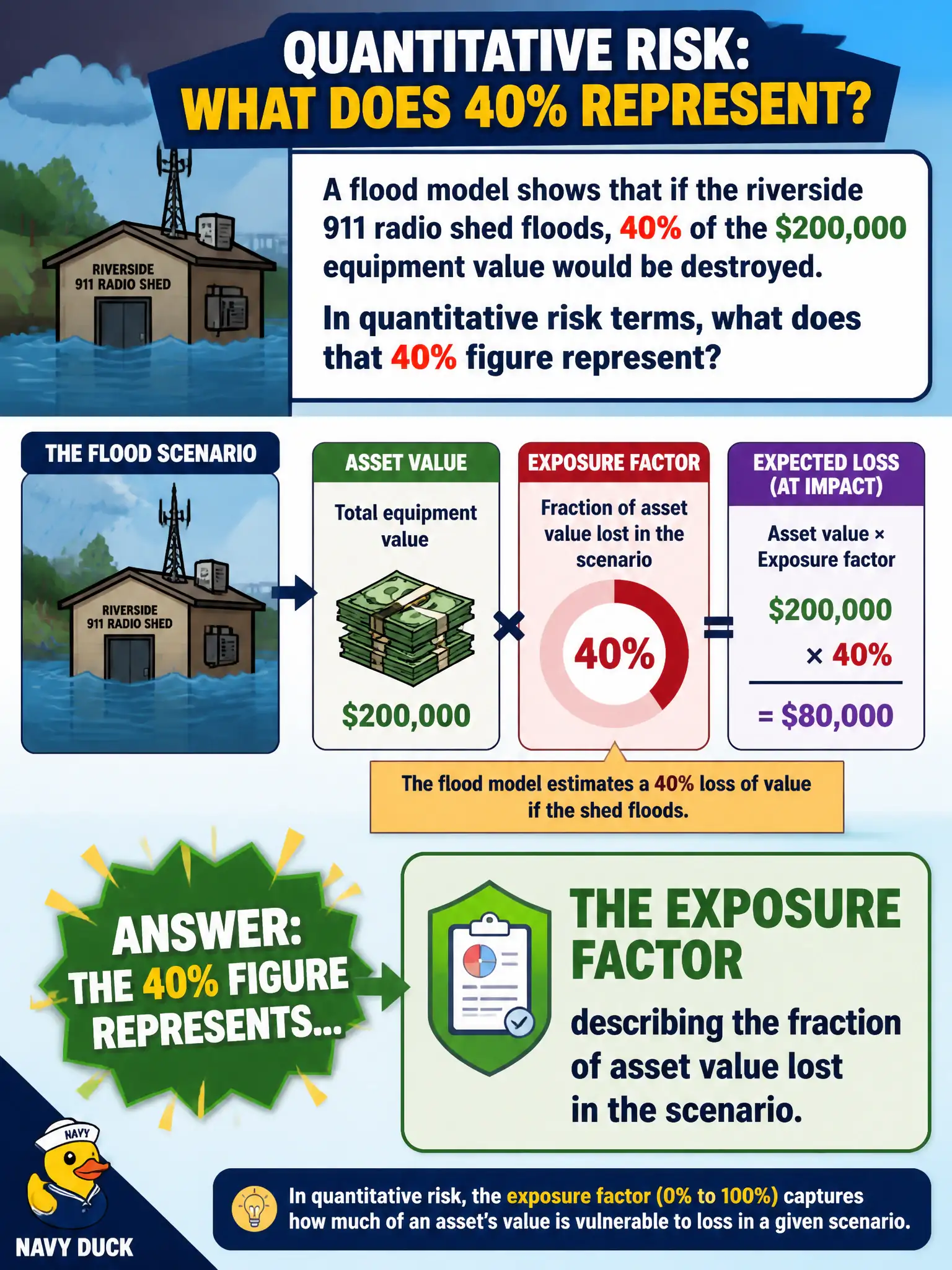
A flood model shows that if the riverside 911 radio shed floods, 40% of the $200,000 equipment value would be destroyed. In quantitative risk terms, what does that 40% figure represent?
Select an answer to reveal the explanation.
Short Explanation
Exposure factor is the slice of the pie that gets ruined when the flood hits—not how often floods arrive and not how long repairs take. Forty percent means two-fifths of that shed's gear value is gone in that scenario.
Full Explanation
Exposure factor is the fraction or percentage of an asset's value expected to be lost if a specific threat scenario materializes. In the riverside 911 radio shed flood model, forty percent means that scenario is expected to destroy two-fifths of the equipment's value. Combined with asset value, exposure factor yields single loss expectancy: SLE = AV × EF. Here, $200,000 × 0.40 produces an SLE of $80,000 for that flood scenario before annualizing with ARO. The annualized rate of occurrence for every county building is a frequency measure, not a percentage of asset value lost in one scenario. ARO answers how often events are expected; it does not describe the forty percent damage fraction for the radio shed. Residual risk appetite set by the city council is a governance statement about how much risk leadership is willing to retain. Appetite is not calculated as a damage percentage inside a flood model for one shed. Mean time to repair for radio technicians measures restoration duration after failure. MTTR informs availability discussions but is not the exposure factor describing fractional asset-value loss in the flood scenario. Exam caveat: Keep quantitative building blocks distinct—AV, EF, SLE, ARO, ALE. When the stem gives a percent of value destroyed in a scenario, that percent is EF, not ARO, appetite, or MTTR. Operational check: Document EF assumptions per threat scenario for critical municipal assets, derive SLE from AV × EF, then apply ARO only when moving to ALE so flood and other models stay mathematically consistent.