
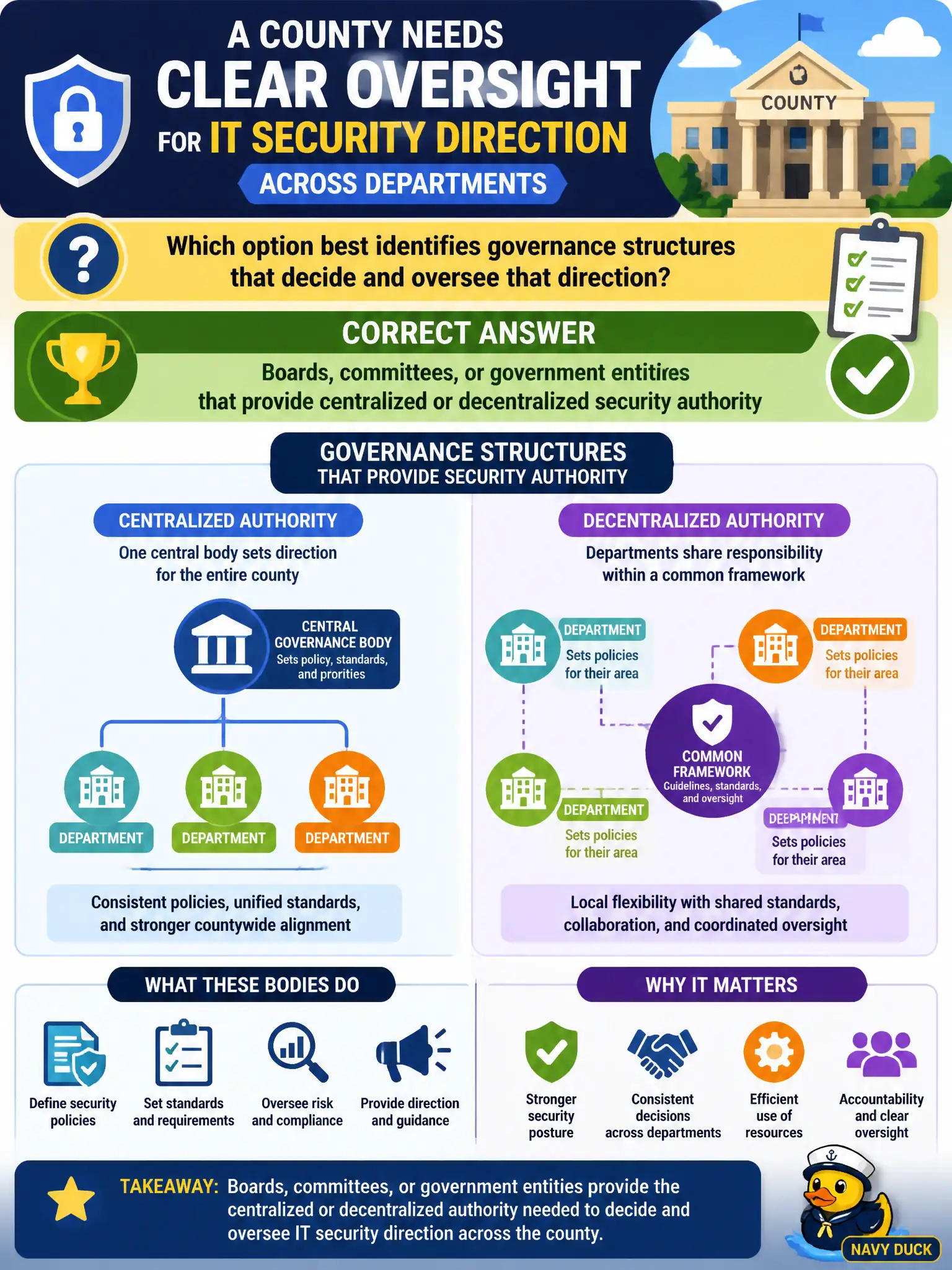
A county needs clear oversight for IT security direction across departments. Which option best identifies governance structures that decide and oversee that direction?
Select an answer to reveal the explanation.
Short Explanation
Somebody has to own the steering wheel—county boards, security committees, or designated government entities, whether authority is centralized or pushed out to departments. Chat threads and suggestion boxes are noise, not governance. Vendor roadmaps without internal ownership leave the county along for the ride.
Full Explanation
Security governance structures are the bodies with authority to set direction, prioritize risk decisions, and oversee IT security across departments. Boards, steering committees, risk committees, and government entities can provide centralized authority (unified policy and funding decisions) or decentralized models (department-level ownership within an enterprise framework). Clear structure answers who approves exceptions, who owns residual risk, and how cross-department conflicts resolve. Without that, county security direction fragments into incompatible local practices.
Random chat threads with no decision rights create noise without accountable approvals. Anonymous suggestion boxes as the sole approval mechanism cannot assign ownership or enforce standards. Vendor sales roadmaps adopted without internal ownership outsource strategy to suppliers and skip municipal accountability. Exam caveat: governance structure questions point to boards, committees, or governmental entities—not informal or vendor-driven substitutes. Operationally, charter a security governance committee with documented membership from IT, legal, and major departments; define centralized versus delegated decision rights; meet on a cadence; and record decisions so county auditors can see who directed security policy and why.