
After a major incident and as the calendar year turns, which governance practice keeps municipal policies effective?
Select an answer to reveal the explanation.
Short Explanation
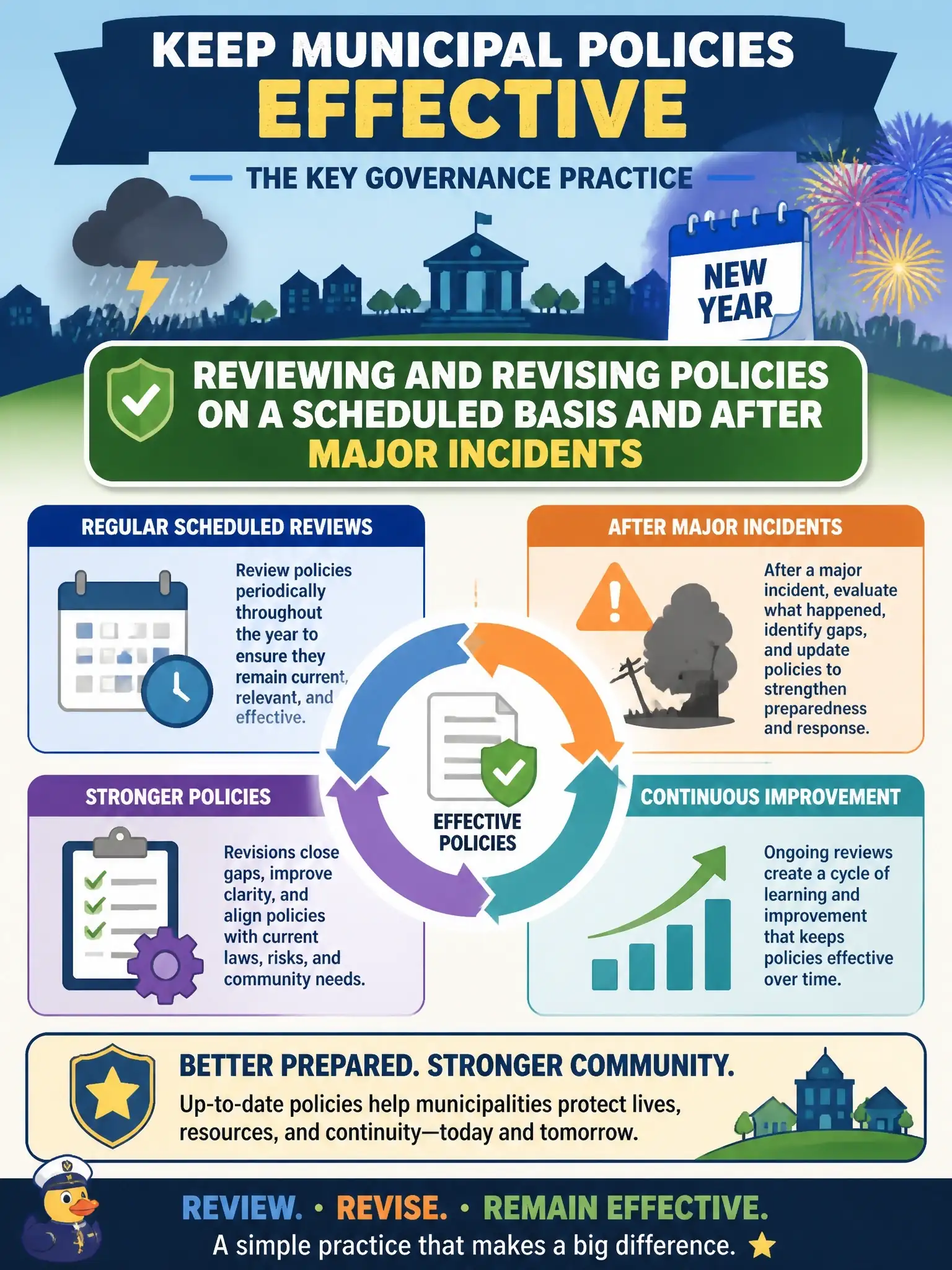
You keep municipal policies effective by reviewing and revising them on a schedule and after major incidents. Freezing them forever, letting staff keep private conflicting copies, or deleting them during turnover just creates drift and amnesia.
Full Explanation
Governance artifacts remain effective only when they are monitored and revised on a defined schedule and after significant events. As the calendar year turns and after a major incident, municipal policies should undergo structured review to confirm they still match technology, threats, organizational structure, and legal obligations. Event-driven updates capture lessons from real failures while periodic reviews catch gradual drift. Version control, approval, and communication of changes keep staff aligned to a single authoritative text rather than outdated PDFs in email archives.
The practice of reviewing and revising policies on a scheduled basis and after major incidents is correct because it combines periodic checks with incident-triggered learning. Freezing all policies permanently after the first approval guarantees obsolescence as systems and laws change. Allowing each employee to maintain a private conflicting policy copy destroys consistency and accountability. Deleting policies whenever staffing changes to reduce paperwork recreates institutional amnesia precisely when turnover already risks knowledge loss—the opposite of durable governance. Exam tip: the correct hygiene is scheduled plus incident-triggered review and revision, not deletion or permanent freeze. Align answers with that concept even when distractors glamorize “less paperwork.” Operationally, put annual policy review on the CISO calendar, require post-incident policy impact checks in incident response closure criteria, track revision history, and verify employees acknowledge updated municipal policies after publication.