
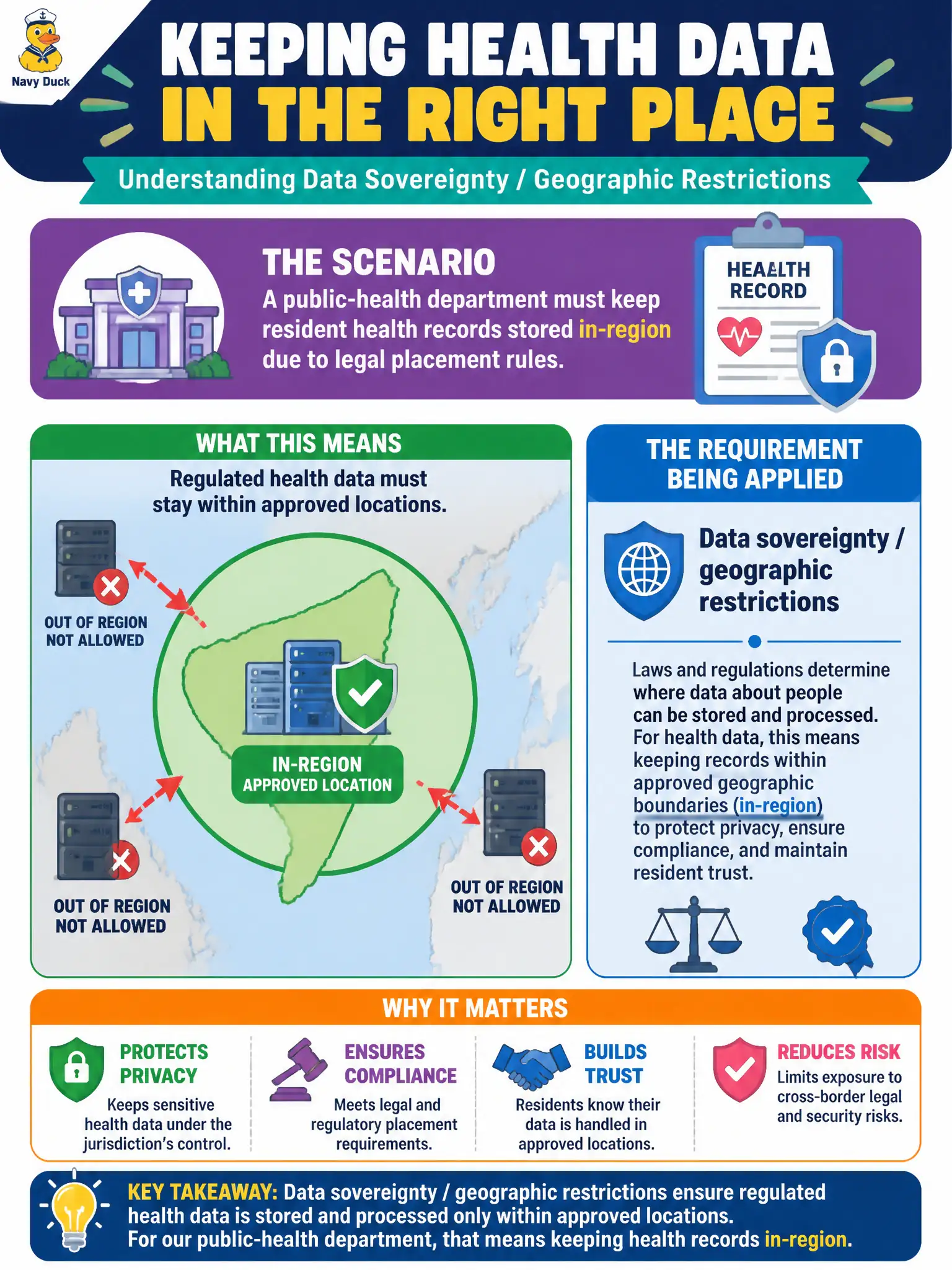
A public-health department must keep resident health records stored in-region due to legal placement rules. Which requirement is being applied?
Select an answer to reveal the explanation.
Short Explanation
Sovereignty is the ‘this data stays in this neighborhood’ rule for regulated health files. You pick storage regions that match the law—not the cheapest offshore bucket. Deleting or dumping to open data dodges the requirement instead of meeting it.
Full Explanation
Data sovereignty and geographic residency rules require regulated health information to remain in approved jurisdictions or facilities. Municipal health programs that store electronic records in cloud or colo platforms must select regions and providers that satisfy those legal and contractual boundaries rather than optimizing only for price.
Deleting all health records to dodge sovereignty obligations destroys mission data and fails continuity, clinical, and retention duties. Replicating every record to unrestricted offshore free tiers for cost savings is the opposite of residency control and expands breach and subpoena exposure. Publishing resident health datasets as open data by default violates confidentiality expectations and most health privacy regimes.
Exam caveat: sovereignty is about where data may live and who may lawfully compel access—not merely encrypting it. Encryption helps confidentiality but does not by itself satisfy a “must stay in-country” requirement if replicas sit abroad.
Operational check: inventory health datasets and their storage accounts, confirm primary and backup regions are on the approved list, block uncontrolled cross-region replication, and document processor agreements so auditors can see geographic controls match policy.