
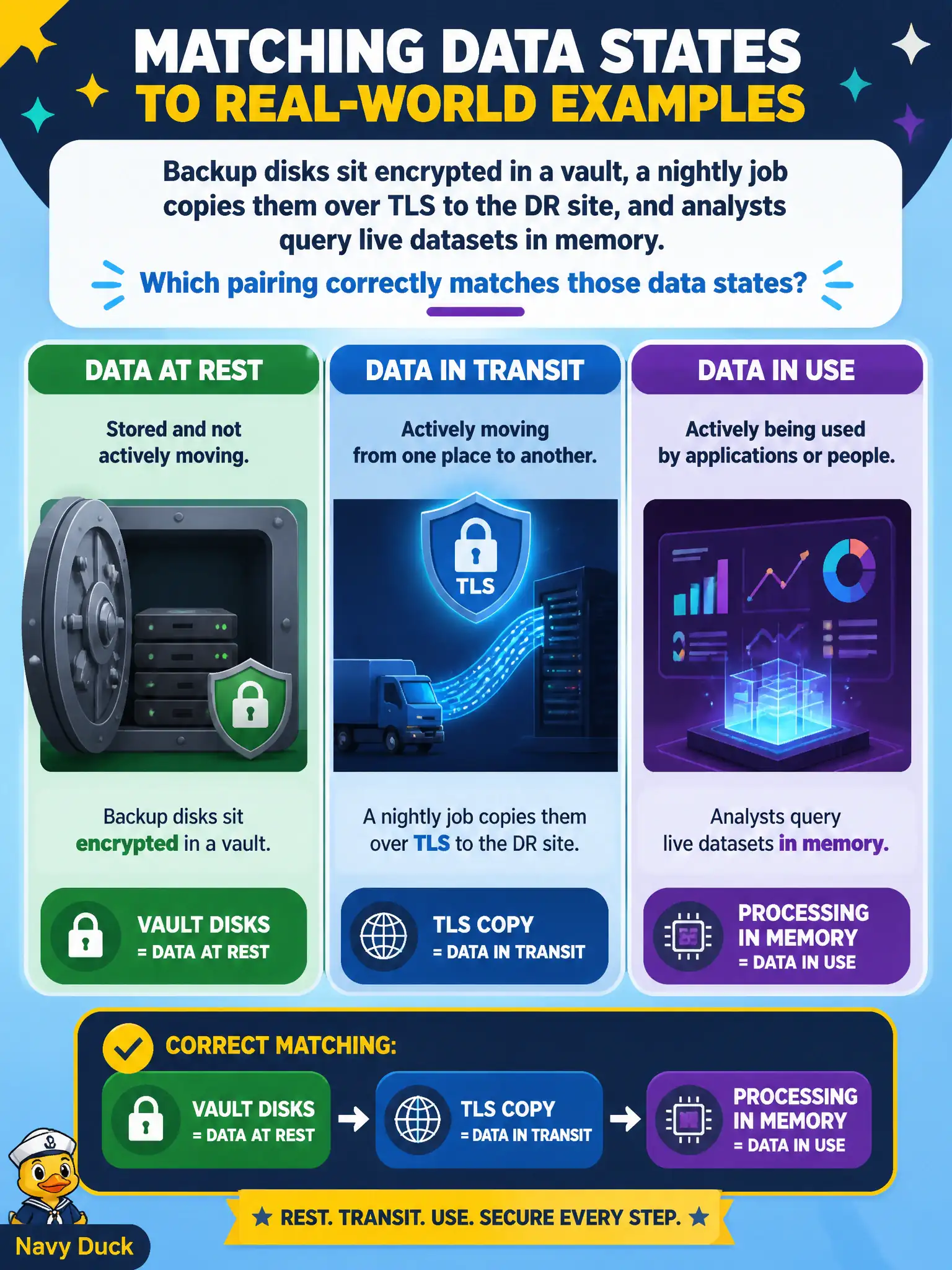
Backup disks sit encrypted in a vault, a nightly job copies them over TLS to the DR site, and analysts query live datasets in memory. Which pairing correctly matches those data states?
Select an answer to reveal the explanation.
Short Explanation
At rest means parked (vault disks), in transit means on the road (TLS to DR), in use means being worked on in memory. Mix those up and you’ll encrypt the wrong stretch of the trip. Simple road-trip mental model keeps the protections lined up.
Full Explanation
Security+ expects clean distinctions among data states. Disks in a vault hold data at rest—persistent storage not actively traversing a network. A TLS-protected copy moving to a disaster-recovery site is data in transit—confidentiality and integrity rely on the transport protection. Values being processed in memory are data in use—accessible to the running application and potentially to memory-scraping malware, demanding different safeguards such as access control, secure enclaves where used, and minimizing cleartext lifetime.
Calling vault disks “in transit” or memory “at rest” misaligns controls: you would encrypt the wrong stage or skip transport protection. Treating everything as at rest because “disks are involved somehow” collapses the model and leaves TLS and runtime protections unexplained. Swapping in-use and at-rest labels produces the same control mismatch.
Exam caveat: the same record can move through all three states in one business process. Protections must follow the state: encryption at rest on media, TLS or VPN in motion, and least privilege / memory protection while processed.
Operational check: for a municipal DR workflow, verify vault or SAN volumes use approved encryption at rest, replication channels enforce TLS or equivalent, and application hosts processing citizen data restrict debug dumps, page files, and admin access that could expose data in use.