
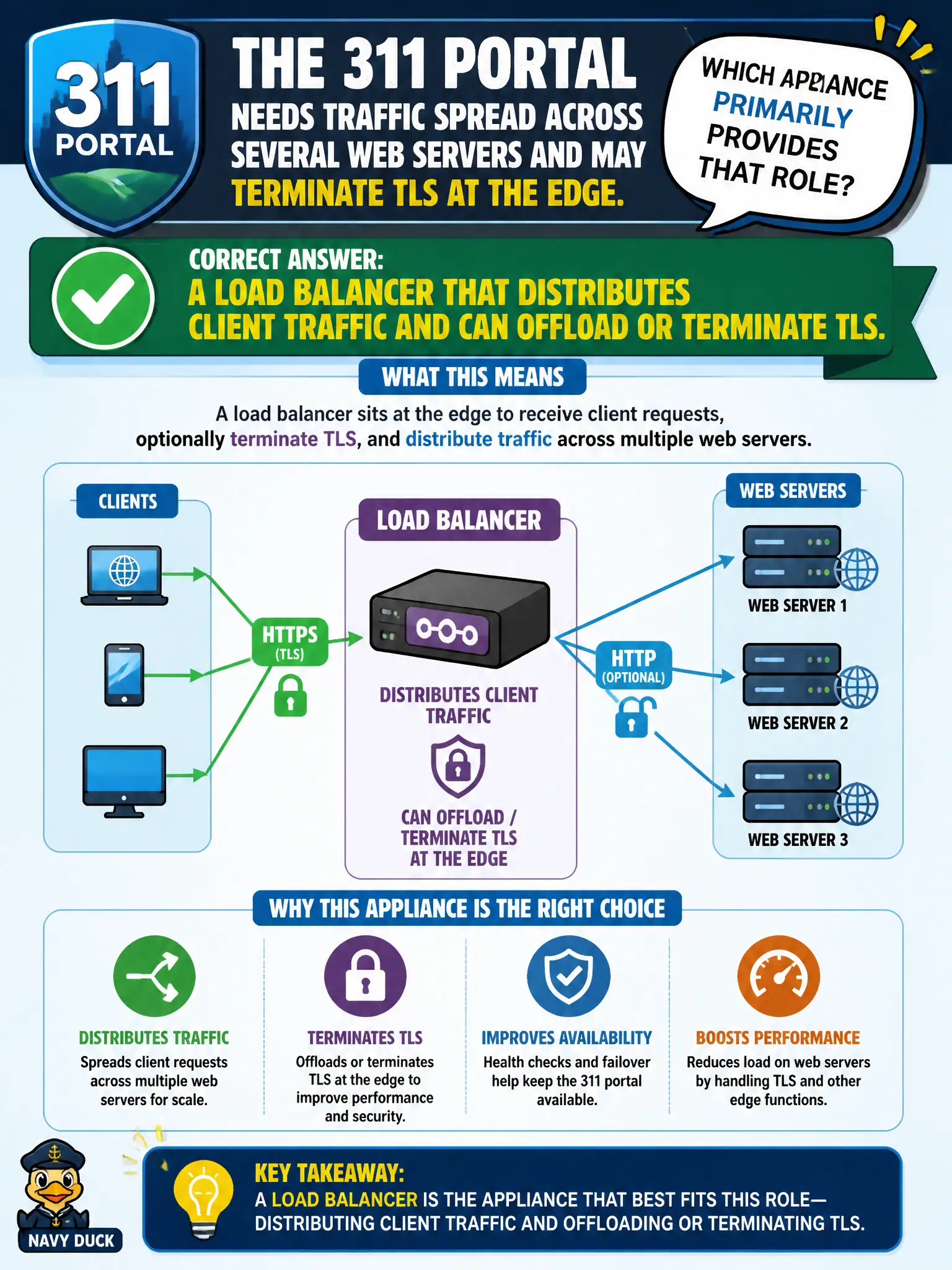
The 311 portal needs traffic spread across several web servers and may terminate TLS at the edge. Which appliance primarily provides that role?
Select an answer to reveal the explanation.
Short Explanation
A load balancer is the traffic cop that spreads visitors across many web servers and can handle TLS at the curb. That is availability architecture, not a jump box or AV agent. Know the appliance by the job it does.
Full Explanation
A load balancer distributes client connections across several web servers for the 311 portal, improving availability and scalability, and commonly offloads or terminates TLS at the edge so certificates and cryptographic work are centralized. That appliance role is about inbound application traffic management—health checks, algorithms for distribution, and optionally SSL/TLS termination—not about admin session brokering or endpoint antivirus. Security architecture should still protect the load balancer itself and understand whether TLS is re-encrypted to backends.
A jump server used only for admin SSH sessions addresses privileged access, not citizen traffic distribution. A desktop antivirus agent on help-desk PCs is an endpoint control unrelated to spreading portal load. A paper shredder policy for the records room is physical data disposal, not a network appliance role.
Exam caveat: identify the appliance by function—distribution and optional TLS offload equals load balancer. Operationally, restrict management of the balancer, keep TLS configurations current, monitor backend health, segment balancer management from public VIPs, and ensure backend servers still enforce authentication and application security even when TLS terminates at the edge.