
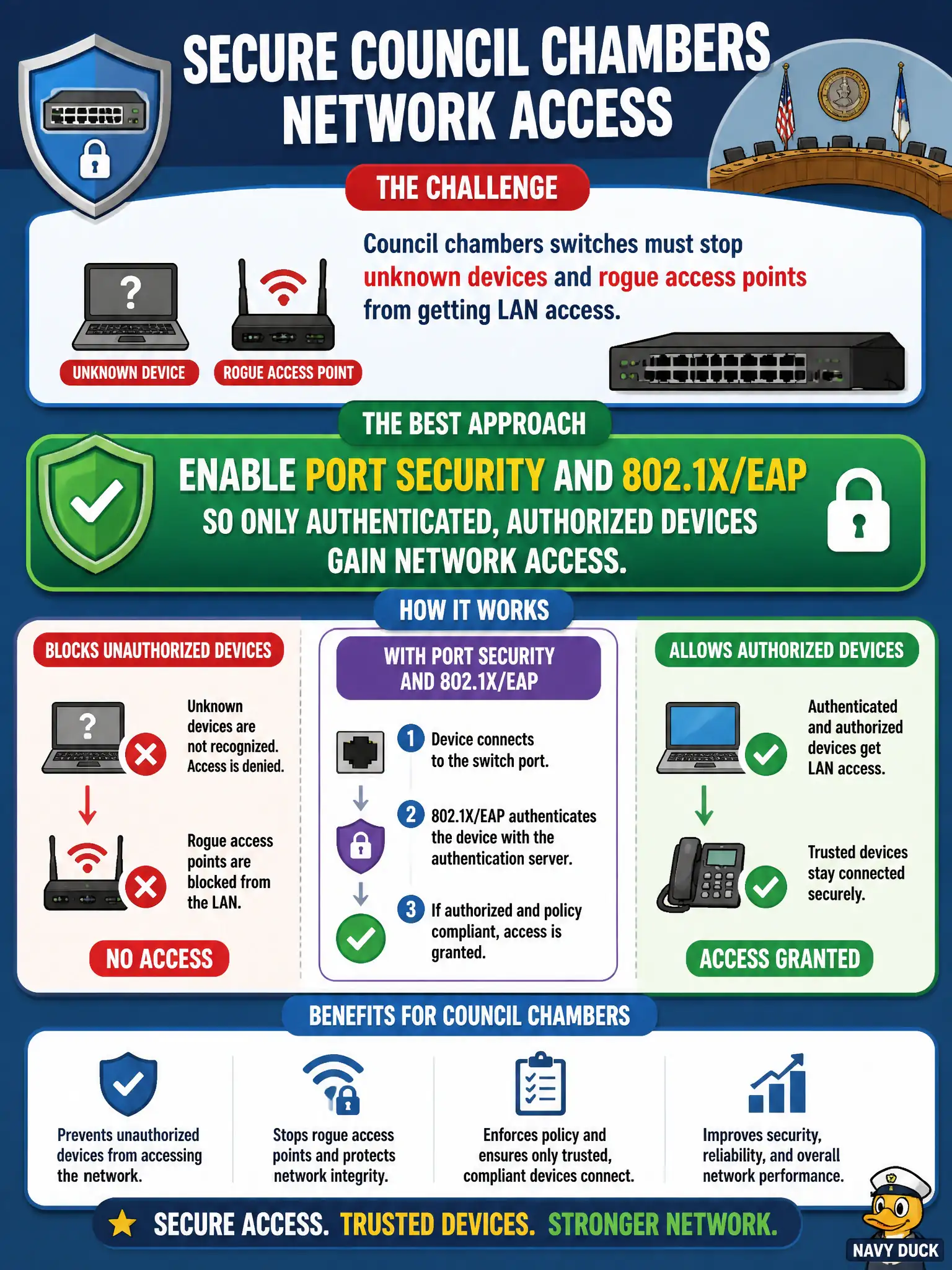
Council chambers switches must stop unknown devices and rogue access points from getting LAN access. Which approach best fits?
Select an answer to reveal the explanation.
Short Explanation
Ports in the chambers should demand a badge before handing out network—802.1X and port security do that. Open ports plus hope is how a rogue AP joins the meeting. Do not shortcut by dumping everything into finance.
Full Explanation
Council chambers switches that must stop unknown devices and rogue access points need port-level admission control. Port security (MAC limits/sticky learning) plus 802.1X/EAP authentication ensure only authorized, authenticated endpoints receive LAN access, often with dynamic VLAN assignment and integration to a RADIUS backend. That approach addresses both casual cable plugging and many rogue AP scenarios at the access edge better than after-the-fact cameras alone. Security+ network hardening repeatedly pairs 802.1X and port security with preventing unauthorized network joins.
Disabling all switch logging so port events cannot be audited removes detective evidence of rogue connects. Allowing any MAC on every port and relying only on camera footage accepts unauthorized access first and investigates later. Bridging all chamber ports directly to the finance VLAN for meeting convenience places untrusted visitor devices adjacent to high-value systems.
Exam caveat: unauthorized device prevention at the switch edge points to 802.1X/port security, not open ports plus cameras. Operationally, enable 802.1X with a fallback plan for non-supplicant devices (MAB carefully scoped), shut unused ports, alert on port-security violations, keep chambers off finance VLANs, and periodically survey for rogue APs that bridge wireless into authenticated jacks.