
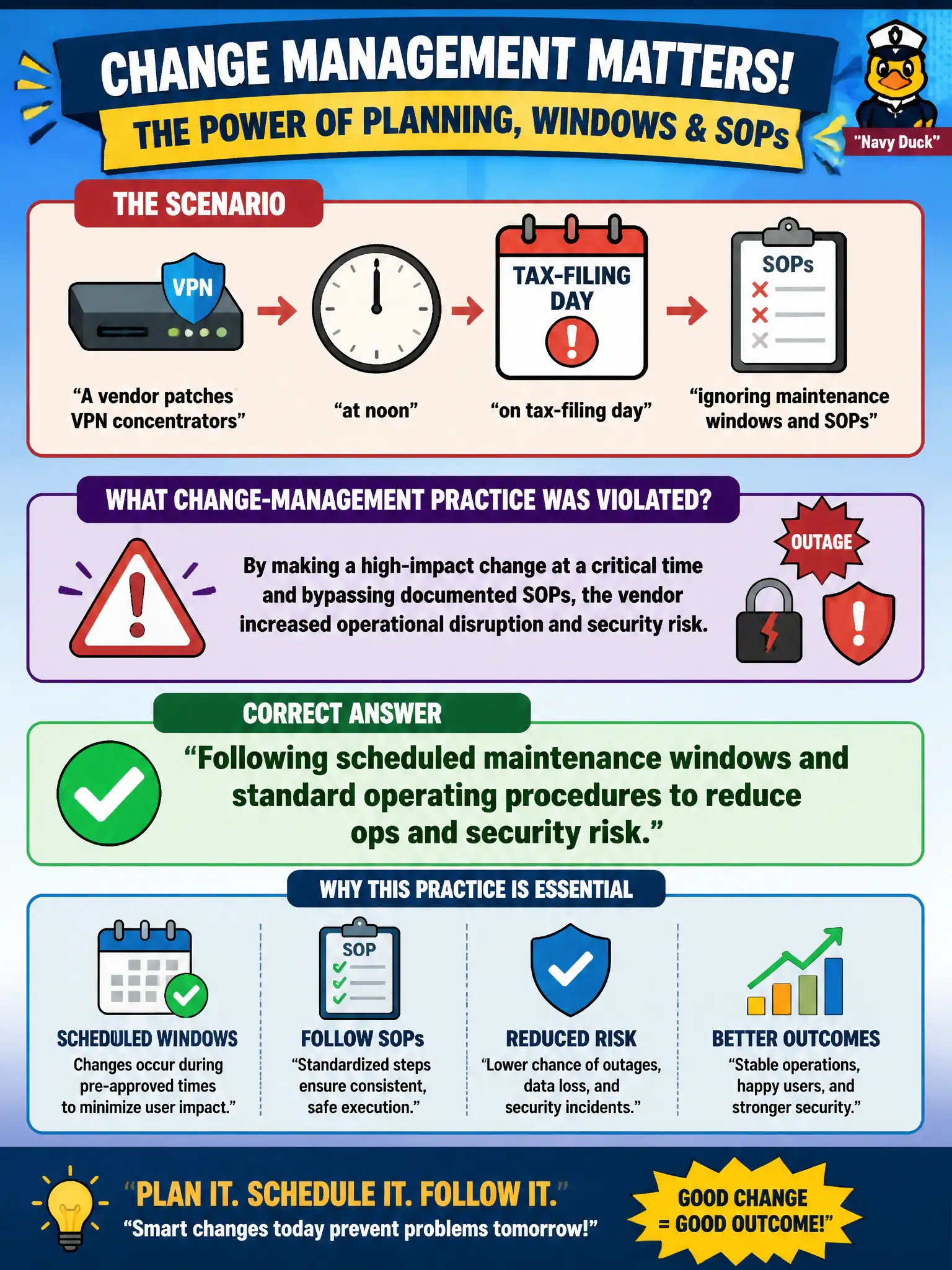
A vendor patches VPN concentrators at noon on tax-filing day, ignoring maintenance windows and SOPs. Which change-management practice was primarily violated?
Select an answer to reveal the explanation.
Short Explanation
Patching the VPN at lunch on tax day is like closing the only bridge during rush hour — technically a fix, operationally a disaster. Windows and SOPs exist so changes happen when the city can absorb the bump.
Full Explanation
Maintenance windows and standard operating procedures (SOPs) are change-management practices that schedule and standardize how changes occur to reduce operational disruption and security risk. A vendor patching VPN concentrators at noon on tax-filing day while ignoring maintenance windows and SOPs primarily violates that scheduling and procedure discipline: peak civic demand is exactly when unplanned remote-access disruption hurts residents and staff most.
Deploying honeynets instead of VPN patches is unrelated theater—deception does not replace timely patching, and it is not the practice the stem describes as violated. Using asymmetric encryption for all patch files misstates both crypto application and the process failure; patch authenticity uses signatures/hashes, but that is not the violated maintenance-window/SOP practice. Replacing SOPs with verbal instructions after every incident only describes a different anti-pattern and is not what noon-on-tax-day patching illustrates.
Exam caveat: SY0-701 links windows and SOPs to secure, low-risk change execution. Know that "we patched" can still be wrong if timing and procedure increase outage or incident likelihood for municipal services.
Operational check: negotiate vendor work into approved windows, require SOP checklists (pre-checks, health probes, backout, communications), avoid peak filing and election events for VPN changes, and measure success by both patch currency and absence of avoidable citizen-facing downtime.