
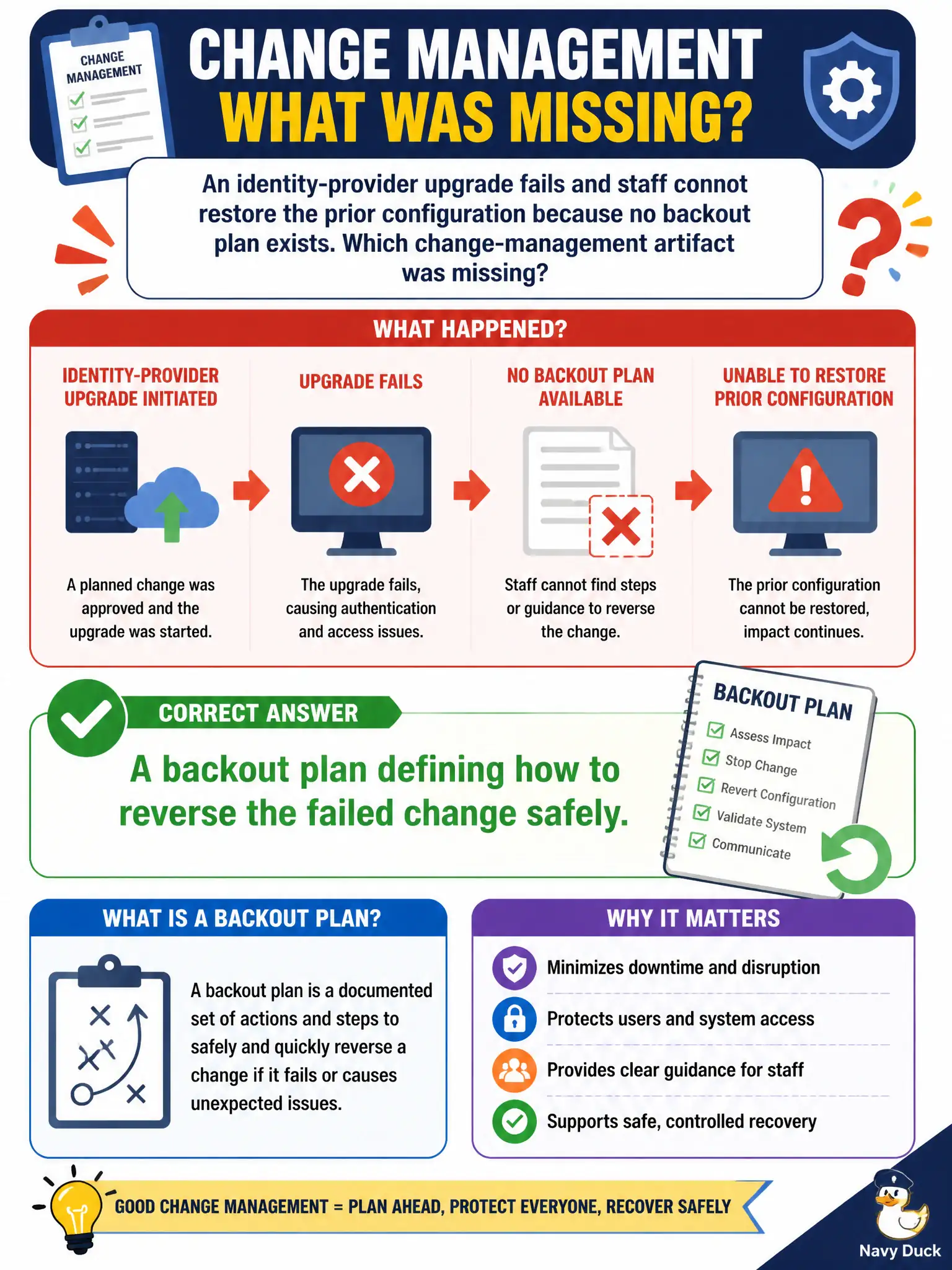
An identity-provider upgrade fails and staff cannot restore the prior configuration because no backout plan exists. Which change-management artifact was missing?
Select an answer to reveal the explanation.
Short Explanation
A backout plan is the reverse gear before you drive into the upgrade. Without it, a failed IdP change leaves everyone stuck in the ditch. Always know how to undo the last move.
Full Explanation
A backout plan defines how to reverse a failed or harmful change safely—steps, criteria, responsible parties, and artifacts such as prior configurations or snapshots. When an identity-provider upgrade fails and staff cannot restore the prior configuration because no backout plan exists, the missing change-management artifact is that reversal path. Without it, authentication outages drag on and insecure interim workarounds proliferate across city departments.
A honeytoken inventory for decoy accounts is a deception-operations artifact, not a change reversal plan. A data classification label for the IdP logo file addresses information handling of an image asset, not recovery from a failed IdP upgrade. A directive forcing all users to re-image laptops immediately is a blunt mandatory instruction and is not a controlled backout of the IdP change; it may even worsen downtime and support load.
Exam caveat: distinguish backout planning from impact analysis and approval. All three matter; the stem's inability to restore prior configuration points specifically at missing backout.
Operational check: for municipal IdP or SSO changes, export and version prior configs, snapshot where supported, document rollback commands and validation tests (login, MFA, app SSO), set abort criteria, and rehearse restoration in a lab. Confirm that break-glass admin paths work if the new IdP build fails mid-cutover.