
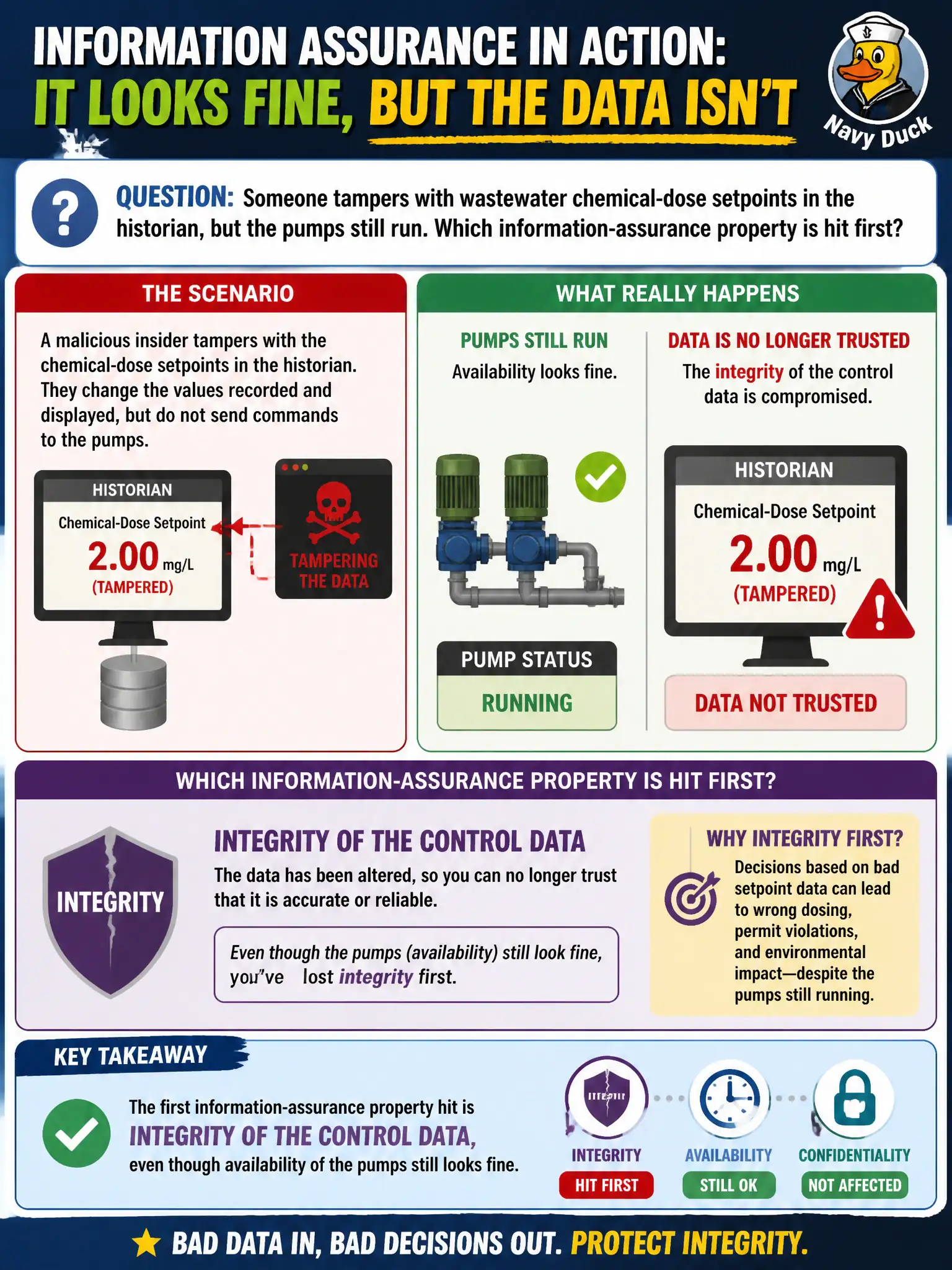
Someone tampers with wastewater chemical-dose setpoints in the historian, but the pumps still run. Which information-assurance property is hit first?
Select an answer to reveal the explanation.
Short Explanation
The pumps humming is not the same as the dose being honest. Tampered setpoints are an integrity hit on the process data — the numbers lie even while the motors keep spinning. Availability looking fine is how this one fools people.
Full Explanation
Someone tampering with wastewater chemical-dose setpoints in the historian while pumps still run hits integrity of the control data first, even though availability of the pumps still looks fine. The numbers lie: process setpoints are falsified while motors keep spinning, which is exactly how OT integrity attacks fool casual observation. Civic water safety depends on honest process data, not merely on pumps that appear "up."
Calling it availability only because pumps still run fails by concept: availability of motors does not equal integrity of setpoints. Calling it confidentiality only because setpoints are always classified Secret fails by concept: the stem is about tampering accuracy of control data, not disclosure classification theater. Calling it non-repudiation of the notable disposition on Incident Review fails by concept: that is an unrelated SOC workflow property.
Exam caveat: In OT stems, separate process-data integrity from plant-equipment availability—healthy pumps can still deliver the wrong dose.
Operational check: Alert on unauthorized setpoint changes in historian logs, correlate operator identity and engineering workstation activity, and brief plant leadership that "pumps running" is not a clean bill of integrity.