
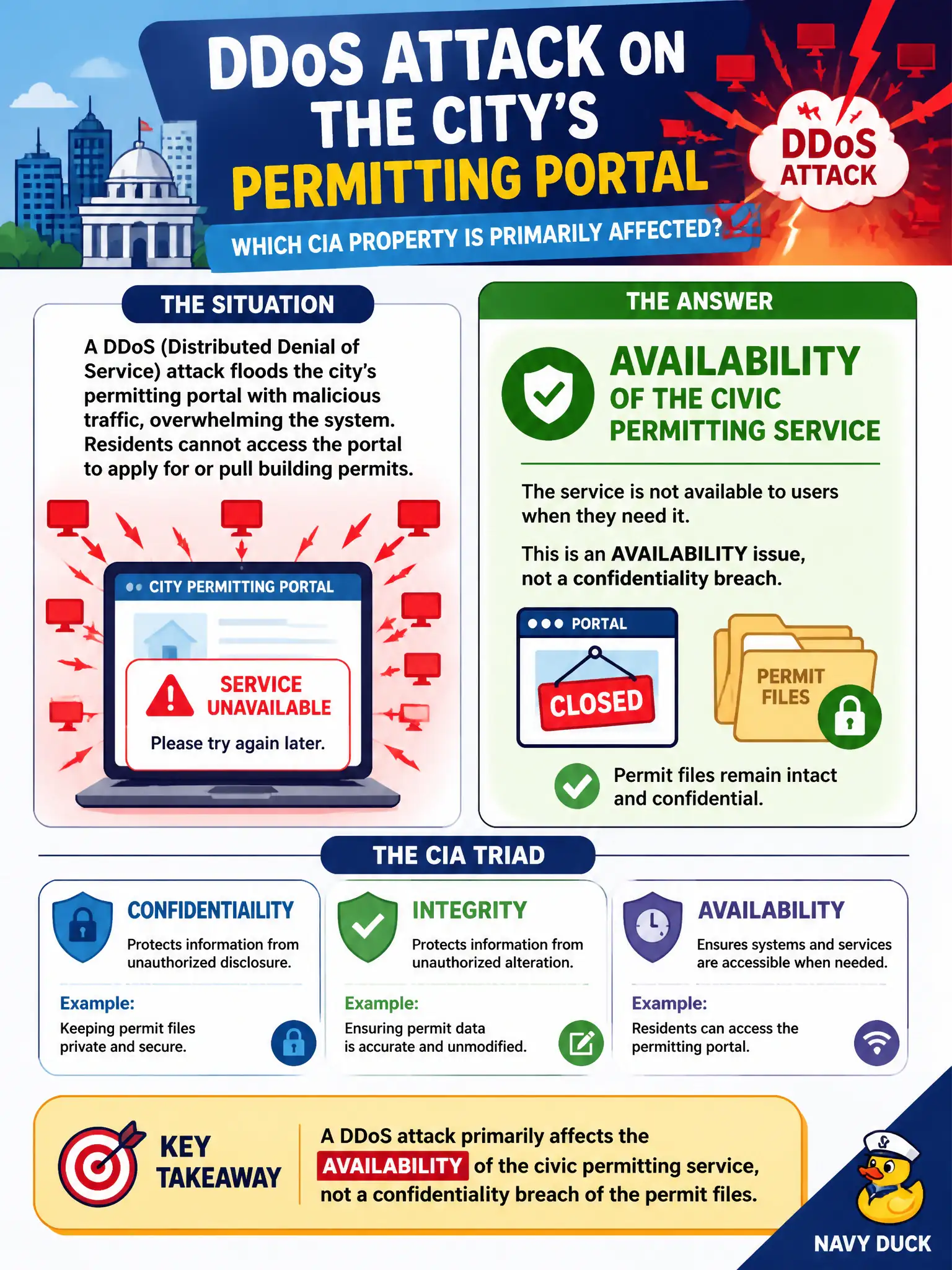
A DDoS against the city's permitting portal means residents cannot pull building permits. Which CIA property is primarily affected?
Select an answer to reveal the explanation.
Short Explanation
The permit window is boarded up — residents cannot get in. That is availability of a civic service, not someone reading the PDFs. A DDoS floods the door; it does not by itself leak files or break CIM.
Full Explanation
A DDoS against the city's permitting portal that prevents residents from pulling building permits primarily affects availability of the civic permitting service, not confidentiality of the permit files. The service window is closed by flood; that is classic availability impact on a public municipal function. Civic SOCs should classify by what residents lose—access to the service—unless evidence shows data disclosure or tampering.
Calling it confidentiality of the permit PDFs fails by concept: a flood that blocks access does not by itself mean files were read by unauthorized parties. Calling it integrity of the CIM Web data model because tstats stopped accelerating fails by concept: acceleration pain is not the primary CIA impact described. Calling it authenticity of the mayor's digital signature on each permit fails by concept: signatures are unrelated to a volumetric outage.
Exam caveat: DDoS stems almost always map to availability of the targeted civic service—do not invent confidentiality or CIM integrity without evidence.
Operational check: Declare an availability incident for permitting, engage ISP/DDoS protections, communicate alternative permit intake channels to residents, and keep ES focused on attack telemetry rather than rewriting CIA labels mid-incident.