
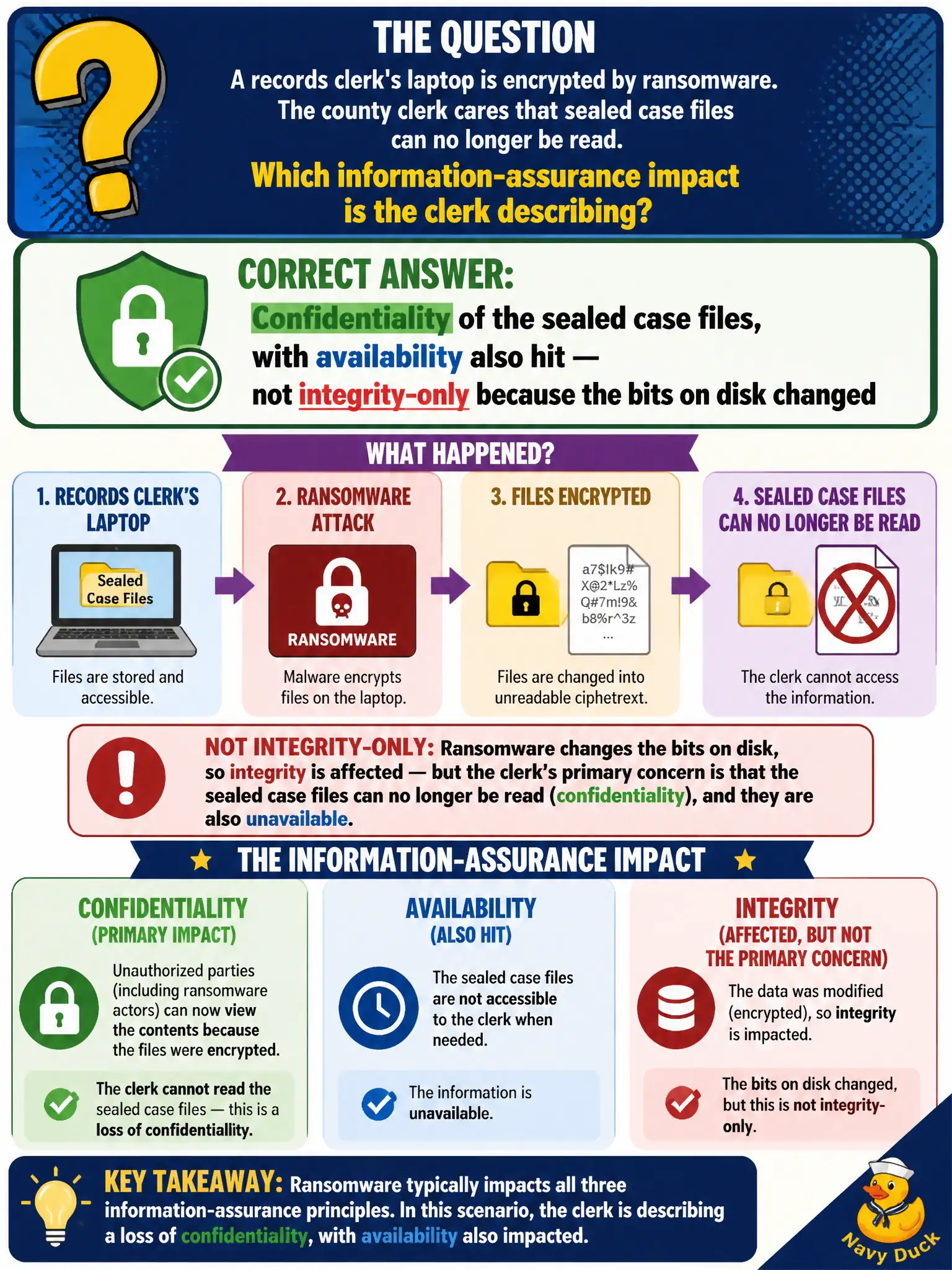
A records clerk's laptop is encrypted by ransomware. The county clerk cares that sealed case files can no longer be read. Which information-assurance impact is the clerk describing?
Select an answer to reveal the explanation.
Short Explanation
The clerk cannot read the files, and neither should anyone else without authorization — that is confidentiality of civic records, with availability punched too. Changed bits are a side effect, not a reason to call it integrity-only. Incident Review still being up is beside the point.
Full Explanation
When ransomware encrypts a records clerk's laptop and sealed case files can no longer be read, the clerk is describing confidentiality of those sealed civic records, with availability also hit—not an integrity-only story merely because bits on disk changed. Unauthorized parties should not read sealed files, and authorized clerks also cannot access them while encrypted; both confidentiality and availability are in play. Civic courts must name the impact that matters to justice operations, not a shallow "bits changed" integrity-only label.
Calling it integrity only because encryption changed bits fails by concept: bit change alone does not make integrity the primary story when sealed content is unreadable to rightful users and potentially exposed through attacker control. Calling it availability only of Incident Review fails by concept: the clerk cares about case files, not whether notables still fire. Calling it authenticity of the CIM user field fails by concept: spoofed identity in CIM is not what the stem describes.
Exam caveat: Ransomware on sensitive civic files commonly implicates confidentiality and availability together; do not force integrity-only because encryption modifies data.
Operational check: In the incident report, document sealed-case confidentiality exposure and clerk availability loss, preserve forensic images before rebuild, and verify backup restore paths for court records independently of Incident Review health.