
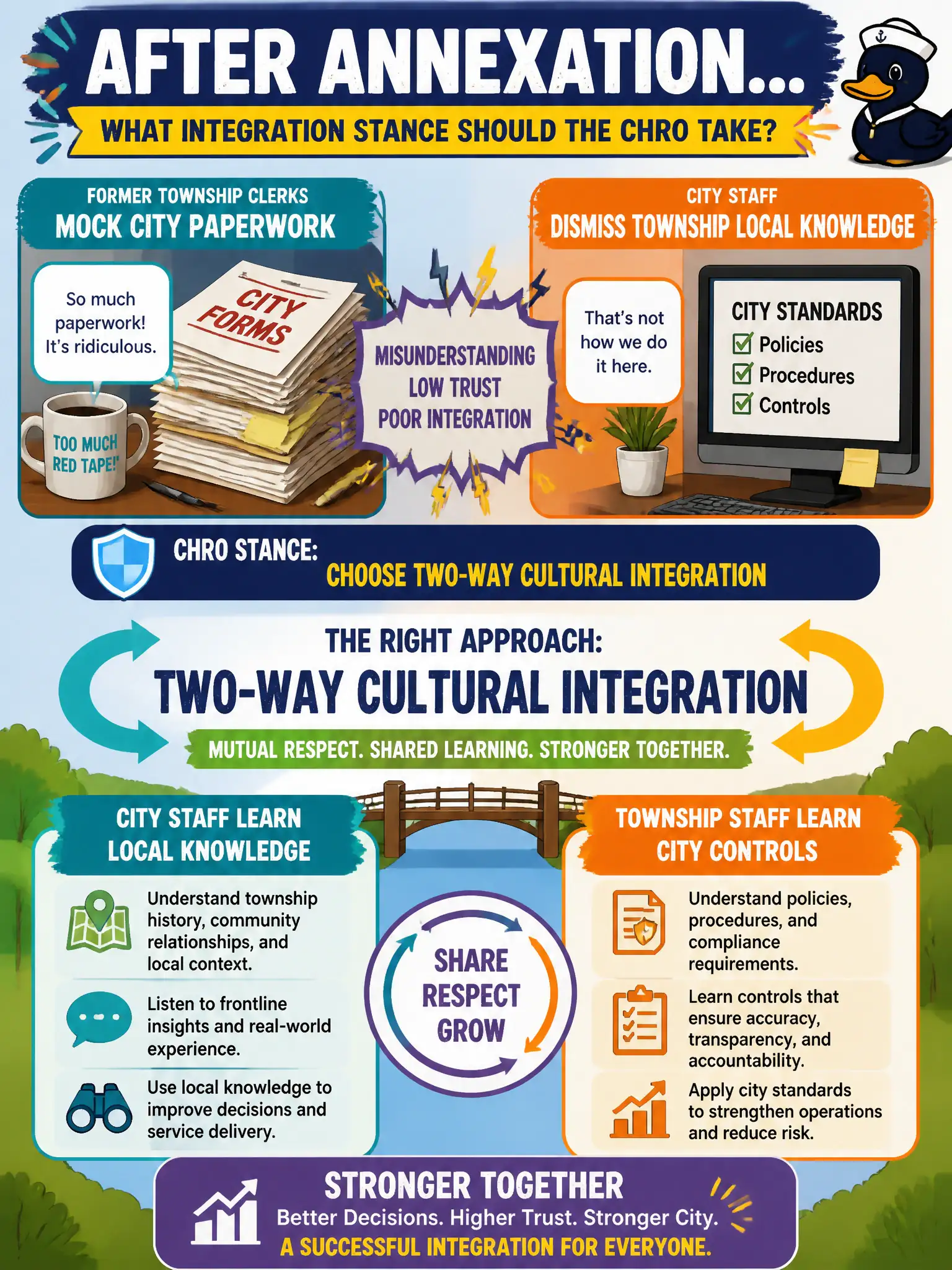
After annexation, former township clerks mock city paperwork while city staff dismiss township local knowledge. What integration stance should the CHRO take?
Select an answer to reveal the explanation.
Short Explanation
Annexation is not a conquest parade. The city has controls the township must learn, and the township has street knowledge the city would be foolish to trash—integration goes both ways.
Full Explanation
After annexation, when former township clerks mock city paperwork while city staff dismiss township local knowledge, the CHRO should drive two-way cultural integration: city staff learn local knowledge and township staff learn city controls. Annexation is not a conquest parade; controls matter, and so does street-level knowledge the city would be foolish to trash. One-way conversion that treats township practice as inherently inferior breeds resistance and loses useful know-how.
A one-way conversion that erases township practices as inferior produces compliance theater and quiet sabotage. Separate service windows forever so cultures never interact freezes a two-tier resident experience. Immediate replacement of all township clerks to avoid integration work discards knowledge and creates unnecessary RIFs.
Exam caveat: two-way integration still requires nonnegotiable legal and financial controls; 'two-way' is not optional compliance. The concept is mutual learning under one employer standard.
Operational check: run paired learning sessions (controls and local knowledge); document which township practices to keep, adapt, or retire; set shared customer-service standards; and pulse both legacy groups on respect and clarity at 60 days.