
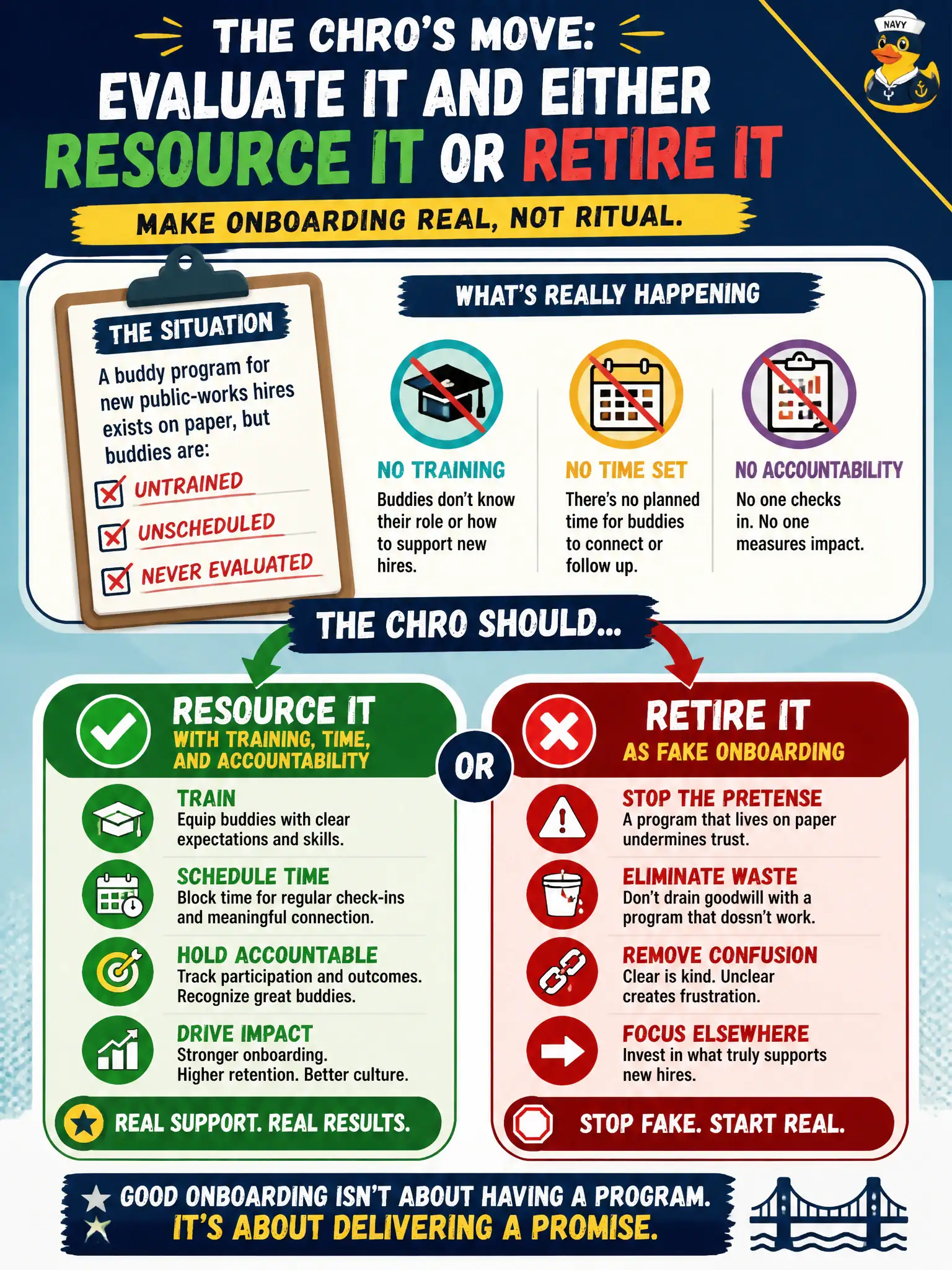
A buddy program for new public-works hires exists on paper, but buddies are untrained, unscheduled, and never evaluated. What should the CHRO do?
Select an answer to reveal the explanation.
Short Explanation
A buddy program with no trained buddies is a cardboard cutout at the door. Fund it for real—or take the sign down—because a fake welcome is worse than an honest you-are-on-your-own.
Full Explanation
A buddy program that exists on paper while buddies are untrained, unscheduled, and never evaluated is fake onboarding. The CHRO should evaluate it and either resource it with training, time, and accountability or retire it. A cardboard cutout welcome is worse than an honest you-are-on-your-own, because new public-works hires are told help exists when it does not.
Leaving the label in the handbook because the name itself onboards people is magical thinking. Expanding the program to every department without owners or standards spreads the fraud. Replacing buddies with a longer legal orientation slideshow swaps one weak design for another and still leaves social integration unowned.
Exam caveat: resourcing a buddy program means protected time, training, and performance expectations—not a volunteer afterthought. Retiring a hollow program is acceptable if replaced by a real design. The concept is integrity of onboarding mechanisms.
Operational check: audit current buddy activity and new-hire feedback; if keeping the program, train buddies, allocate hours, and score participation; set early-retention KPIs tied to buddy sites; and remove handbook language for any program that will not be funded.