
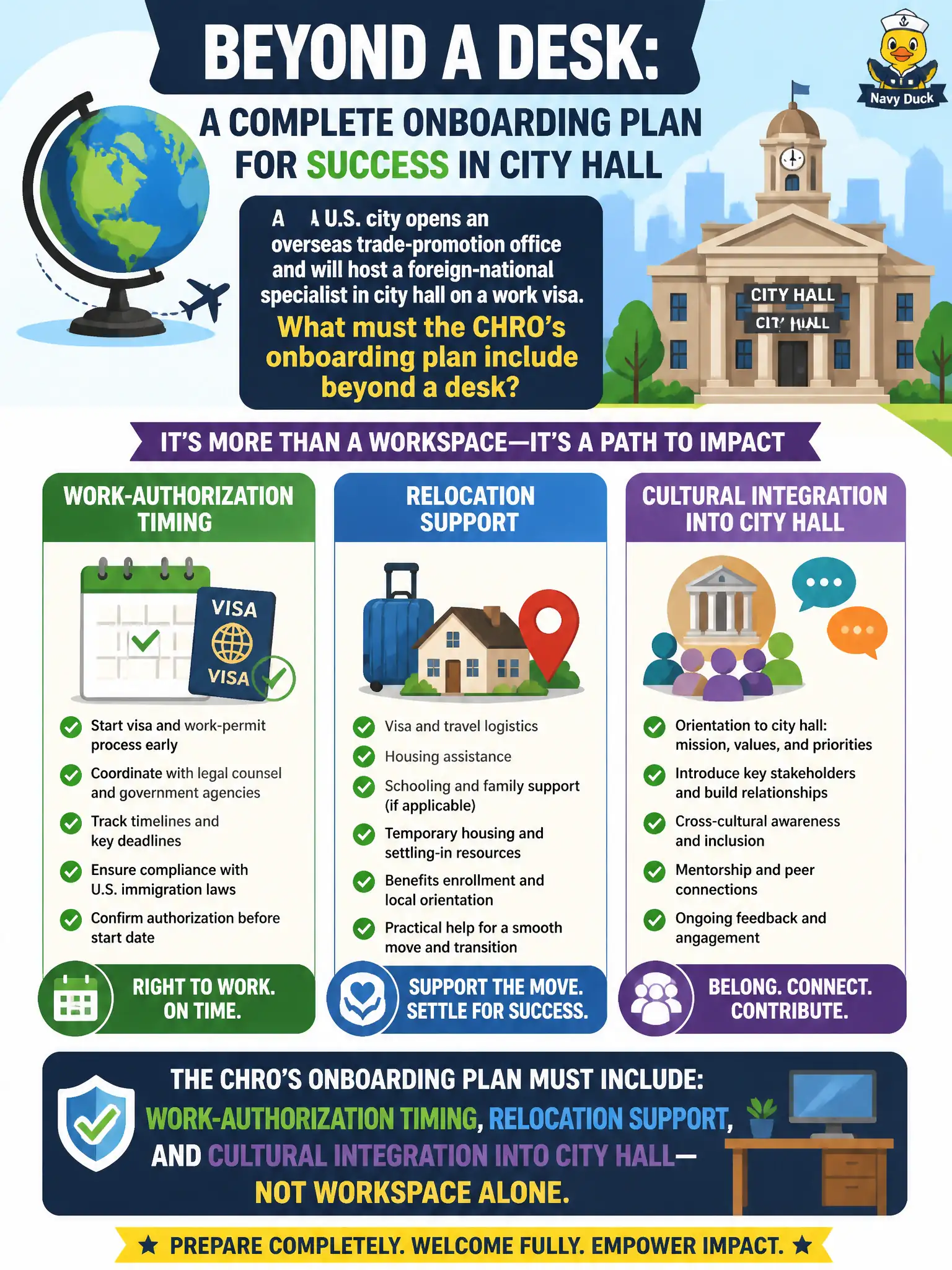
A U.S. city opens an overseas trade-promotion office and will host a foreign-national specialist in city hall on a work visa. What must the CHRO's onboarding plan include beyond a desk?
Select an answer to reveal the explanation.
Short Explanation
A visa and a desk are not a welcome. The person still has to land legally, find a life here, and learn how this city hall actually works—plan all three or day one is a folding chair.
Full Explanation
Hosting a foreign-national specialist in city hall on a work visa requires an onboarding plan beyond a desk: work-authorization timing, relocation support, and cultural integration into how this municipal organization actually works. Visa status changes sequencing, documentation, and day-one readiness; relocation and cultural integration determine whether the specialist can contribute. A standard slideshow that ignores authorization and landing logistics fails the assignment.
Treating onboarding as only a standard new-hire slideshow because 'visa status does not change onboarding' misses legal timing and practical landing needs. Building a full multinational mobility architecture for every city job family overbuilds relative to one specialist posting. Converting immediately to a contractor so the city never onboards a foreign national may violate the intended employment relationship and still leave authorization issues unsolved.
Exam caveat: cities must follow immigration and employment-authorization law carefully with counsel; HR designs onboarding around lawful status, not around informal workarounds. The concept is visa-aware, relocation-aware, culture-aware onboarding—not workspace alone.
Operational check: build a critical path from petition or visa milestone to start date; assign relocation and local settling support; schedule cultural and stakeholder onboarding into city hall norms; verify work authorization before start; and check in at days 7 and 30 on both logistics and integration.