
A city public-works department keeps losing warehouse-eligible applicants to a nearby fulfillment center that pays more at start, and the wage match operations wants is not fundable. What recruitment strategy should the CHRO recommend?
Select an answer to reveal the explanation.
Short Explanation
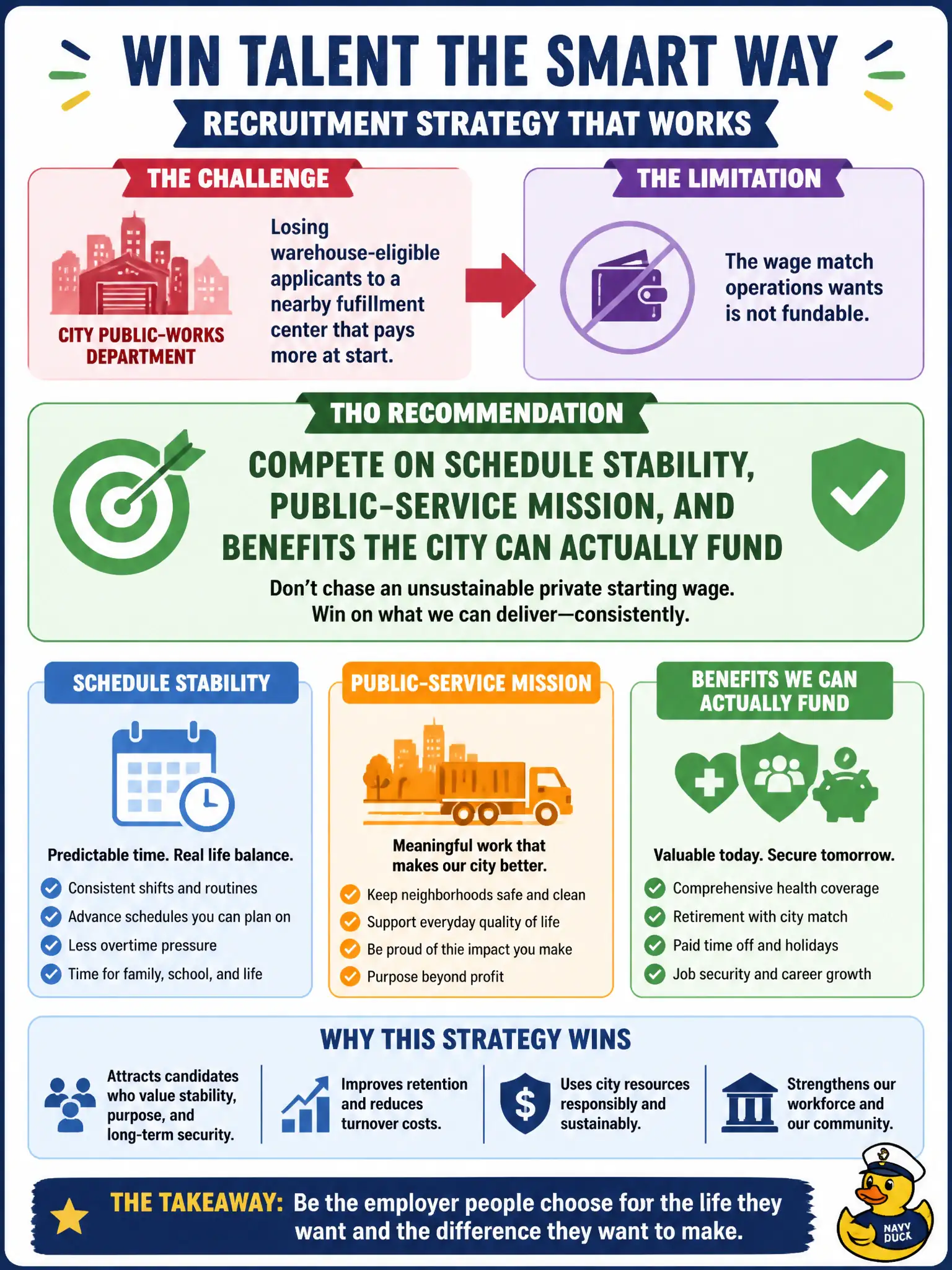
You do not beat a warehouse by becoming a warehouse with a city seal. Sell the job the budget can keep—steady schedule, pension, mission—instead of writing a starting wage that will bounce.
Full Explanation
When public works loses warehouse-eligible applicants to a higher-paying fulfillment center and a wage match is not fundable, the CHRO should compete on schedule stability, public-service mission, and benefits the city can actually sustain—not match an unsustainable private starting wage. Becoming a warehouse with a city seal writes a paycheck the budget will bounce. Sustainable differentiation beats unaffordable imitation.
Matching warehouse starting wages on every requisition by raiding professional vacancies creates new shortages elsewhere. Freezing hiring until council raises the entire pay plan to private levels abandons present work. Copying night-shift premiums and attendance bonuses the city cannot administer invents failed promises.
Exam caveat: competing on schedule and mission is not a ban on targeted pay adjustments where affordable and classified properly. The concept is refusing unsustainable private-wage matching as the only strategy.
Operational check: document schedule stability and benefit advantages in the EVP; pilot where operations can guarantee those schedules; track offer-accept and 12-month retention versus the warehouse; propose limited, funded differentials only where classification supports them; and brief council on the cost of true matching versus service cuts.