
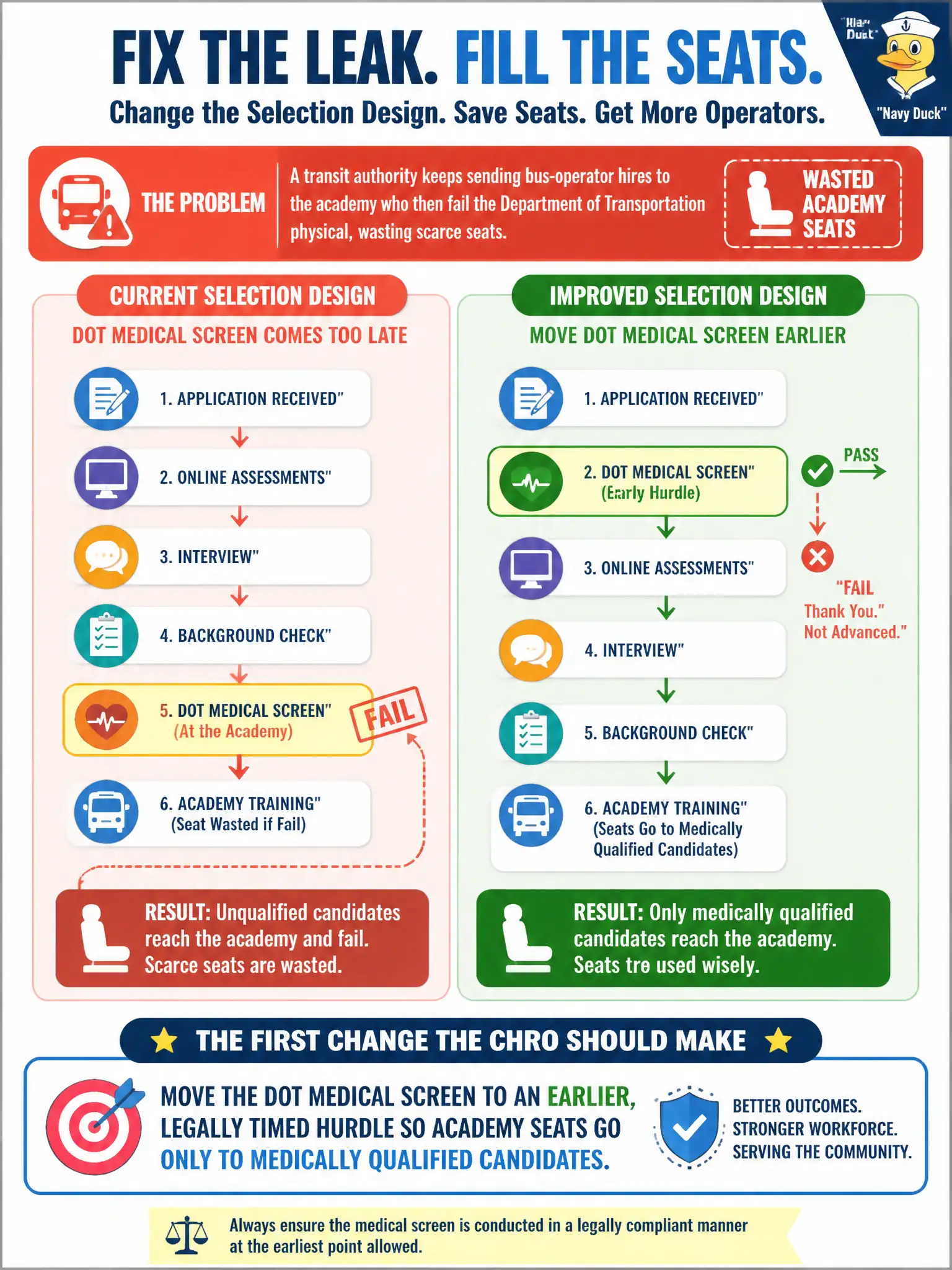
A transit authority keeps sending bus-operator hires to the academy who then fail the Department of Transportation physical, wasting scarce seats. What should the CHRO change first in the selection design?
Select an answer to reveal the explanation.
Short Explanation
Picture a bakery that frosts every cake before checking whether the oven works—pretty, then dumpster. Selection hurdles are a yield machine: put the expensive, disqualifying screen as early as the law allows so academy seats stop becoming souvenirs.
Full Explanation
Selection hurdles are a yield machine: expensive, disqualifying screens should come as early as the law allows. When a transit authority keeps sending bus-operator hires to the academy who then fail the DOT physical, the CHRO should move the medical screen to an earlier, legally timed hurdle so academy seats go only to medically qualified candidates. Frosting every cake before checking the oven wastes scarce academy capacity.
Lengthening the academy so medical failures can get in shape before the physical spends training seats on people who may still fail. Keeping the physical last to avoid exam spend on written failures optimizes the wrong cost when academy seats are scarcer. Dropping the physical and treating fitness as a training outcome risks putting medically unqualified operators into training and service pathways.
Exam caveat: medical timing must comply with ADA and related rules on when medical inquiries are permitted—typically after a conditional offer in many private contexts, with public-safety nuances counsel must confirm. The concept is lawful early placement of a high-fail, high-cost screen.
Operational check: with counsel, place DOT medical immediately after conditional offer (or the earliest lawful point); stop academy scheduling until medical clear; track academy-seat waste before and after; and report medical fail rates separately from academy training fails.