
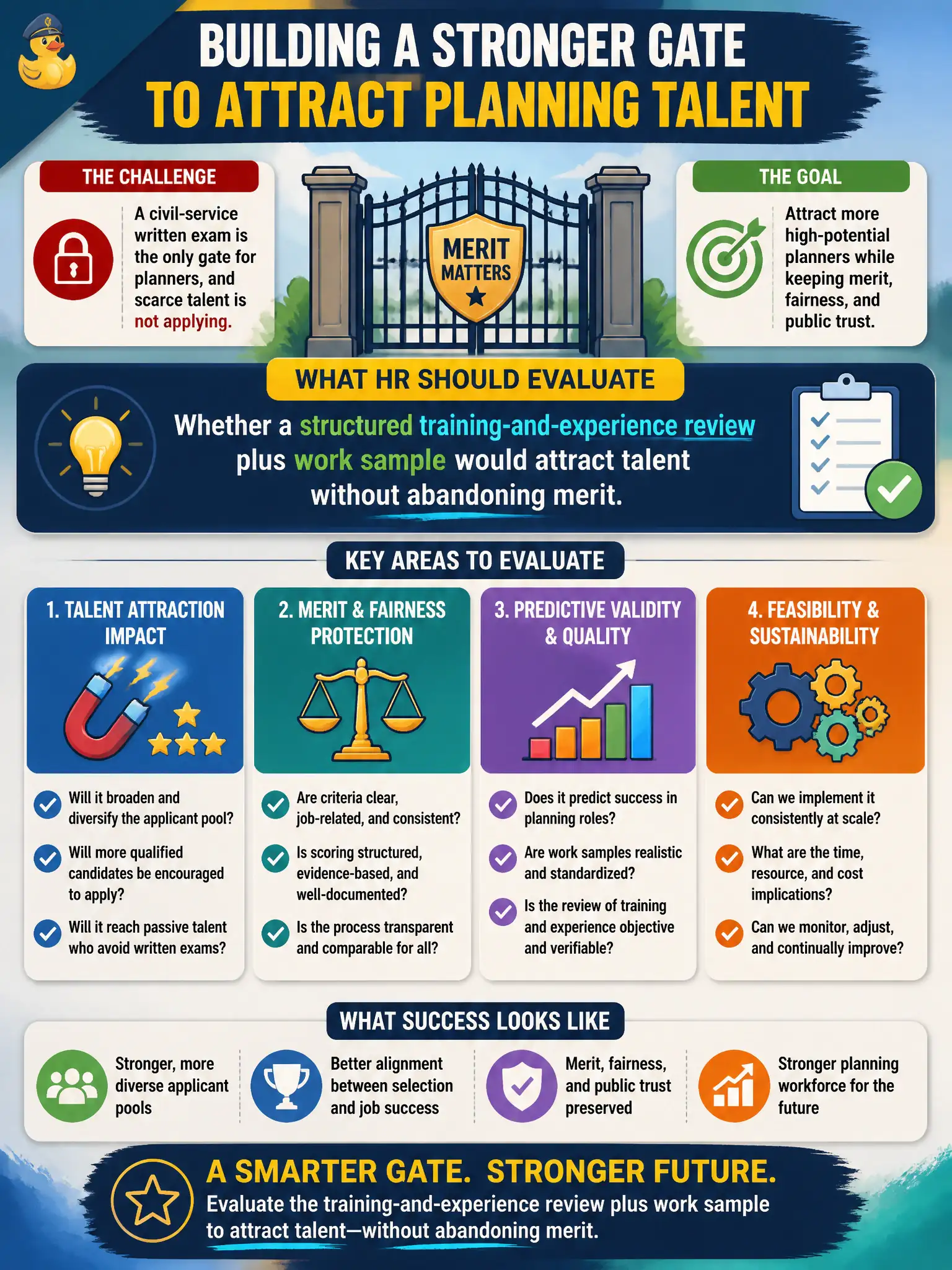
A civil-service written exam is the only gate for planners, and scarce talent is not applying. What should HR evaluate?
Select an answer to reveal the explanation.
Short Explanation
A dusty written exam can be a locked door with a merit sign on it. Structured training-and-experience plus a work sample can still be scored and still be fair—and actually attract planners who will not sit a trivia test. Merit is not one format.
Full Explanation
When a civil-service written exam is the only gate for planners and scarce talent will not apply, HR should evaluate whether a structured training-and-experience review plus work sample would attract talent without abandoning merit. Merit is scored, job-related, consistent selection—not one dusty trivia format. Alternative structured methods can remain defensible while opening the door talent will actually enter.
Abolishing merit rules so managers may pick anyone abandons public merit principles the exam defends. Adding more written-exam dates on the same content multiplies a format candidates reject. Restricting the exam to current employees shrinks the pool and still uses the failing gate.
Exam caveat: T&E plus work sample must be structured, scored, and job-related—not informal manager preference. Civil-service rules may require board approval to change methods. The concept is modernizing merit methods, not discarding merit.
Operational check: job-analyze planner KSAs; design a scored T&E and work-sample battery; pilot with adverse-impact and candidate-experience measures; seek civil-service approval; and compare applicant volume and quality against the legacy written-only gate.