
Seasonal lifeguard sourcing has always started in May. What should HR change, and how should success be judged?
Select an answer to reveal the explanation.
Short Explanation
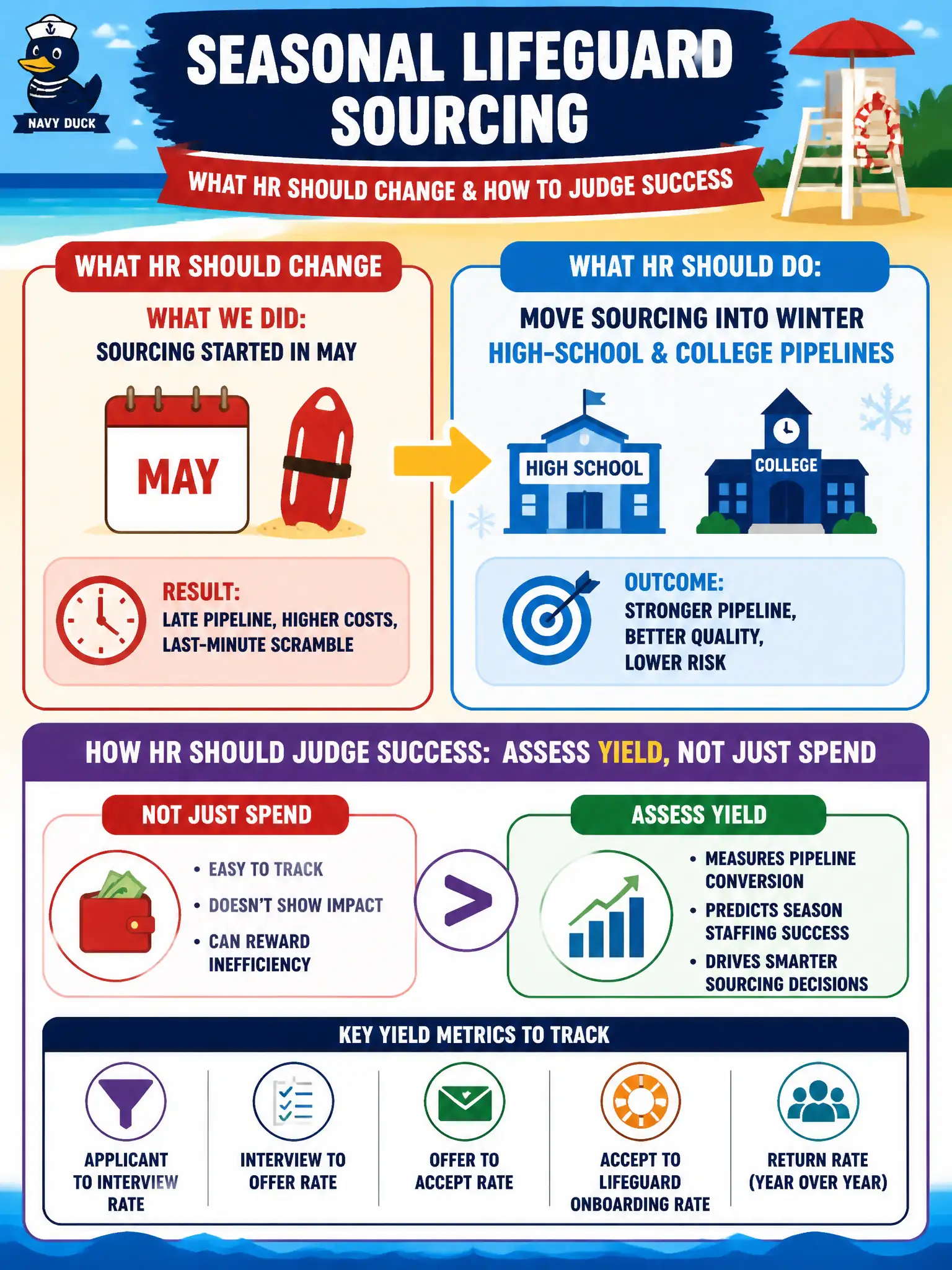
College kids already have summer jobs by May. Start in winter at the schools, then count who actually shows up certified in June. Timing is strategy; spend-in-May is a habit.
Full Explanation
Seasonal lifeguard sourcing that always starts in May arrives after many high-school and college candidates already have summer jobs locked. HR should move sourcing into winter school and college pipelines and judge success by yield—certified guards who actually report in June—not by May advertising spend alone. Timing is recruiting strategy; spend-in-May is an inherited habit that systematically misses the candidate calendar.
Keeping the May start and doubling May ads spends more money against a late market that has already chosen other employers. Hiring the first May applicants without yield analysis confuses speed with coverage quality and can leave beaches under-certified. Outsourcing all lifeguard recruiting to a May-only staffing agency inherits the same late calendar and adds markup without fixing timing.
Exam caveat: earlier sourcing still requires certifications, background checks, and nondiscriminatory selection before water opens; winter intent lists are not automatic hires. The concept is pipeline timing plus yield metrics rather than calendar inertia.
Operational check: schedule winter school visits and collect intent-to-hire interest; track offer-to-report and certification completion rates; set a June staffing coverage KPI by beach; compare cost-per-certified-guard across start months; and lock next year's recruiting calendar to winter outreach before budgets are spent in May.