
Finance proposes eliminating the classification-and-compensation analyst during a downturn. What should HR demonstrate?
Select an answer to reveal the explanation.
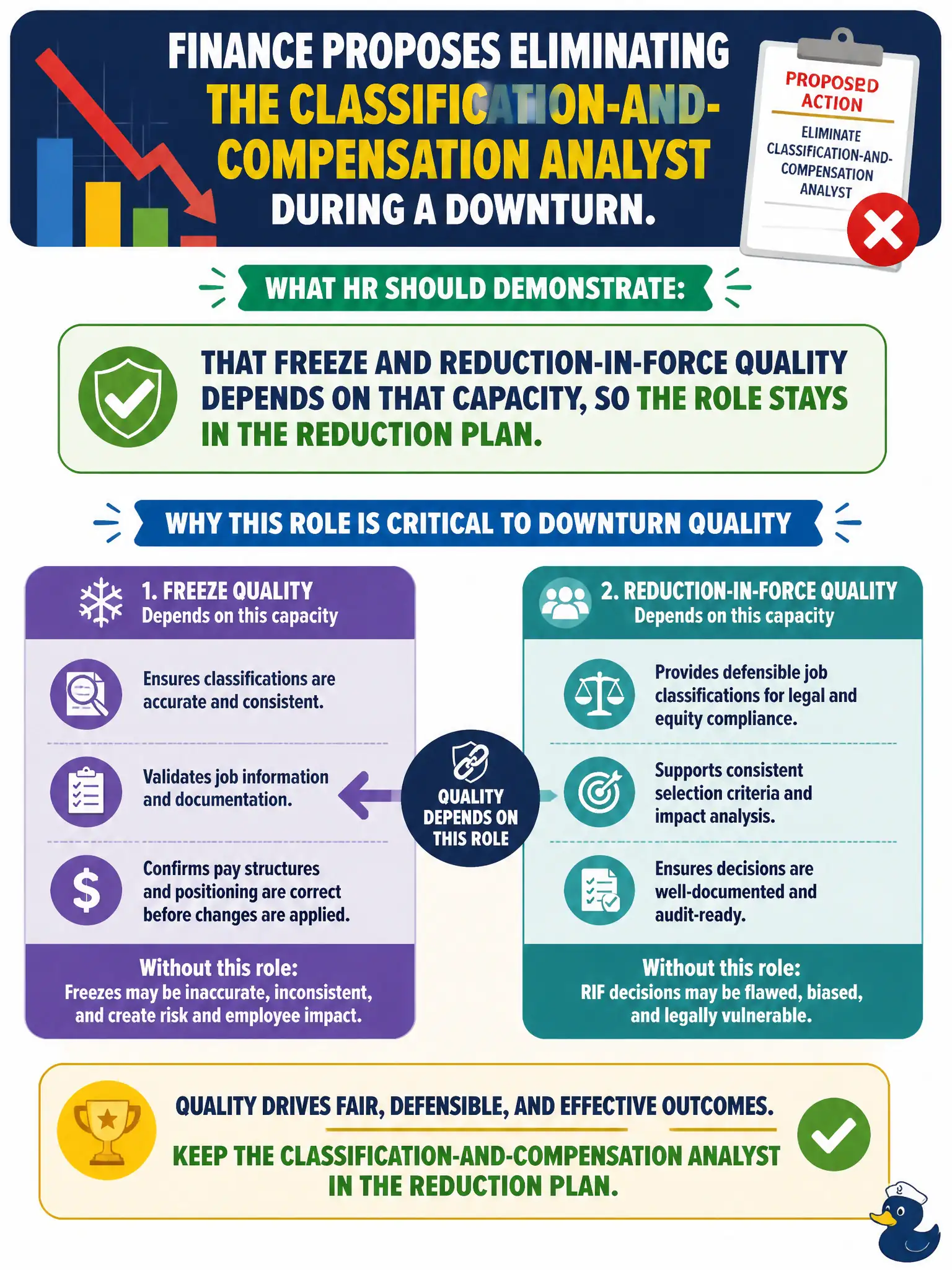
Short Explanation
Cutting the class-and-comp analyst right before a reduction is like firing the mapmaker on the morning of a retreat. Freeze and RIF decisions need that capacity more, not less. Keep the person who can tell a real vacancy from a protected class.
Full Explanation
Eliminating the classification-and-compensation analyst during a downturn removes capacity exactly when freeze and reduction quality depend on it. HR should demonstrate that RIF and freeze decisions need that expertise to distinguish real vacancies, protected work, and misclassified risk—so the role stays in the reduction plan. Cutting the mapmaker on the morning of the retreat is false economy.
Claiming classification can pause because no new jobs will be created ignores reorgs, RIFs, and freeze exceptions that still need class judgment. Replacing the analyst with a one-time consultant after lists are posted is too late for design quality. Asserting every generalist can absorb the work without a workload model is wishful stacking.
Exam caveat: protecting the role is not protecting every HR vacancy; it is preserving a scarce control capability tied to the reduction itself. The concept is capacity criticality under austerity.
Operational check: show pending freeze exceptions and RIF class decisions queued to that desk; quantify error risk without the role; propose the analyst as a protected FTE in the reduction package; and measure classification cycle time and grievance rate through the downturn.