
A housing authority will add a RAD-converted property. How should HR forecast the new site's staffing?
Select an answer to reveal the explanation.
Short Explanation
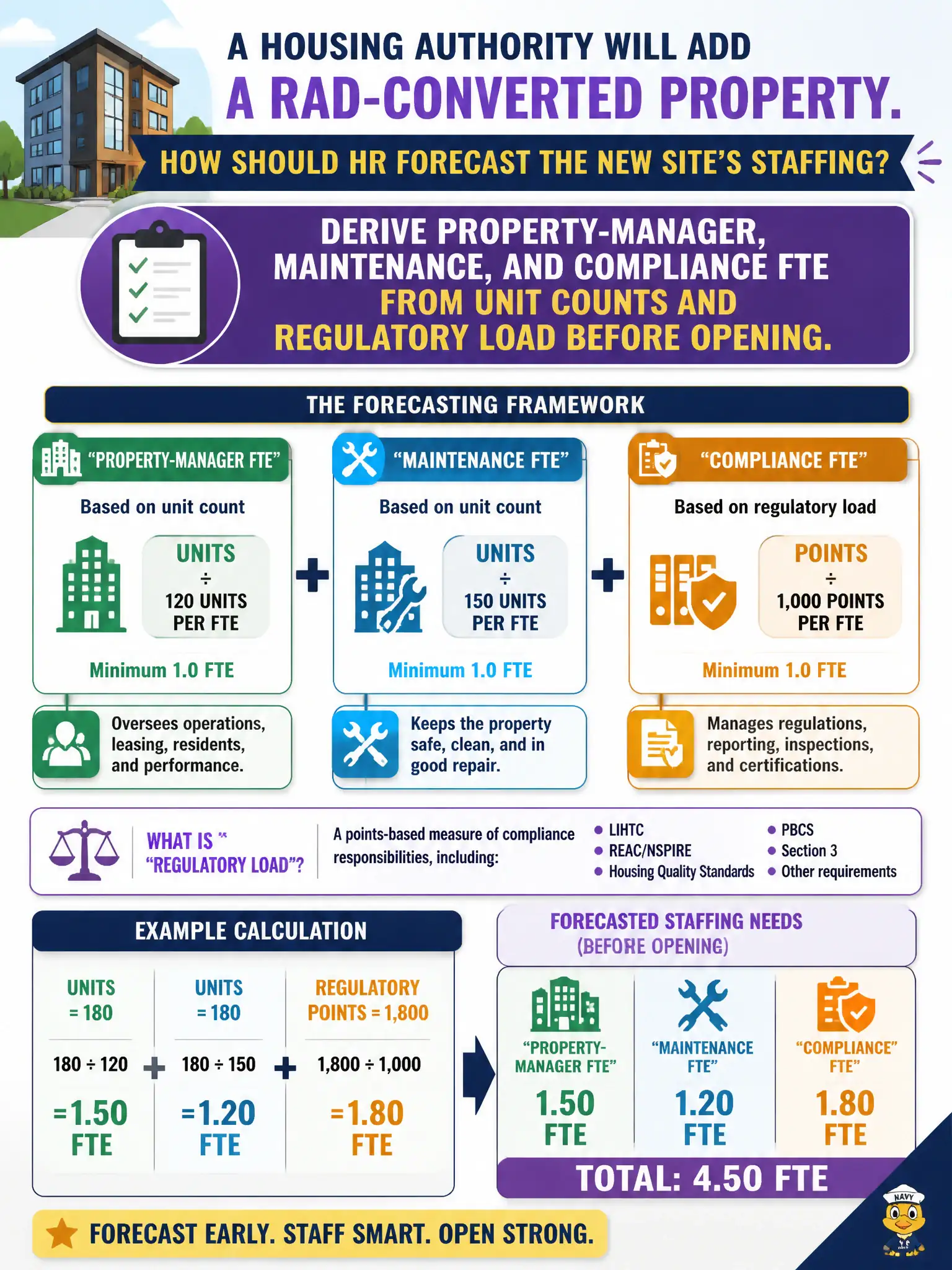
A new property is not 'we'll see after the ribbon.' Units plus compliance load tell you how many managers, maintainers, and compliance folks you need. Do the people formula before keys change hands.
Full Explanation
Adding a RAD-converted property to a housing authority requires staffing derived from unit counts and regulatory load before opening—not after the first audit finding. Property-manager, maintenance, and compliance FTE scale with units and with the compliance burden conversion brings. Opening on central-office leftovers invites missed work orders, failed inspections, and compliance findings residents and regulators will notice long before a 'we'll add FTE later' promise arrives.
Opening with current central staff and adding FTE after audit findings is failure-driven staffing. Staffing identically to the authority's smallest conventional property ignores RAD-specific compliance load. Transferring one vacant clerk and deferring maintenance hiring underbuilds the site on purpose and shifts breakdowns onto tenants.
Exam caveat: formulas should reflect local portfolio data and regulatory requirements; they are not a license to overstaff without evidence. The concept is a pre-opening people formula from units and compliance load, timed to keys changing hands.
Operational check: build a unit-and-compliance staffing model; fund manager, maintenance, and compliance seats before transfer; set work-order and inspection KPIs for the first ninety days; and refuse ribbon-cutting dates that precede minimum site staffing.