
A city airport will lose a hub carrier. What should HR do with the workforce plan?
Select an answer to reveal the explanation.
Short Explanation
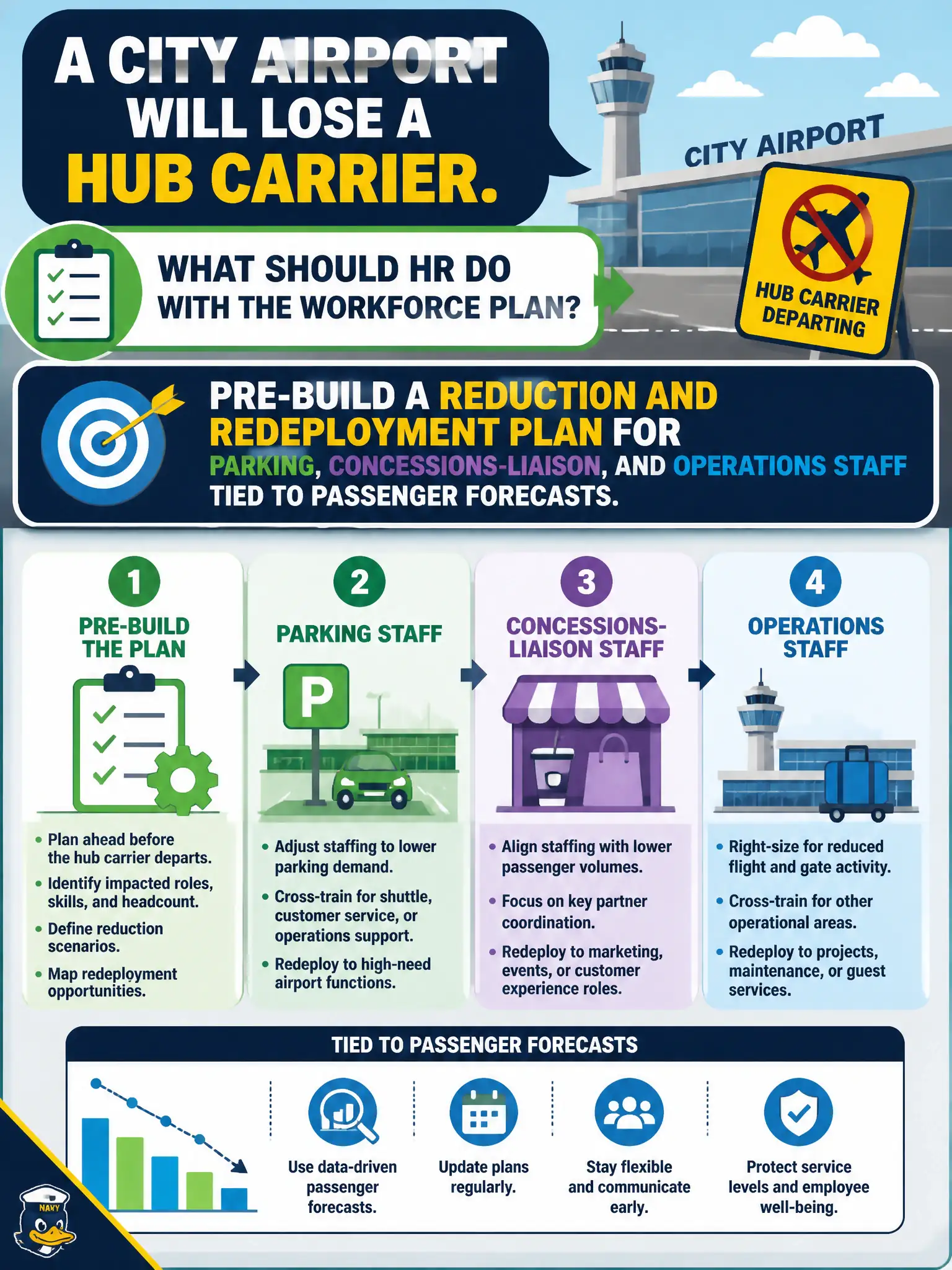
When a hub carrier walks, parking and ops do not drop the same week—the slide is forecastable. Do not wait for empty lots, and do not fire everyone on the press release. Tie a reduction-and-redeploy plan to the passenger curve now.
Full Explanation
Losing a hub carrier is a forecastable workforce slide for parking, concessions-liaison, and operations—not a surprise to wait for empty lots. HR should pre-build a reduction and redeployment plan tied to passenger forecasts so actions track the curve rather than a panic on announcement day or a freeze until pain is visible. Forecast-linked plans protect scarce skills, meet notice duties, and avoid both premature mass abolishment and delayed action.
Waiting for actual passenger counts to fall before revising FTE is lagging by design. Immediately abolishing parking and liaison jobs on announcement day may overshoot if the decline is gradual. Dumping everyone into the general vacancy pool without skills match is not redeployment.
Exam caveat: forecast-tied reductions still require lawful selection and notice; forecasts are planning inputs, not automatic termination triggers. The concept is anticipatory workforce planning linked to demand indicators.
Operational check: map roles to passenger elasticities; set trigger thresholds for freeze, redeploy, and reduce; prepare notice timelines; identify transferable skills into remaining airport or city jobs; and review triggers monthly with finance and operations.