
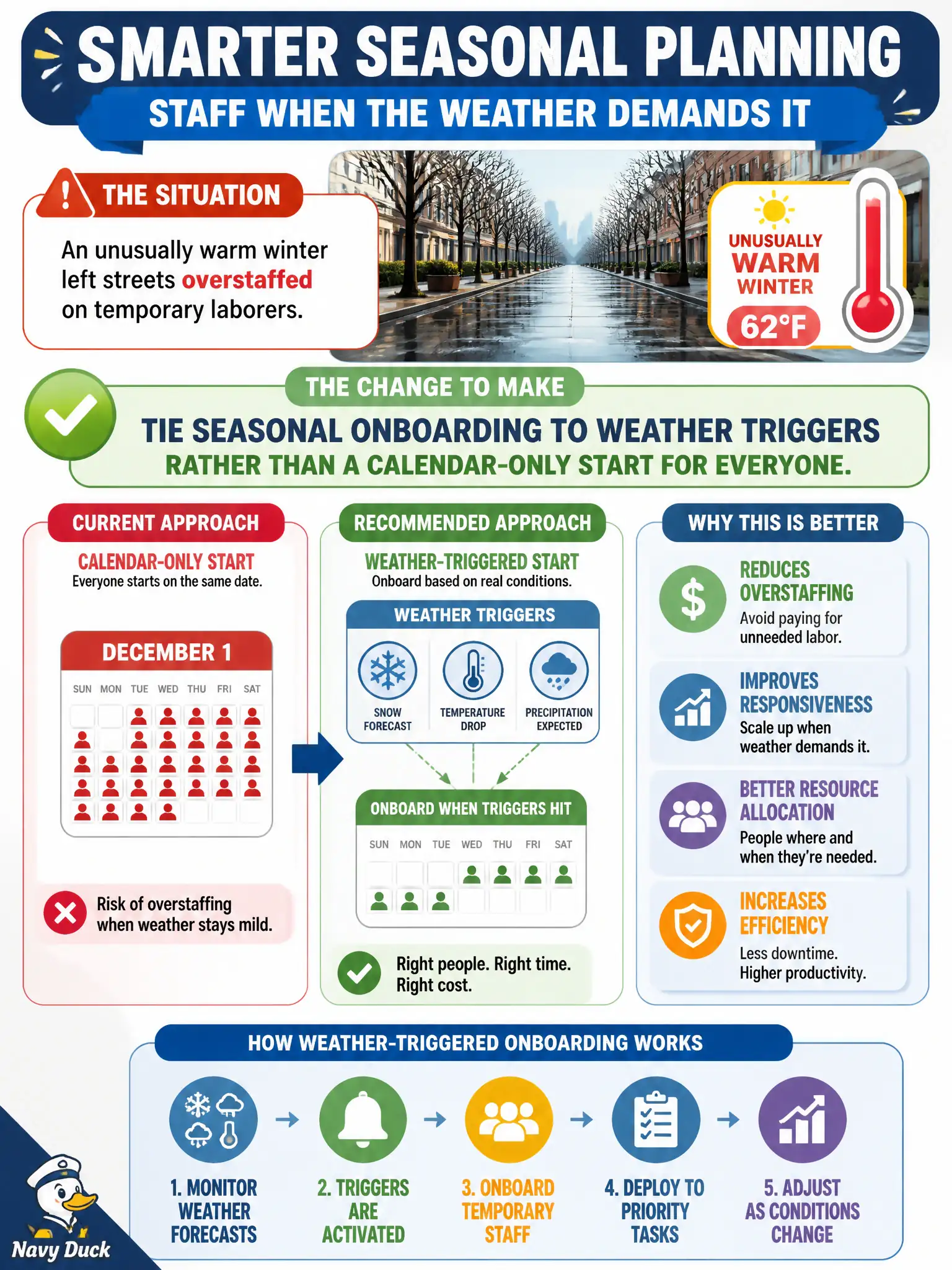
An unusually warm winter left streets overstaffed on temporary laborers. What change should HR make to the next-cycle seasonal plan?
Select an answer to reveal the explanation.
Short Explanation
Last year's everybody-starts-October-1 plan paid people to lean on shovels in a winter that never showed up. Next cycle, let the weather—not the calendar—turn the crew on. Triggers beat a fixed start date when snow is a maybe.
Full Explanation
Seasonal staffing for snow and street work should follow weather triggers, not a calendar-only onboarding date that paid idle laborers after an unusually warm winter. HR should retie next-cycle seasonal starts to forecast and event triggers so the crew turns on when snow is likely, not merely when the spreadsheet says October 1. Triggers beat fixed starts when demand is probabilistic and resident expectations still spike on the first real storm.
Starting every seasonal on a fixed October 1 regardless of forecast recreates last year's surplus and wastes budget that heavy winters will need. Converting temps to year-round FTE so mild winters never create surplus locks in permanent cost the millage did not fund. Cancelling seasonal hiring for contractors-only may raise unit cost and lose surge control the city still needs in heavy years.
Exam caveat: weather triggers must still meet wage-hour, scheduling notice, and nondiscrimination rules; on-call seasonal designs need careful compliance review. The concept is demand-triggered seasonal planning, not abandoning seasonals or pretending weather is perfectly predictable.
Operational check: define measurable weather or forecast triggers with public works; set staggered onboarding waves; communicate expected windows to applicants honestly; track paid idle hours versus storm response hours; and adjust triggers after each winter with finance at the table.