
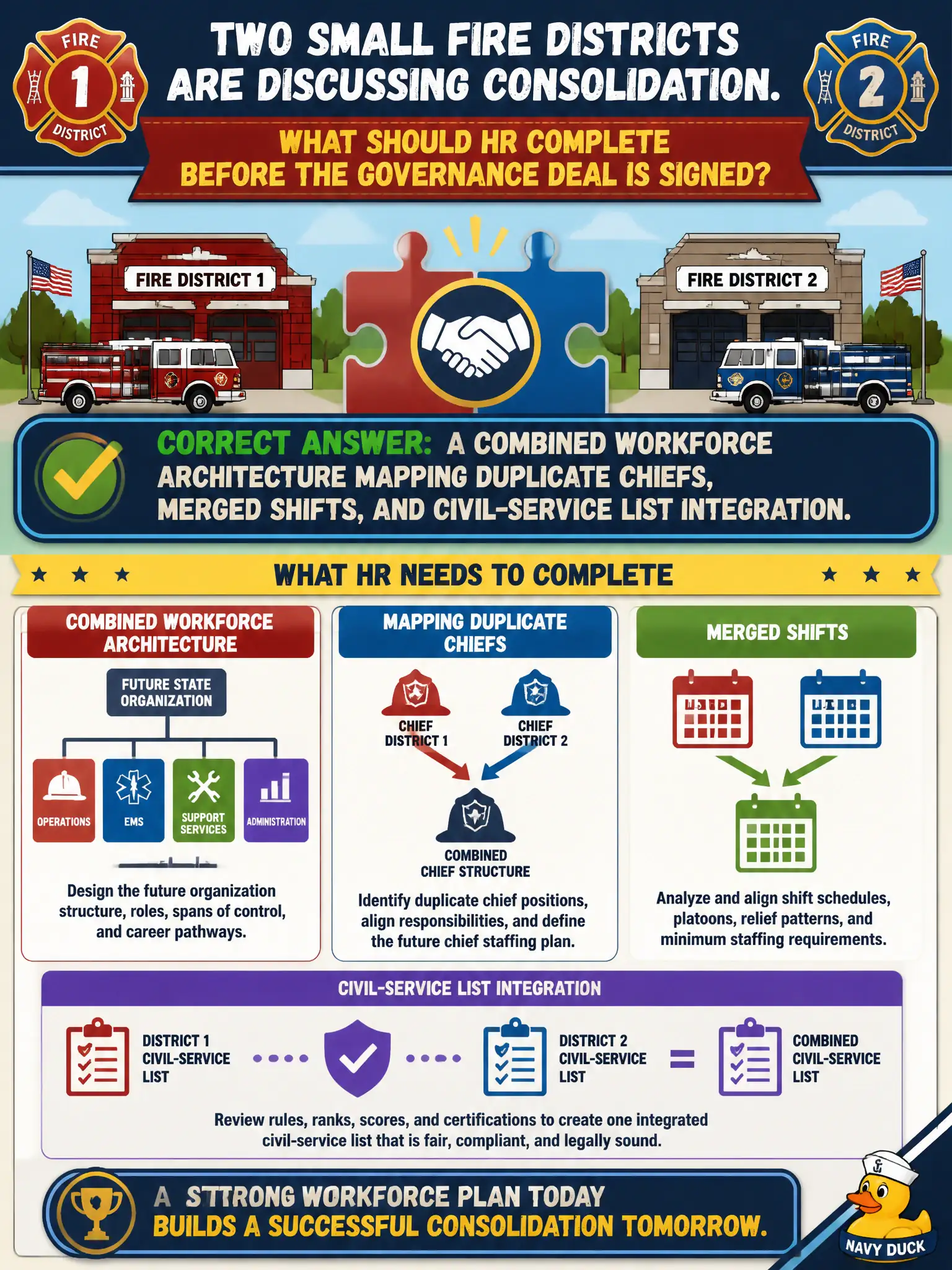
Two small fire districts are discussing consolidation. What should HR complete before the governance deal is signed?
Select an answer to reveal the explanation.
Short Explanation
Combining two fire shops is not just new letterhead. Two chiefs, overlapping shifts, and two civil-service lists will collide. Draw the combined people architecture before the handshake, or the first joint roster becomes a grievance factory.
Full Explanation
Fire-district consolidation is a combined workforce architecture problem before it is a governance handshake. HR should map duplicate chiefs, merged shifts, and civil-service list integration before the deal is signed. Two seniority cultures, overlapping command, and dual eligible lists will otherwise collide on the first joint roster and produce grievances that poison the merger.
A single seniority list that automatically ranks everyone by original hire date may violate local rules or bargained terms and is premature without architecture. Freezing both districts' promotional exams until the first joint budget stalls careers without solving structure. Agreeing that each district keeps its own classification plan after merger preserves the conflict the consolidation was meant to end.
Exam caveat: architecture mapping informs negotiation; it does not invent seniority rules unilaterally. Bargaining and civil-service boards may control list integration. The concept is designing the combined people system before signature.
Operational check: inventory command layers, shift patterns, and list rules; draft a proposed combined org and list-integration options with counsel and labor; identify redundant chief roles and transition pay; and make architecture a closing condition of the governance deal.